
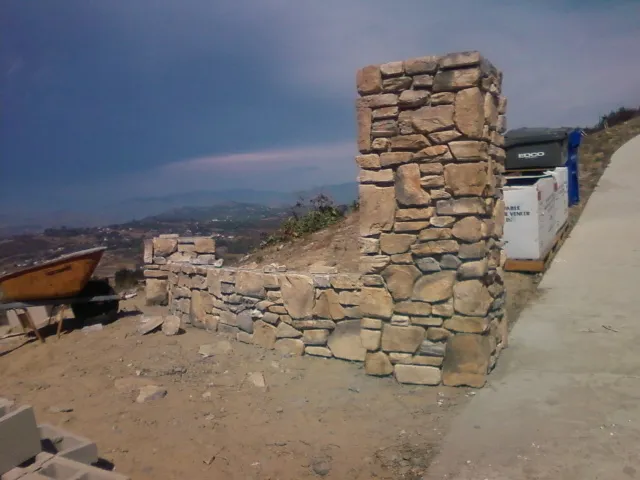
Driveways
Driveways and approaches
Driveway slabs on a compacted base with steel chaired up and joints laid out before the pour, plus the approach and curb cut in the street under the City’s encroachment permit and inspection.
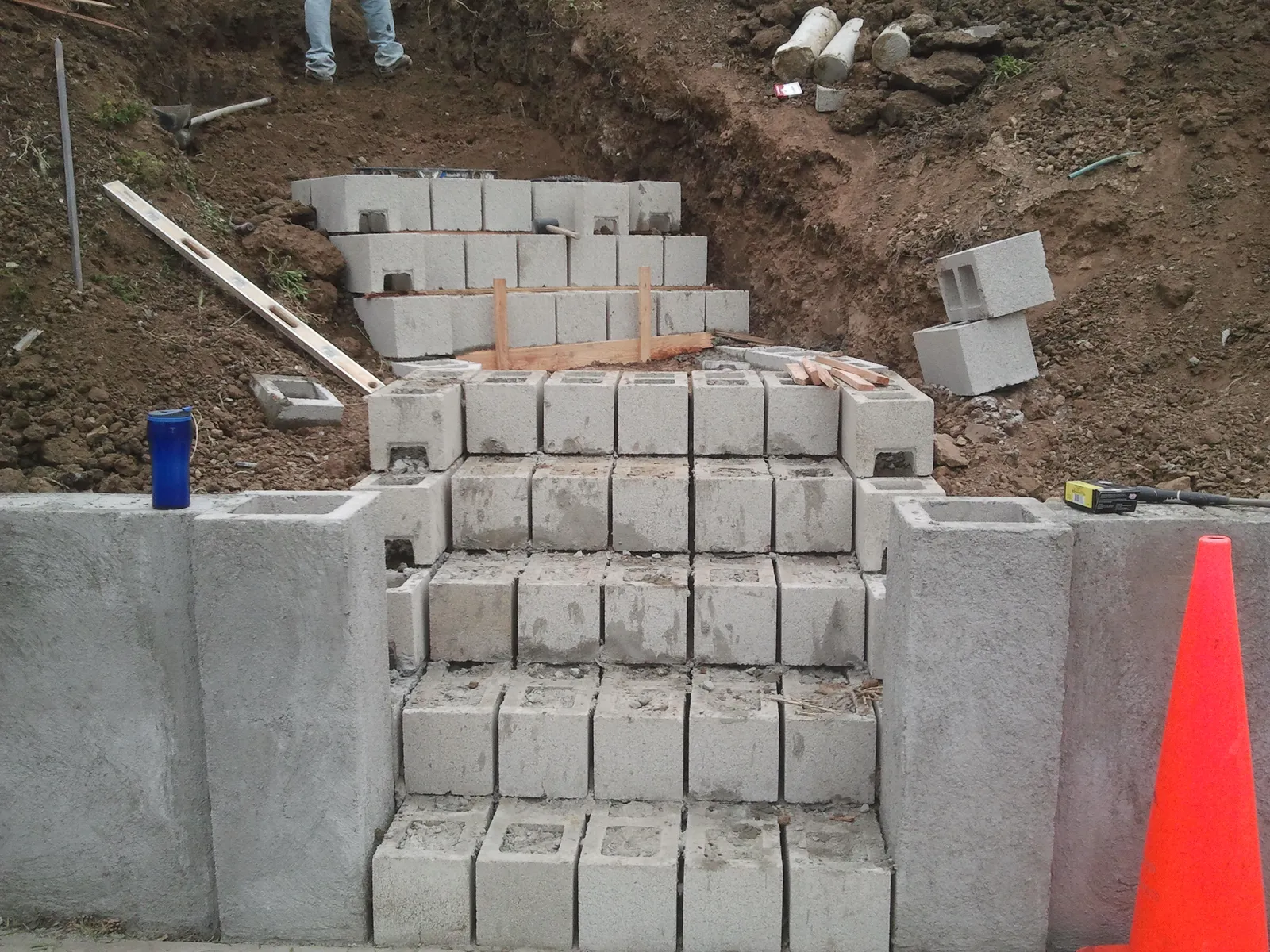
Driveways and approaches, patios, walks, steps and footings poured for Lemon Grove’s shrink-swell clay — with the base, steel, joints and fall that keep a slab whole. Where your driveway meets the street, we pull the City’s encroachment permit and meet its inspector. Licensed, owner-run, one written price.
CSLB #979389 · C-29 Licensed · Bonded $25,000 · Free on-site estimates
Concrete in Lemon Grove, by the numbers
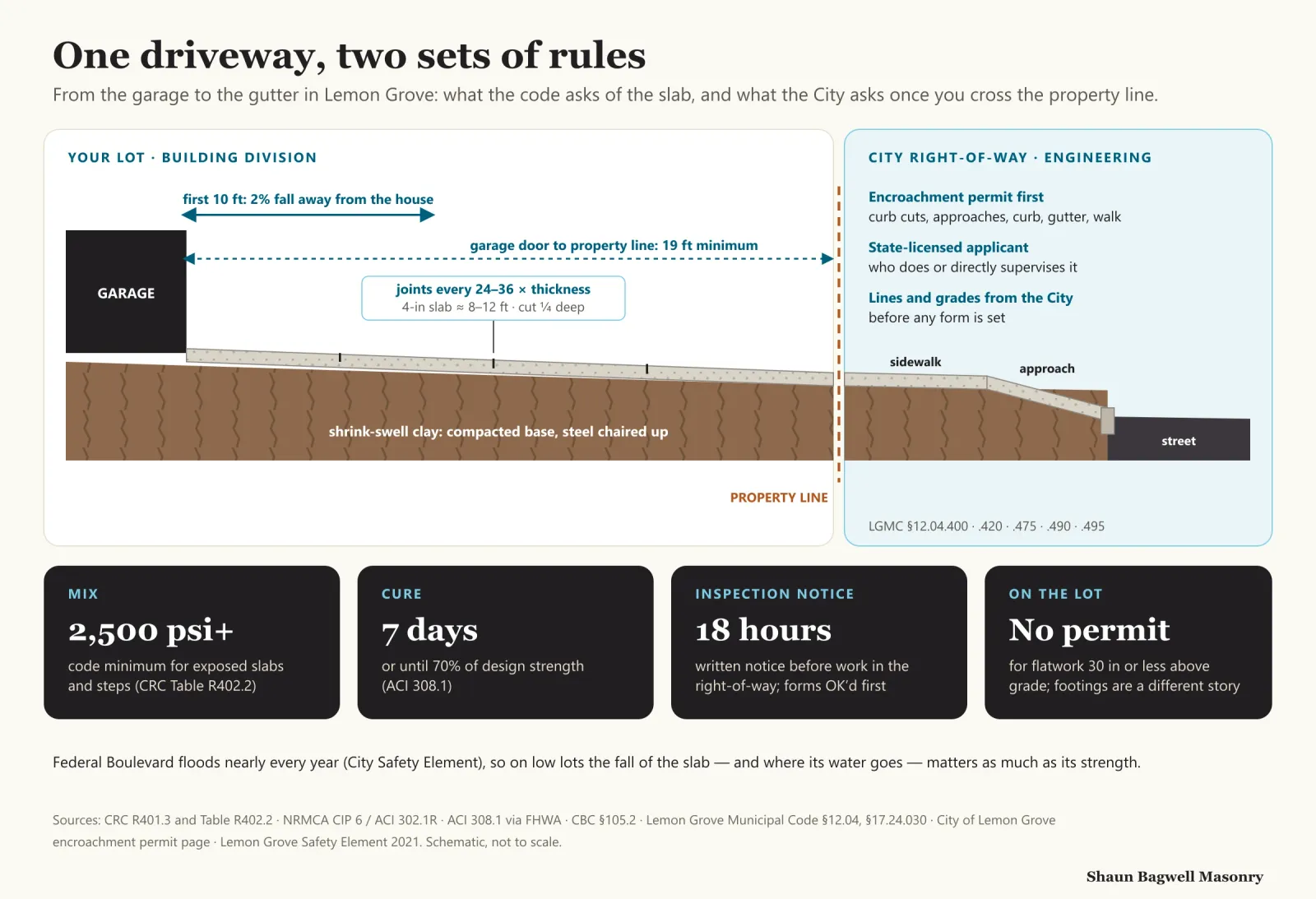
Concrete on a Lemon Grove lot has two masters. On your side of the property line it answers to the ground: the City’s Safety Element says the soil almost everywhere outside east Broadway is high-clay with high shrink-swell potential, and that’s what cracks driveways and lifts walks. Joints placed where the slab wants to crack, a compacted base, steel held up in the slab and a 2% fall away from the house are what keep it whole.
On the City’s side — the driveway approach, curb, gutter and sidewalk — it answers to Chapter 12.04 of the Municipal Code. You need a permit before you build or repair a driveway in the street; the work must be done or directly supervised by a state-licensed contractor; the City sets the lines and grades; it gets 18 hours’ written notice to inspect; and no concrete is poured until the forms are approved.
Residential flatwork and the footings under masonry. For mix, steel and finish options in more depth, see our county-wide concrete page.
Driveways
Driveway slabs on a compacted base with steel chaired up and joints laid out before the pour, plus the approach and curb cut in the street under the City’s encroachment permit and inspection.
Right-of-way
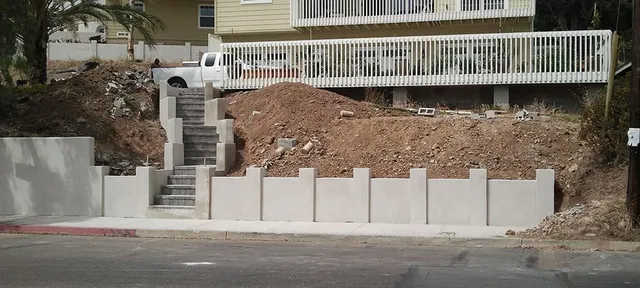
Lifted or broken sections in front of your house, replaced to the City’s lines and grades. Chapter 12.04 lets the City refuse a short patch where a partial run would be a hazard, so we plan the full length it will accept.
Patios
Patios jointed into panels the clay can move under, falling 2% away from the house. If you’d rather have a surface that shifts instead of cracking, our Lemon Grove pavers page covers the alternative.
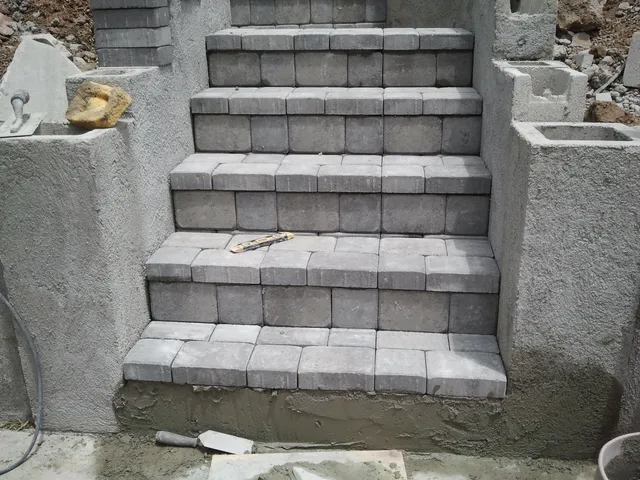
Walks & steps
Front walks and steps with even risers, a non-slip finish and enough fall to shed water — formed and poured, or faced in brick or pavers.
Footings
Reinforced footings for block and retaining walls, outdoor fireplaces and small structures — sized for clay, inspected before the pour, and the part of a project you never see but always pay for if it’s wrong.
Slabs
Slabs with a vapor retarder where the space will be enclosed, thickened edges, and steel sized to the load, on ground prepared for movement rather than hoping for none.
Concrete is specified by its 28-day strength, and the residential code sets 2,500 psi as the floor for porches, steps and exposed slabs in a mild climate like ours; driveways usually go higher. Strength alone doesn’t stop cracking, though — on shrink-swell clay, joints and curing do.
Control joints go in at 24 to 36 times the slab thickness — about every 8 to 12 feet in a 4-inch slab — cut a quarter of the depth, so the slab cracks where we chose instead of where the clay pushes. Then it’s kept moist for 7 days, or until it reaches 70% of its design strength, which is the default curing rule in ACI 308.1.
On your lot. Sidewalks, driveways and patios no more than 30 inches above the adjacent grade are exempt from a building permit under the state code. Footings for walls, fireplaces and additions aren’t — they go through the Building Division’s in-person counter at City Hall with the structure they carry. Lemon Grove now builds to the 2025 California Building Code, and its local amendment lets the City hold a permit until required grading or public improvements are complete.
In the street. Any work in the right-of-way or a City easement — a driveway curb cut, an approach, or removing and replacing curb, gutter and sidewalk — needs an encroachment permit from the Engineering Division, (619) 825-3810, with fees and deposits paid in person. Chapter 12.04 then sets the rules for the pour itself: a licensed contractor does or directly supervises the work, lines and grades come from the City first, the inspector gets 18 hours’ written notice, forms are approved before concrete arrives, and the City confirms completion in writing.
The same pour, two different processes. This is why a driveway replacement in Lemon Grove is scheduled from the street back, not the house out.
| Driveway, patio or walk on your lot | Approach, curb, gutter or sidewalk | |
|---|---|---|
| Permit | None for at-grade flatwork | Encroachment permit from Engineering |
| Who checks it | Nobody, unless a footing or structure is involved | The City’s inspector, after 18 hours’ written notice |
| Layout | Your lot, our joint plan | Lines and grades set by the City |
| Before concrete | Base, steel and forms checked by us | Forms approved by the City in writing |
| Who can do it | A licensed contractor for any job of $1,000 or more (state law) | A state-licensed contractor doing or supervising the work |
Sources: CBC §105.2; City of Lemon Grove encroachment permit page; LGMC §12.04.400–.515 (GoCodebook mirror); CSLB licensing threshold. Fees and deposits are set by the City at application.
Shaun checks the slope, the drainage, the condition of the approach and curb, and whether the City will want the full sidewalk run replaced.
If the street side is involved, the application and deposit go to Engineering at City Hall, and the City sets the lines and grades.
Old concrete out, soft clay cut back, base placed and compacted, and the fall set away from the house.
Forms built, steel chaired up, joint layout marked — and, at the street, the City’s inspector notified 18 hours ahead to approve the forms.
Placed, struck off and finished — broom, colored or stamped — with joints cut a quarter deep.
Kept moist for 7 days, and the City’s written acceptance of the right-of-way work before you drive on the apron.
Planning one? Shaun will walk the site with you and tell you what it needs — free, no obligation.
Call (619) 581-2492National cost-guide figures, for orientation — not our price. In Lemon Grove the clay base, demolition and haul-off, and any right-of-way work move the number. You get an itemised written price after the site visit.
| Item (national cost guide) | Typical range |
|---|---|
| Median U.S. driveway or walkway project | $2,900 |
| Concrete driveway, 24 × 24 ft, 5 in, broom finish | $5,184 avg ($3,460–$6,910) |
| Driveway, plain finish, per sq. ft. | $6–$8 |
| Driveway, colored or exposed aggregate, per sq. ft. | $8–$12 |
| Driveway, stamped, per sq. ft. | $12–$18 |
| Poured concrete patio, per sq. ft. (2022) | $6–$17 |
Sources: U.S. Census/HUD 2023 American Housing Survey; Fixr concrete driveway guide (Jan 2025) and patio guide (2022) — national figures. City encroachment fees and deposits are extra and shown separately on our proposals.
One ZIP code, 91945, but not one kind of ground. These are the streets where we plan a pour differently.
The Lemon Grove page covers the ground, permits and neighbourhoods across every kind of job. The county-wide pages go deeper on the build itself.
Straight answers before you hire. Anything else — call, and Shaun answers it himself.
Call (619) 581-2492Not for the part on your lot, if it’s at grade — the state code exempts driveways and walks 30 inches or less above the adjacent ground. If the work touches the approach, curb cut, curb, gutter or sidewalk, you need an encroachment permit from the City’s Engineering Division, and the City inspects that work.
Lemon Grove’s code says the applicant for concrete work in the street — driveways, curbs, sidewalks or gutters — must hold a state licence for it and do or directly supervise the work (LGMC §12.04.420). Shaun Bagwell Masonry is licensed and pulls the permit itself.
Because, by the City’s own Safety Element, almost all of its soil is high-clay with high shrink-swell potential. When the clay swells and shrinks, slabs crack. Joints every 24 to 36 times the slab thickness, a compacted base, steel held up in the slab and good drainage keep the cracking where it’s planned.
Four inches handles light flatwork; driveways usually step up to 5 inches or more, with tighter steel on clay. The code minimum strength for exposed slabs is 2,500 psi; driveways are normally poured stronger. Your soil and the vehicles decide — that’s what the site visit is for.
The default curing rule is 7 days of keeping it moist, or until it reaches 70% of its design strength. Light foot traffic is usually fine sooner. Concrete is accepted on its 28-day strength, so we’ll tell you when heavy vehicles are safe for your mix.
Repairs to the sidewalk, curb and gutter are work in the right-of-way and need the City’s encroachment permit whoever does them. Call Engineering at (619) 825-3810 about responsibility for a specific section before you plan the work; we’ll coordinate the replacement with your driveway.
Shaun Bagwell Masonry holds California C-29 Masonry licence #979389. Look it up at cslb.ca.gov under “Check a License”. California requires a licensed contractor for any job of $1,000 or more, or any job that needs a permit.
Call Shaun at (619) 581-2492 or send the form. He’ll check the ground, the drainage and the street side, tell you which permits apply, and put an itemised written price in your hands.