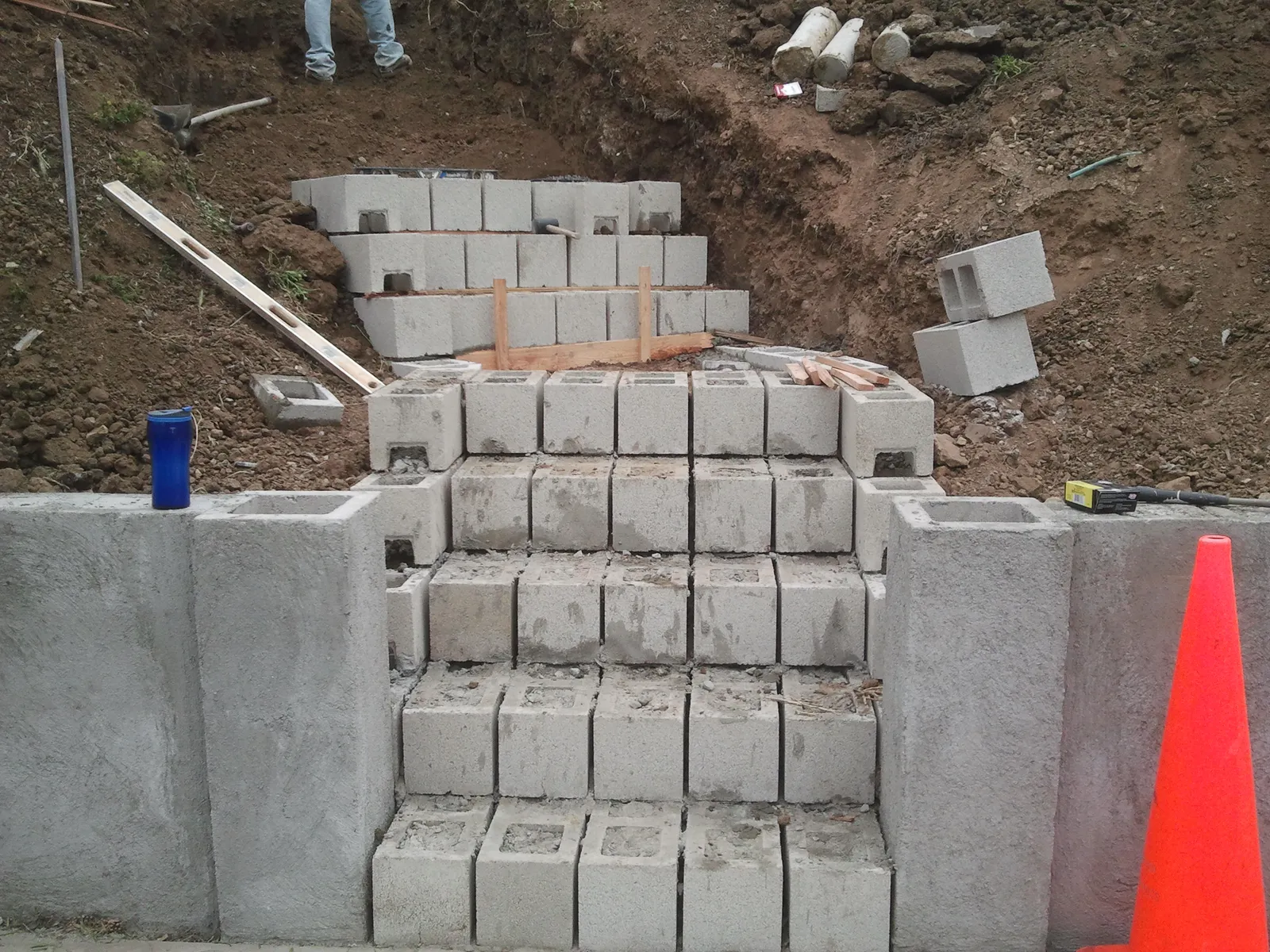
Concrete block stair and stepped retaining walls being built into an excavated San Diego hillside, with a new block wall along the street.

San Diego Foundation Repair That Fixes the Cause, Not Just the Crack

A crack in the drywall is a symptom. The real problem is almost always under the house — expansive clay, a poorly drained lot, or fill that was never compacted. Shaun Bagwell diagnoses what's actually moving your foundation and repairs it at the source, with masonry and concrete built to San Diego code. Owner-operated, and straight with you about what your home needs and what it doesn't.

CSLB #979389 · C-29 Licensed · Bonded $25,000 · Free on-site estimates

How to Tell If Your San Diego Home Has a Foundation Problem

Foundation movement rarely announces itself. By the time the signs reach your walls and floors, the soil below has usually been shifting for months or years — which is exactly why spotting them early is worth real money.

Cosmetic cracks vs. structural cracks

Not every crack means trouble. Knowing the difference keeps you from panicking over a hairline — and from ignoring the ones that matter.

  • Usually cosmetic: thin hairline cracks in stucco or paint, isolated and not widening over time; shrinkage cracks in new concrete.

  • Likely structural: cracks wider than ¼ inch; stair-step cracks running through exterior brick, block or stucco joints; cracks radiating diagonally from the corners of doors and windows; any crack that keeps growing.

The signs that mean it's time to call

One of these alone may be nothing. Several of them together point to soil movement worth assessing:

  • Doors and windows that suddenly stick, drag or won't latch
  • Floors that slope, bounce or feel uneven when you walk them
  • Gaps opening where the floor meets the baseboard, or trim pulling away from the wall
  • A chimney tilting or separating from the exterior wall
  • Cracking spreading through driveways, patios and flatwork around the house
  • Musty crawl-space odors, standing water underneath, or persistent high indoor humidity

The pattern matters more than any single symptom. When cracks, sticking doors and sloping floors show up together, that's the fingerprint of a moving foundation — not settling paint.

(619) 581-2492

The Real Culprits Are in the Ground, Not the Concrete

San Diego foundations fail for reasons specific to this region's soil and its building history. Understanding which one is at work on your lot is the entire job — because the cause dictates the cure.

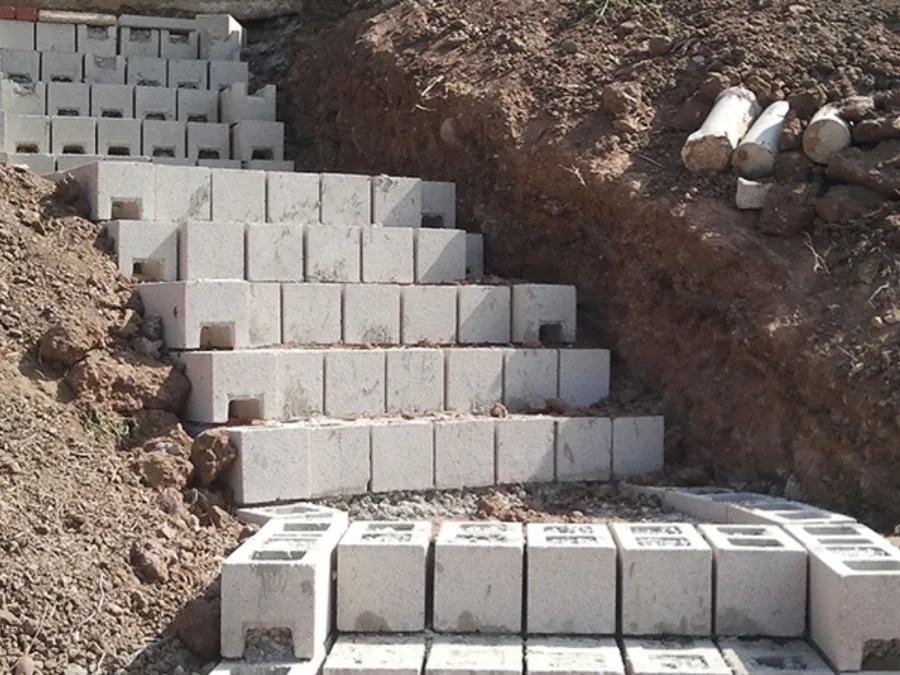
Excavated clay hillside with concrete block footing courses stepped into the cut and perforated drain pipe staged on the soil.

Expansive clay and the swell-shrink cycle

Highly expansive clay soils sit across San Diego's coastal plains, marine terraces and uplands — precisely where most of the county's homes are built.

  • Clay swells when it absorbs moisture — winter rain, over-irrigation, a plumbing leak, or water pooling against the house.
  • It shrinks back through the long dry season, pulling support out from under the footing.
  • Each swell-and-shrink cycle lifts and drops the foundation a little. Over years, that repeated movement cracks concrete and racks the framing above it.

The fix isn't fighting the clay with a bigger slab — it's controlling the moisture so the clay stops cycling.
Uncompacted cut-and-fill: settlement vs. upheaval

Many older San Diego homes sit on cut-and-fill lots graded before modern compaction testing was required. That history produces two opposite failures — sometimes on the same house:

  • Settlement (sinking): poorly compacted fill compresses under the weight of the home, and that corner drops.
  • Upheaval (lifting): where the fill is expansive, added moisture makes it expand upward, pushing the foundation up.
  • Differential movement: one part of the house settles while another heaves, which is what tears foundations apart rather than moving them evenly.

Drainage — the accelerator behind all of it

Water is the common thread. Nearly every failure above gets faster and worse when drainage is bad.

  • Downspouts dumping at the foundation, negative grade sloping toward the house, and irrigation over-watering next to the stem wall all drive moisture into the soil that supports your footings.
  • On San Diego's coast, high humidity, salt air and storm runoff add corrosion and moisture load on top of the soil movement.
  • Correct the water and you remove the engine driving the clay cycle — which is why drainage is often the highest-value part of a real repair.

Diagnosis First, Then the Right Repair — Not One Solution Sold to Every House

The assessment finds the cause; the repair matches it. Here's the range of what that looks like, from the common fixes to the engineered cases.

Structural crack stabilization

For cracked footings, stem walls and masonry foundation walls, the goal is to stop the movement — not just hide it.

  • Repair and reinforce the cracked section so it carries load again
  • Address the soil or drainage cause at the same time, so the crack doesn't simply reopen
  • Match mortar and finish on masonry foundations so the repair disappears into the original work

Footing and concrete foundation repair

Failed concrete footings and foundation walls get rebuilt or extended to current code.

  • Re-pour or reinforce footings that have cracked or lost bearing
  • Tie the repair into adjoining retaining walls and block walls, which often move together with the foundation
  • Build back to Seismic Design Category D reinforcement standards

Masonry underpinning

Where a footing has lost the soil support beneath it, underpinning deepens and strengthens it — a traditional masonry method for localized settlement.

  • Extend the footing down to firmer bearing in controlled sections
  • Restore support without replacing the entire foundation
  • Best suited to localized drops rather than whole-perimeter failure

Drainage and grading correction

On a large share of San Diego lots, this is the repair.

  • Re-slope the grade to move water away from the foundation
  • Add French drains, surface drains and proper downspout discharge
  • Stop the moisture cycle that's driving the clay — the durable fix, not a patch

When it needs engineered piers

For severe settlement that calls for an engineered underpinning system, Shaun coordinates a licensed structural engineer to design and specify it rather than guessing — the accountable, code-correct route. The two systems, so you know the vocabulary:

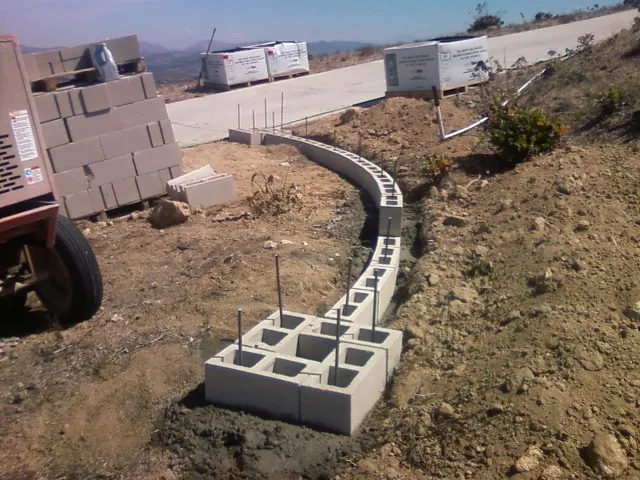
Concrete block core laid on a new footing along a hillside driveway, before its stone facing was added.
  • Steel push piers — hydraulically driven through a bracket on the footing down to load-bearing strata or bedrock, sometimes 20–40 feet on expansive sites. Best for heavier, two-story or masonry structures; each pier takes roughly 2–4 hours to install.

  • Helical piers — screwed into the soil like a large auger. Better for lighter structures, room additions and tight-access sites, with faster installation and less disturbance.

Pier count is the real cost driver — a single corner might need 4; a full side, 10 or more. The engineer maps the settlement and specifies the count.

You get the honest split: what Shaun repairs directly, and where an engineer's stamp belongs.

What San Diego Code Requires for Foundation Work

Structural foundation work is permitted work, and the requirements exist because getting it wrong is dangerous.

The geotechnical soil report

Under Chapter 18 (Soils and Foundations) of the San Diego Building Code:

  • A soil investigation for an expansive-soil site must be prepared by a California-registered civil engineer
  • The written report is submitted with the permit application
  • It must recommend corrective action that will actually prevent structural damage — not merely describe the problem
  • Expected total and differential settlement, bearing capacity and deep-foundation criteria are all part of the record

The permit and inspection process

  • Most structural foundation repair requires a City building permit
  • Existing footings disturbed by excavation must be underpinned or protected against further movement during the work
  • All of it falls under Seismic Design Category D, San Diego's high seismic classification
  • Shaun handles the permit and brings in the engineer when scope requires it — so nothing gets red-tagged, and the fix survives the next buyer's inspector

San Diego Foundation Repair Costs — What to Expect

Foundation pricing tracks the cause and the extent, so treat these 2026 ranges as planning numbers. A proper assessment produces the real figure.

Typical San Diego foundation repair cost ranges, 2026
RepairTypical Range (2026)
Structural crack injection / stabilization$400 – $1,500 per crack
Drainage correction (French drain, regrading)$2,500 – $6,000
Slab lifting (mudjacking / polyurethane foam)$500 – $2,500 per area
Masonry / partial underpinning$5,000 – $20,000
Engineered pier underpinning (push or helical)$1,500 – $3,500 per pier
Full perimeter underpinning (severe)$20,000 – $80,000
Structural engineer report$500 – $2,000
Geotechnical soil investigation$1,500 – $15,000

Read This Before You Hire Any Foundation Company

Foundation repair is where homeowners get oversold. A few things Shaun will tell you for free:

  1. Get an independent structural engineer's report before you pay for major repair — it's the one document that isn't trying to sell you anything.
  2. Demand the pier count and scope in writing before you sign. "We'll see when we get down there" is not a bid.
  3. Know that insurance usually excludes soil settling — the estimate you accept is money out of pocket, so it's worth getting right.
  4. Be skeptical of deep underpinning quoted sight-unseen. On many San Diego homes the real fix is drainage and masonry, not a truckload of piers.

San Diego Foundation Repair — Straight Answers

Are foundation cracks always serious?

No. Thin hairline cracks are often cosmetic shrinkage. The ones to act on are wider than ¼ inch, stair-stepped through masonry, or paired with sticking doors and sloping floors — that combination signals soil movement.

What causes most foundation problems in San Diego?

Expansive clay that swells and shrinks with moisture, uncompacted fill on older cut-and-fill lots, and poor drainage letting water reach the foundation. Fixing the water and soil behavior is usually the lasting repair.

Do I need a permit and an engineer?

Most structural foundation repair requires a City permit, and expansive-soil sites need a soil report from a California-registered civil engineer under Chapter 18. Shaun handles the permit and coordinates the engineer when the scope calls for it.

Do you install piers yourself or work with an engineer?

Shaun self-performs masonry and concrete foundation repair, footing work, underpinning and drainage correction. For engineered deep-pier systems, he coordinates a licensed structural engineer to design and specify them — the code-correct way to handle serious settlement.

How do I know if I need piers or just drainage?

That's what the assessment determines. Localized cracking with a clear drainage cause often resolves without piers; widespread differential settlement is what points toward engineered underpinning.

Are you licensed and insured?

Yes — active California C-29 masonry contractor license (CSLB #979389), $25,000 bond, plus liability insurance. Verify at cslb.ca.gov.

Get an Honest Read on Your Foundation

If your doors are sticking or the cracks are spreading, an assessment now beats a rebuild later. Shaun Bagwell will tell you what's actually happening under your home, what it needs, and what it doesn't — with a workmanship guarantee on the repair.

(619) 581-2492

Call Now(619) 581-2492Estimate