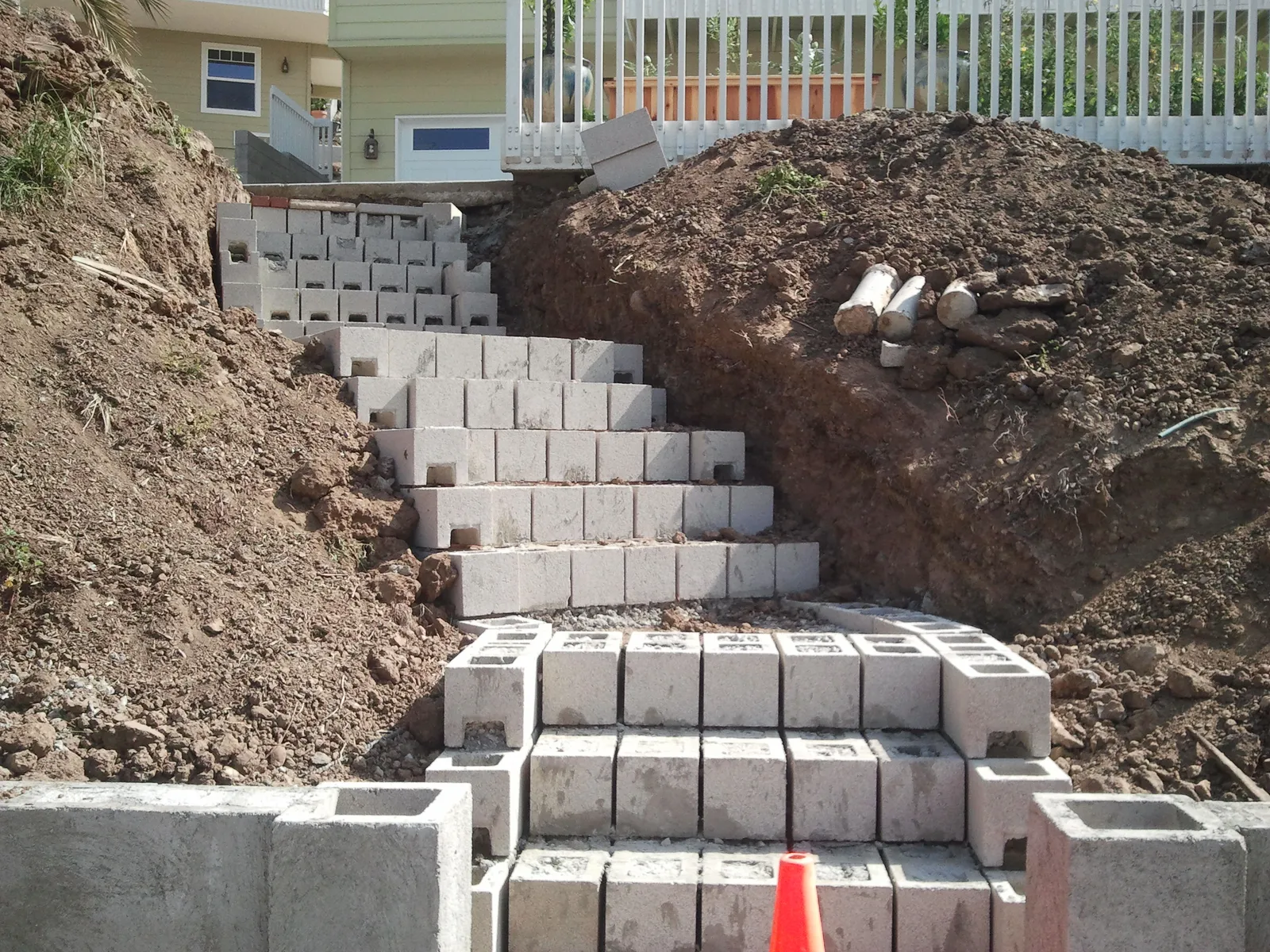
Stepped concrete block stair walls set into a cut hillside of decomposed granite and clay, with drain pipe staged on the slope.

Alpine Masonry Contractor — Based in Town, Built for the Back Country

Most masonry companies serving Alpine drive out from San Diego. Shaun Bagwell works from here — headquartered in Alpine, in the foothills at the base of the Viejas Mountains, building for the exact soil, slope and fire conditions that define this stretch of East County. Local isn't a service-area checkbox for Shaun; it's where the truck is parked.

CSLB #979389 · C-29 Licensed · Bonded $25,000 · Free on-site estimates

Why Being Based in Alpine Actually Matters

Alpine sits along Interstate 8 at 1,800 to 2,600 feet, tucked into rolling chaparral hills below the Viejas Mountains and bordering the Cleveland National Forest — about 27 square miles of foothill village, roughly 15,000 residents, mostly larger lots and small ranches on homes built in the 1970s and '80s. It is not coastal San Diego, and masonry built for the coast doesn't automatically work here.

That's the difference a local contractor brings. Shaun knows Alpine's ground because he builds on it: the decomposed-granite soils, the sloped parcels, the wider temperature swings, and the wildfire exposure that shapes every material choice in this community. When you hire a masonry contractor headquartered in town rather than one adding Alpine to a coverage map, you get someone who has already solved the problems your property presents — not someone learning them on your job.

Foothill Soil, Mountain Climate, Fire Country

Three conditions set Alpine apart from the rest of the county, and each one changes how masonry has to be built.

Sloped lots and decomposed-granite soil

Alpine's foothill terrain means sloped, rocky parcels where decomposed granite and expansive clay meet — and that combination makes retaining walls the most common structural masonry job in town. Building into a grade here demands proper engineering: footings sized to the actual soil, drainage that carries water off the slope instead of letting it build behind the wall, and reinforcement matched to the load. A wall thrown up without that drainage detail is the wall Shaun gets called out to rebuild after the first heavy winter. Hillside lots also mean foundations and slabs have to account for cut-and-fill grading that older Alpine homes often sit on.

Elevation and thermal cycling

At this elevation, Alpine runs hotter in summer and cooler at night than the coast, with real seasonal swings and occasional winter frost the beaches never see. That thermal cycling expands and contracts masonry harder than coastal conditions do, which stresses mortar joints and demands the right mortar and expansion detailing — the opposite problem from the salt-air corrosion that drives coastal repairs. A contractor who uses one countywide spec is wrong in one direction or the other; Alpine calls for its own.

Fire country — where masonry earns its keep

This is the condition that defines building in Alpine. The community has lived through it: the 2018 West Fire burned through Alpine and destroyed more than 50 homes and structures, and the 2003 Cedar Fire — one of the largest wildfires in California history — swept the surrounding back country. Much of Alpine sits within mapped Fire Hazard Severity Zones and the Wildland-Urban Interface, and construction here is governed by California's Chapter 7A wildfire building standards, now folded into San Diego County's 2026 Consolidated WUI Code — which the Alpine Fire Protection District enforces directly.

Masonry is noncombustible by nature, and that's exactly why it does double duty here. A block wall or stone wall is both a privacy barrier and a firebreak — and County rules require fencing within five feet of a structure in a fire hazard zone to be noncombustible or an approved fire-retardant material, a spot where an ordinary wood fence isn't allowed and a CMU or stone wall is the answer. For Alpine homeowners hardening a property against embers, masonry walls, hardscape and noncombustible veneer are among the most effective defensible-space investments there are. (Fire Hazard Severity Zone designation is set parcel by parcel — worth confirming yours before you plan, and Shaun can point you to how.)

Knowing the Right Authority Is Half the Job

Here's a detail that trips up out-of-area contractors: Alpine is unincorporated, so it does not permit through the City of San Diego. Masonry permits, wall designs and inspections run through the County of San Diego Planning & Development Services, on the County's own forms and standards, and fire-zone work answers to the County Fire Code and the Alpine Fire Protection District. A retaining wall over the County threshold, a structural footing, or any work in a fire hazard zone follows County process — not the City process that governs coastal and central San Diego.

Shaun handles that process because he works in it constantly. Knowing which agency reviews your wall, which County form it's designed to, and how the local fire district treats defensible space is the kind of local fluency that keeps a project from getting red-tagged or bounced back for the wrong submittal.

Masonry Suited to How Alpine Actually Lives

On Alpine's larger foothill lots, the work runs to the practical and the substantial: retaining walls to terrace sloped yards and stabilize hillsides, block walls for property lines and fire-safe fencing, and foundation and concrete work engineered for decomposed-granite and expansive soils. With homes here built decades ago, chimney repair and rebuilds to current seismic code are common, as are outdoor fireplaces and stone features that suit the ranch-and-oak character of the area. And for the long driveways and courtyards typical of Alpine parcels, pavers set on a proper base outlast poured concrete on this moving ground.

Every project is built to the same standard Shaun brings countywide — correct engineering, proper permits through the right County authority, quality materials matched to Alpine's conditions, and a workmanship guarantee behind the finished work.

Talk to a Mason Who’s Actually in Alpine

Whether it's a retaining wall for a sloped lot, a noncombustible block wall for a fire-zone property, or a foundation built for foothill soil, Shaun Bagwell is right here in town to build it. Free on-site estimate and a written proposal.

(619) 581-2492

Call Now(619) 581-2492Estimate