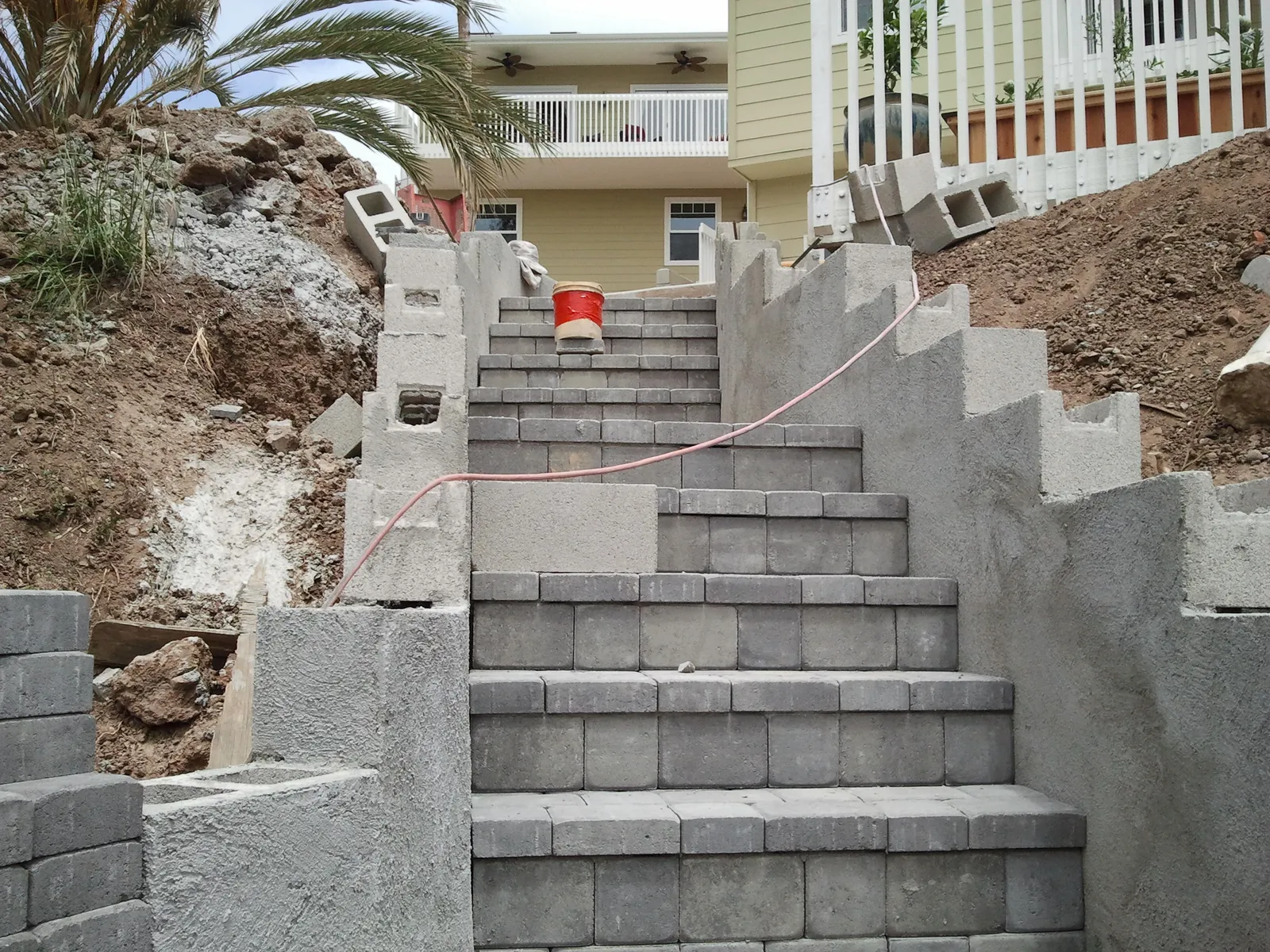
Paver stairway climbing between stepped, plastered concrete block walls on a sloped lot.

Ramona Masonry Contractor for Fire-Safe Walls, Retaining Walls and Hardscape

Block walls, retaining walls, stone and pavers for Ramona homes, ranches and Main Street — built noncombustible for the County’s 2026 wildfire code and permitted through County PDS. Licensed C-29 since 2012. Call for a free on-site estimate.

CSLB #979389 · C-29 Licensed · Bonded $25,000 · Free on-site estimates

Ramona by the numbers

A Valley Town in Fire Country, Built Mostly in the ’70s and ’80s

Ramona is an unincorporated community of about 22,600 people spread over 38 square miles of the Santa Maria Valley — a valley the federal Ramona Valley wine-region ruling describes as “encircled by a ring of hills and mountains.” Seven in ten homes are owner-occupied, and the median house was built in 1983; the 1970s alone account for 28.8% of the housing. A lot of Ramona’s block walls, chimneys and driveways are now 40 to 50 years old.

Fire is the other number that defines building here. The 2007 Witch Fire started east of Ramona and, by the City of Poway’s account, had travelled through Ramona and the San Pasqual Valley by 4 a.m. the next morning; it burned 197,990 acres and destroyed 1,711 structures. The County’s 2026 wildfire code now requires the first five feet around a home to be hardscape or noncombustible — exactly where masonry belongs.

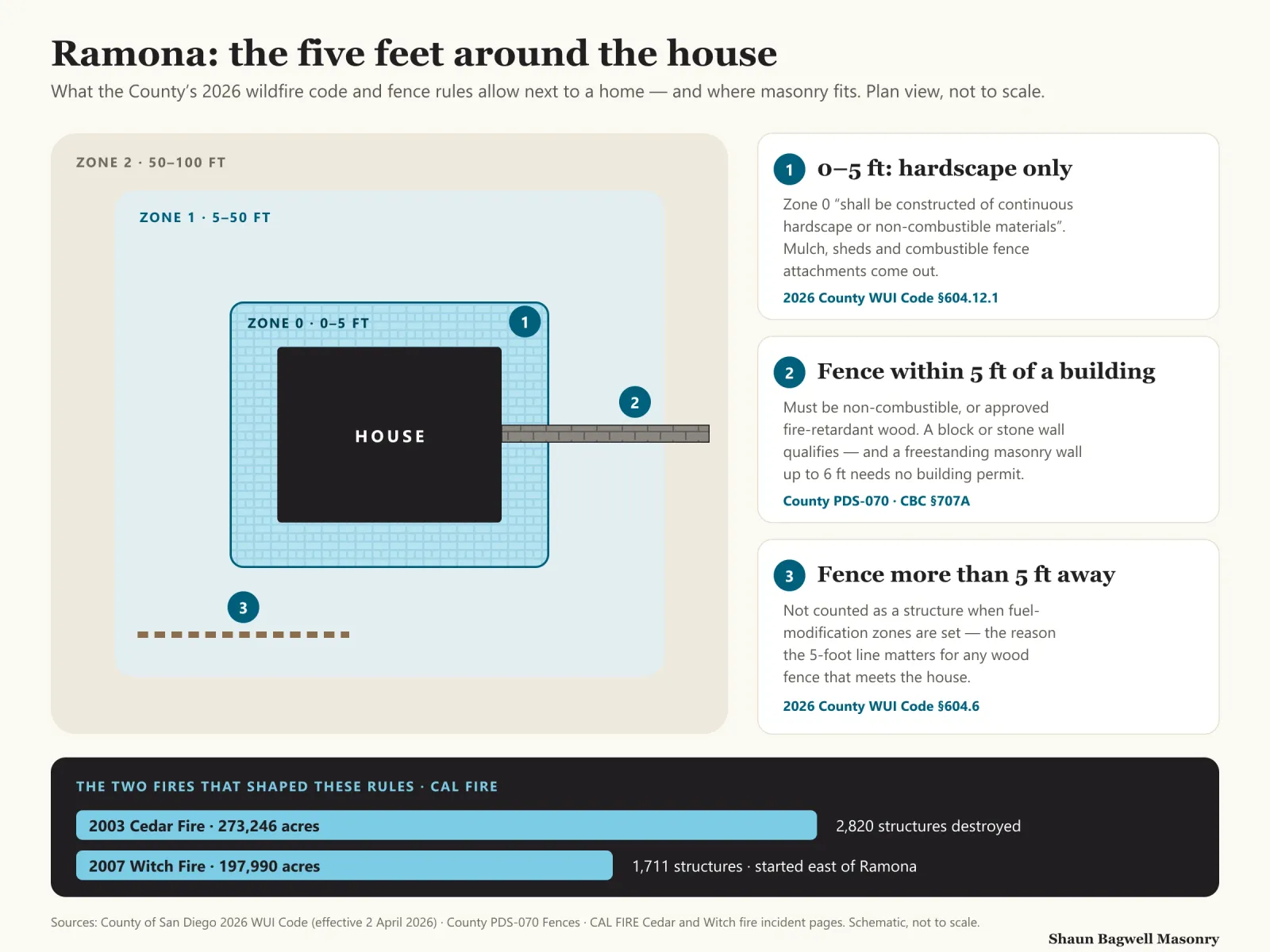
Infographic: plan view of a Ramona home with wildfire zones. Zone 0, the first 5 feet, must be continuous hardscape or noncombustible materials under the 2026 County WUI Code §604.12.1. A block wall attached to the house passes through it; a fence within 5 feet of a building must be noncombustible or approved fire-retardant wood (County PDS-070). A wood fence more than 5 feet away is not counted as a structure for fuel modification (§604.6). Zone 1 is 5–50 feet and Zone 2 is 50–100 feet. Below: the 2003 Cedar Fire burned 273,246 acres and destroyed 2,820 structures; the 2007 Witch Fire, which started east of Ramona, burned 197,990 acres and destroyed 1,711 structures.
The five feet that matter most. Under the County’s 2026 wildfire code, the ring right around the house is hardscape or noncombustible only — pavers, concrete, block and stone. Schematic, not to scale; your fire district confirms what applies to your parcel.Sources: 2026 County WUI Code; County PDS-070; CAL FIRE Cedar Fire; CAL FIRE Witch Fire.

Fire Country, Valley Loam and Rural Lots

Six things shape masonry in Ramona — each documented by CAL FIRE, the County or the federal wine-region ruling, not borrowed from a coastal spec.

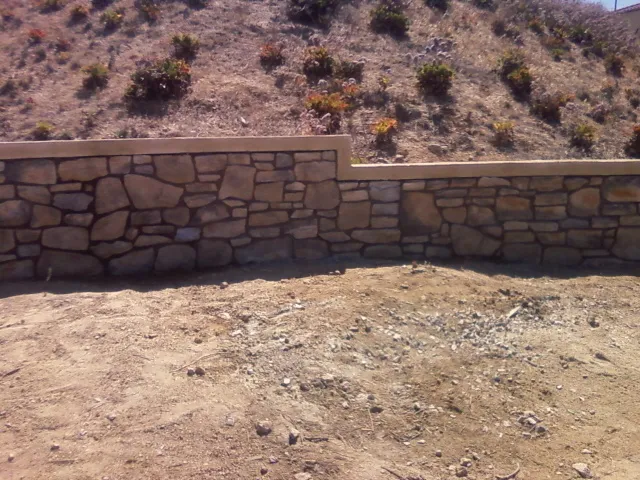
Finished stone-veneer wall with a mortar cap along a dry, brush-covered hillside.

Fire history

Two of the county’s largest fires

CAL FIRE records the 2007 Witch Fire starting in the Witch Creek area east of Ramona: 197,990 acres and 1,711 structures destroyed. NIST traced its spread through San Diego Country Estates, Ramona, Rancho Bernardo, Poway and Escondido. Four years earlier the Cedar Fire burned 273,246 acres and destroyed 2,820 structures. Ramona’s fire and EMS service now runs through the County Fire Protection District, staffed by CAL FIRE. Masonry doesn’t burn — which is why it’s the first material we suggest near a house.
2026 County WUI Code

Zone 0: hardscape next to the house

The County’s Wildland-Urban Interface Code, in effect since 2 April 2026, says the zone from 0 to 5 feet around a building “shall be constructed of continuous hardscape or non-combustible materials” and calls for combustible fence attachments to be removed from it. The County’s fence handout already required any fence within 5 feet of a building to be noncombustible or approved fire-retardant wood. Pavers, concrete walks and a block wall where a wood fence meets the house are the straightforward fixes.

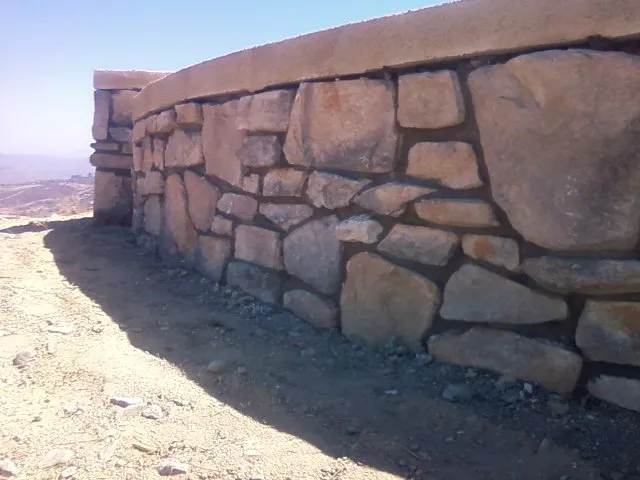
Hand-set natural rock wall with mortared joints.

Ground

Loam valley floor, rocky hills

The federal Ramona Valley wine-region ruling describes valley soils of Ramona, Visalia, Los Posas and Fallbrook loams, ringed by igneous mountains with San Marcos Gabbro on the mid-slopes; County Parks describes the rocky outcrops that bracket the Santa Maria Valley. On the valley floor, footings and slabs need drainage and the right backfill; on the hillsides, trenches can meet rock. Either way, the County’s prescriptive wall designs only fit standard conditions — beyond them, a retaining wall is engineered.

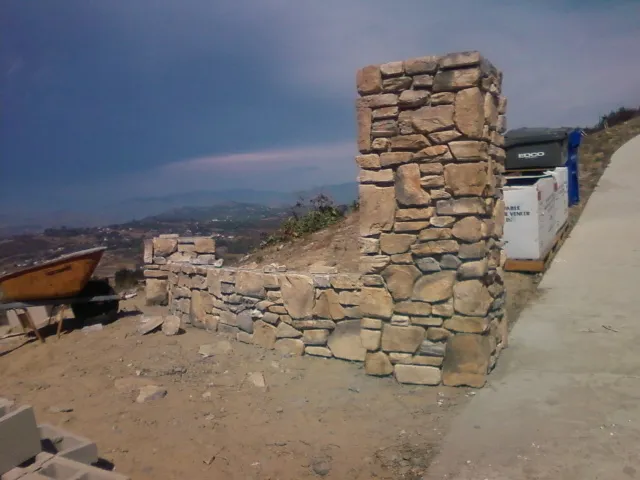
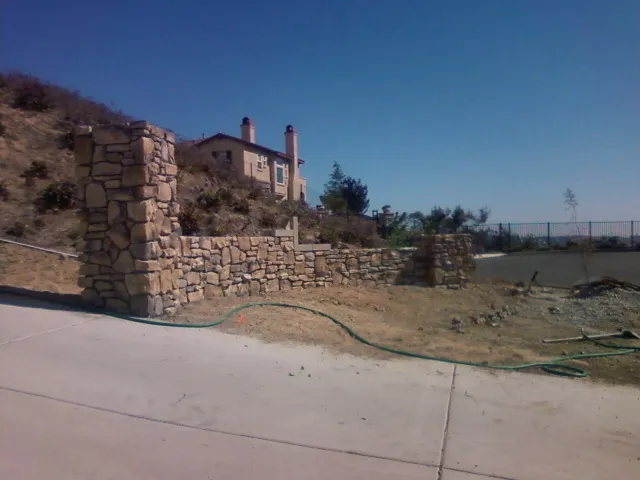
Stone pillar and low stone wall at the entrance of a concrete driveway.

Rural parcels

Ranches, corrals and long driveways

County zoning lets lots of an acre or more in the A70, A72, RR and S8x/S9x zones run open fences — wrought iron, pipe corral or rails — to 72 inches in the front yard, where other lots stop at 42. The 3,867-acre Ramona Grasslands Preserve is open to riders, and the Village Center code speaks of Ramona’s “equestrian and agricultural heritage.” That means masonry pilasters for gates and corral fencing, arena and pad retaining walls, and long concrete driveways.

Tall fieldstone pillar with a flat stone cap and mailbox beside a driveway.

Main Street

Stone and brick on the Village Center

On Main Street the Ramona Village Center Form-Based Code limits facades to brick, adobe, native stone, tinted and textured concrete, wood siding or stucco, puts the heaviest materials at the base, and allows stone and brick fencing up to 8 feet. Commercial and mixed-use masonry there is designed to that code; homes outside the Village follow the general County zoning rules.

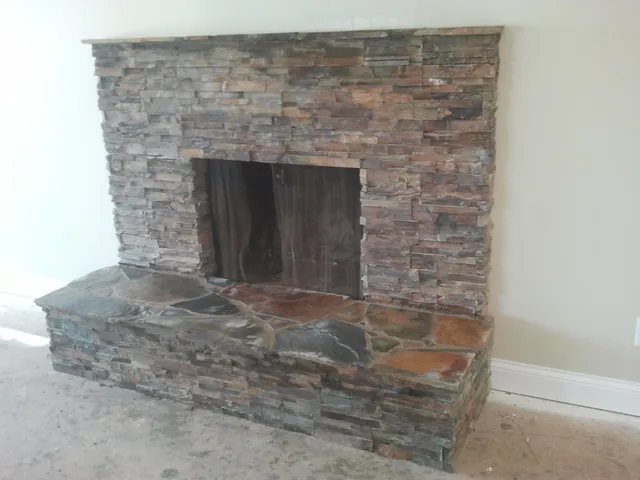
Finished floor-to-ceiling stacked-stone fireplace with a raised hearth.

Housing age

A 1970s building boom, now 50 years on

Census figures show 2,188 of Ramona’s 7,604 homes were built in the 1970s and 44.5% before 1980. Those are the chimneys, block property walls and footings now reaching the end of their first life — repointing, crown and cap replacement, and rebuilding walls that were never grouted solid.

Ramona Permits Run Through the County, Not a City

Ramona is unincorporated, so there is no city building department: walls, footings and fences are permitted by the County of San Diego Planning & Development Services, and fire rules come from the County Fire Protection District. County zoning puts it plainly — a retaining wall’s height is unlimited when it stabilizes a bank, but every retaining wall over 3 feet needs a building permit. The County’s 2026 exemption list is narrower still: a wall is exempt only if it retains no more than 3 feet measured from the top of the footing, sits on level backfill, carries no surcharge and has no structure within 6 feet. Sloped lots rarely meet all of that.

Freestanding masonry walls up to 6 feet that meet zoning need no building permit, and the County publishes a prescriptive block-fence table (8-inch block, 24-inch footing and #4 bars at 24 inches for a 6-foot wall, all cells grouted). Zoning caps solid walls at 42 inches in front and 72 inches at the side and rear, with an Administrative Decision for anything taller. Any fence within 5 feet of a building must be noncombustible.

County of San Diego issues

  • Building and zoning permits (PDS, 5510 Overland Ave)
  • Fire code and defensible space (County Fire / CAL FIRE)
  • Encroachment onto County roads (DPW)

Extra rules on Main Street

  • Village Center Form-Based Code
  • Brick, adobe, native stone or stucco facades
  • Stone and brick fencing to 8 ft
Retaining wall
Over 3 ft = building permit
Exempt only with level backfill, no surcharge and no structure within 6 ft (measured from top of footing).PDS-308 · PDS-110
Freestanding masonry wall
Up to 6 ft — no permit
When it complies with zoning. Prescriptive block-fence table; no special inspection.PDS-070
Solid wall or fence height
42 in front · 72 in rear
Taller with an Administrative Decision (Zoning Ordinance §6708(h)).PDS-308
Open fence, 1-acre+ rural lots
72 in in front yards
Wrought iron, pipe corral or rail, in A70, A72, RR and S8x/S9x zones.PDS-308
Fence within 5 ft of a building
Noncombustible
Or approved fire-retardant wood (County Building Code §707A).PDS-070

Masonry Work We Do in Ramona

For homes, ranches and Main Street buildings — each quoted in writing after a visit to the property.

Retaining walls

Walls for building pads, arenas, driveways and terraced yards, with gravel backfill and drains behind them — permitted through County PDS over 3 feet, and engineered where the slope or a driveway loads the wall.

Gate pilasters and stone entries

Stone and block pilasters for ranch gates and corral fencing, entry columns and mailbox pillars, on a footing sized for the gate they carry.

Stone and brick for Main Street

Native stone, brick and adobe-style work for Village Center storefronts and walls, designed to the Form-Based Code’s materials list.

Not sure which of these your property needs? Shaun will look at it with you — free, on site, no obligation.

(619) 581-2492

What Masonry Costs in Ramona

These are the 2026 ranges we quote across San Diego County. In Ramona the swing comes from distance and access on rural parcels, rock in the trench, and whether a wall fits the County’s prescriptive tables or needs engineering.

What Masonry Costs in Ramona
ProjectTypical 2026 range
Retaining wall, CMU block, under 4 ft$35–$55 per sq. face ft.
Retaining wall, engineered, 4–8 ft$45–$120 per sq. face ft.
Natural stone retaining wall$80–$250 per sq. face ft.
Block wall, CMU with stucco or veneer$250–$400 per linear ft.
Patio or pavers$18–$40 per sq. ft.
Masonry chimney repair$1,500–$8,000+ by scope

Ranges are for comparison, not a quote. Engineering, County permit fees and any Administrative Decision for over-height walls are priced separately and shown on the proposal.

Where We Work In and Around Ramona

All of Ramona is permitted through the County. What changes from one part of the valley to the next is the terrain and the kind of property.

  • Main Street & Village CenterStorefronts and mixed use under the Form-Based Code: brick, adobe and native stone facades, stone and brick fencing to 8 ft.
  • San Diego Country EstatesThe adjacent community on Ramona’s east side, in the path the 2007 Witch Fire took toward Ramona. Fire-safe walls and Zone 0 hardscape.
  • Santa Maria Valley & the GrasslandsValley-floor loam around the 3,867-acre Ramona Grasslands Preserve. Corral pilasters, pads and long driveways.
  • Ramona Valley wine countryThe 89,000-acre federal wine region ringed by hills. Stone walls, terraces and patios for tasting rooms and estates.
  • Ramona Airport areaHome of CAL FIRE’s Ramona Air Attack Base on Montecito Road. Block walls and concrete for the homes and businesses around it.
  • Highway 67 toward PowayHillside lots along the road down to Poway. Retaining walls on slopes and rock.

Ramona Masonry Questions

Straight answers to what Ramona homeowners ask before they hire. Anything else — call, and Shaun answers it himself.

(619) 581-2492

Do I need a permit for a retaining wall in Ramona?

Usually. Ramona is unincorporated, so County of San Diego rules apply: every retaining wall over 3 feet needs a building permit (PDS-308), and the County’s 2026 exemption only covers walls retaining 3 feet or less from the top of the footing with level backfill, no surcharge and no structure within 6 feet. We confirm it with PDS and pull the permit.

How tall can a block wall be in Ramona without a permit?

A freestanding masonry wall up to 6 feet needs no building permit if it meets County zoning (PDS-070). Zoning limits solid walls to 42 inches in front and side-street setbacks and 72 inches at the side and rear; taller needs an Administrative Decision. On lots of an acre or more in rural zones, open fences like pipe corral or wrought iron can be 72 inches in front.

What is Zone 0, and what can go there?

Zone 0 is the first 5 feet around a building. Under the County’s 2026 Wildland-Urban Interface Code, in effect since 2 April 2026, it “shall be constructed of continuous hardscape or non-combustible materials,” and combustible fence attachments are removed. Pavers, concrete, block and stone all qualify. Your fire district confirms what applies to your parcel.

Can a wood fence touch my house in Ramona?

Not an ordinary one. The County requires any part of a fence within 5 feet of a building to be noncombustible or approved fire-retardant wood (PDS-070). The common fix is a short masonry wall or pilaster where the fence meets the house, with the wood fence starting more than 5 feet out.

Are there special rules for masonry on Main Street?

Yes. The Ramona Village Center Form-Based Code limits facades to brick, adobe, native stone, tinted and textured concrete, wood siding or stucco, and allows stone and brick fencing up to 8 feet. Homes outside the Village Center follow the general County zoning rules.

Can I get a rebate for replacing my lawn with pavers?

Possibly. Regional turf-replacement rebates start at $2 per square foot through the San Diego County Water Authority’s program, but only permeable surfaces count — solid concrete and grouted paving don’t. Unincorporated residents may also be eligible for County rebate programs. Get pre-approval before any work starts.

How much does a block wall cost in Ramona?

Most reinforced CMU walls with a stucco or veneer finish run $250–$400 per linear foot in 2026. Long runs on rural parcels, rock in the trench and access move the number; you get an itemised written proposal after a free site visit.

How do I check that you’re licensed?

Shaun Bagwell Masonry holds California C-29 Masonry licence #979389, issued 14 December 2012, with a $25,000 contractor bond. Look it up at cslb.ca.gov → “Check a License”.

Get Your Ramona Wall or Hardscape Priced

Call Shaun at (619) 581-2492 or send the form. He’ll walk the property, tell you what the County and the 2026 fire code will require, and put a written, itemised price in your hands.

(619) 581-2492

Call Now(619) 581-2492Estimate