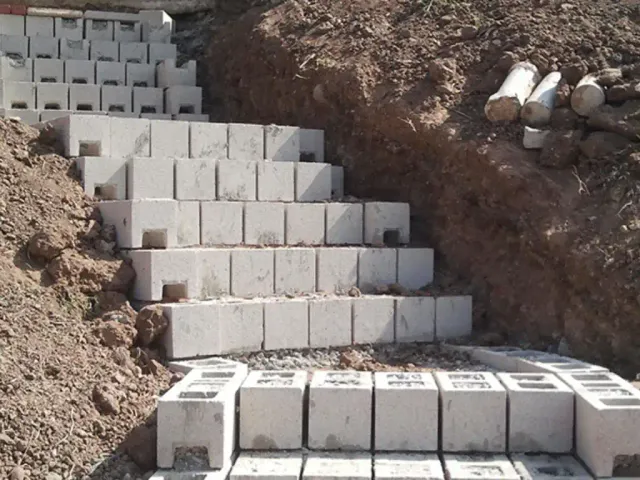
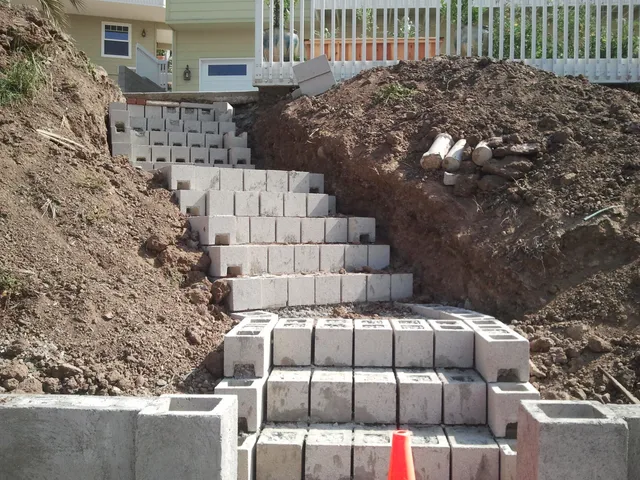
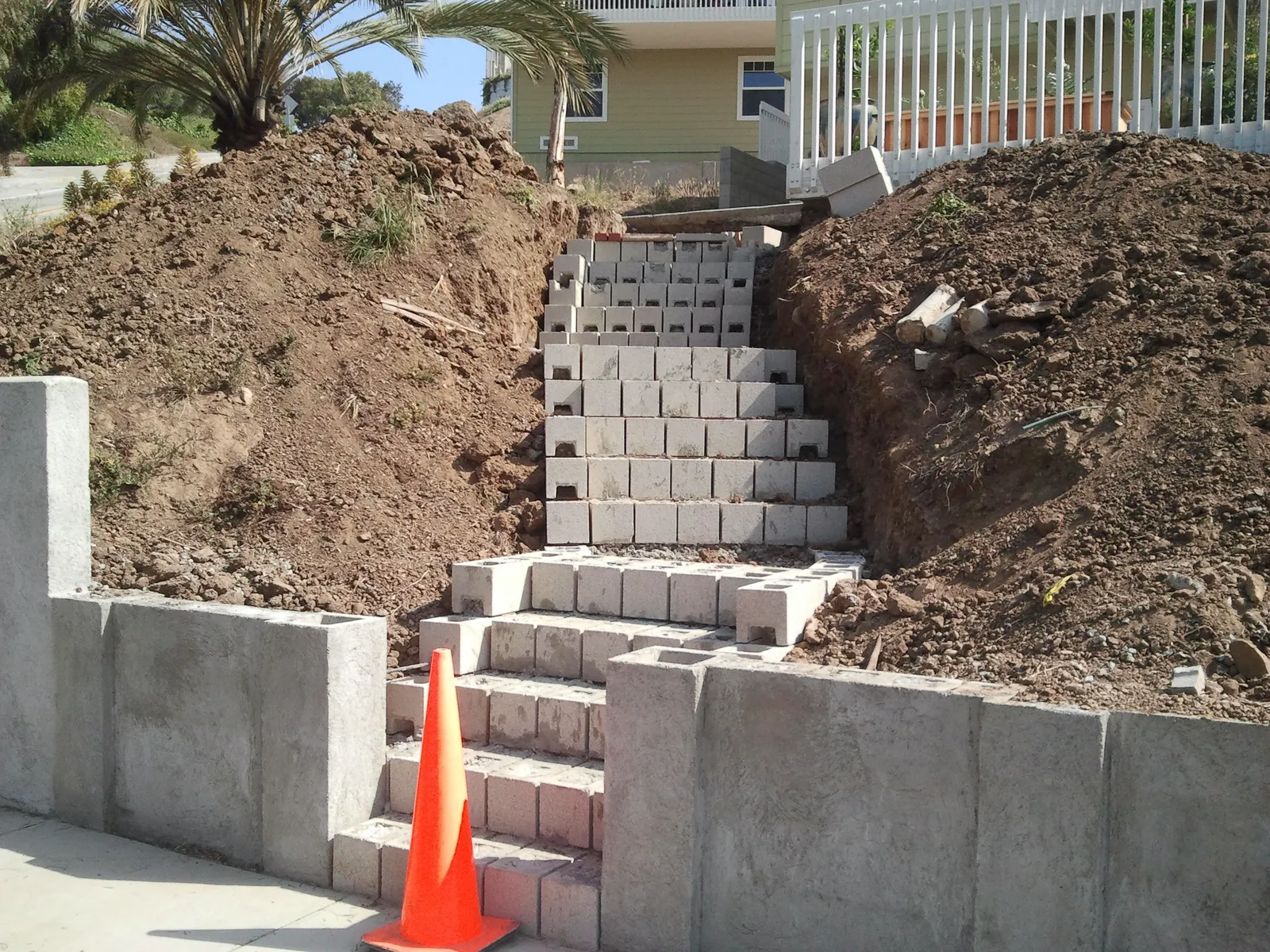
Concrete block stair rising up a cut slope between newly laid block retaining walls.

Lemon Grove Masonry Contractor for Block Walls Built on Clay

Front-yard walls to the city’s 42-inch rule, block and retaining walls with footings and drainage made for Lemon Grove’s shrink-swell clay, and chimney and patio work for its 1950s-era homes. Licensed C-29 — and we handle the in-person permit counter for you.

CSLB #979389 · C-29 Licensed · Bonded $25,000 · Free on-site estimates

Lemon Grove by the numbers

A Post-War Town on Clay

Lemon Grove became California’s 414th city on 1 July 1977, and it still puts “Best Climate on Earth” on the base of the giant lemon at Broadway and Lemon Grove Avenue — a 1928 parade float made permanent in 1930. It is small and dense: 27,627 people (2020 Census) on 3.88 square miles, about nine miles from downtown San Diego. Its homes are older than its neighbours’: the median was built in 1969, one in four went up in the 1950s alone, and 61.5% are detached single-family houses — mostly owner-occupied, unlike La Mesa next door.

What sets Lemon Grove apart for a mason is the ground. The City’s own Safety Element says that, except for the east Broadway area, all the soil types in the city have high clay contents with high shrink-swell potential that “can cause building foundations to shift and crack”, that several minor slope failures have occurred, and that Federal Boulevard floods significantly nearly every year. Footings, drainage and joints decide whether a wall or slab lasts here.

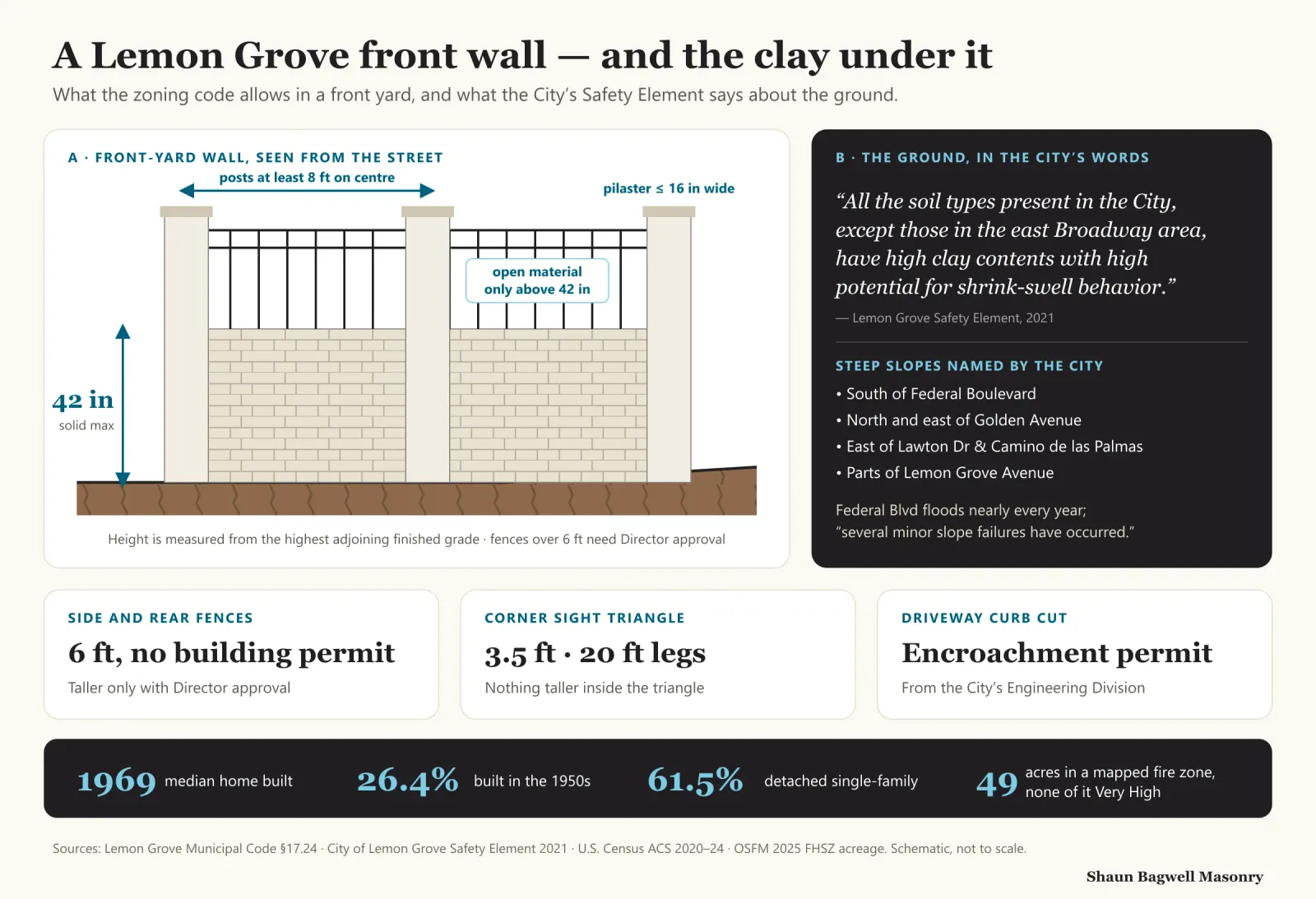
Infographic: a Lemon Grove front wall and the clay under it. Panel A shows a front-yard wall seen from the street: a solid masonry base up to 42 inches, open material only above 42 inches, masonry pilasters no more than 16 inches wide, and posts at least 8 feet on centre; height is measured from the highest adjoining finished grade, and fences over 6 feet need Director approval. Panel B quotes the City Safety Element: all soil types in the city except the east Broadway area have high clay contents with high shrink-swell potential; steep slopes are south of Federal Boulevard, north and east of Golden Avenue, east of Lawton Drive and Camino de las Palmas, and along parts of Lemon Grove Avenue; Federal Boulevard floods nearly every year and several minor slope failures have occurred. Cards: side and rear fences up to 6 feet need no building permit; nothing over 3.5 feet in the 20-foot corner sight triangle; driveway curb cuts need an encroachment permit. Strip: median home built 1969, 26.4% built in the 1950s, 61.5% detached single-family, 49 acres in a mapped fire zone with none Very High.
The front wall is set by the code; how long it lasts is set by the clay. Solid masonry stops at 42 inches in the front yard, with open iron above. Underneath, almost every Lemon Grove lot sits on shrink-swell clay. Schematic, not to scale.Sources: LGMC §17.24; Lemon Grove Safety Element 2021; Census ACS 2020–24; OSFM 2025 FHSZ acreage.

Shrink-Swell Clay, Named Slopes and a Street That Floods

The City of Lemon Grove documents its own ground better than most. These six conditions come from its 2021 Safety Element, its zoning code and Census data — and each changes how a wall, slab or chimney should be built.

Hollow concrete block stair courses laid into an excavated earth slope.

Soil

Clay almost everywhere

Except for the east Broadway area, the City says all its soils have high clay content and high shrink-swell potential. Clay that swells when wet and shrinks when dry lifts and drops footings, slabs and walls through the seasons — a problem big enough that a landmark 1973 ASCE paper put US damage from expansive soils above $2.3 billion a year. Our answer is deeper, reinforced footings, gravel instead of clay behind walls, and control joints placed where slabs will crack anyway.

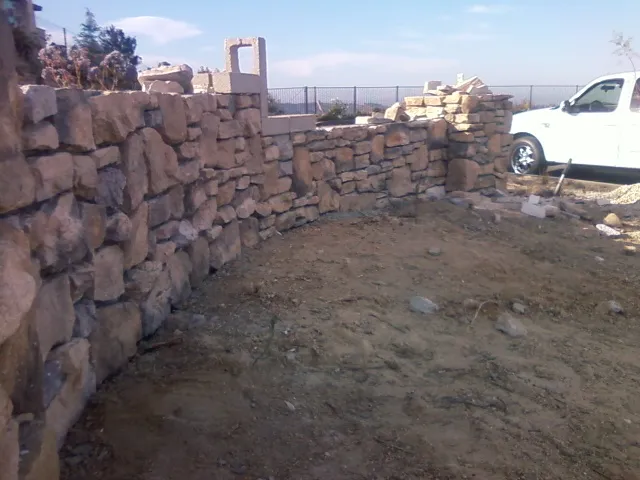
Natural stone veneer being set on a curved block wall, with stone staged on the slope below.

Slopes

The streets the City calls steep

The Safety Element names the steep slopes: south of Federal Boulevard, north and east of Golden Avenue, east of Lawton Drive and Camino de las Palmas, and around parts of Lemon Grove Avenue. It records several minor slope failures and says geotechnical studies are required for projects involving grading. A retaining wall on one of these lots gets an engineered design, not a guess.

Stepped block stair walls set into a clay hillside cut with perforated drain pipe staged on the slope.

Water

Federal Boulevard floods nearly every year

The City’s primary flood zone runs along Federal Boulevard, with “significant flooding” almost every year, and residential streets see localized flooding in prolonged rain. On clay that drains slowly, water is what tips a wall or heaves a patio. Every wall we build has drain rock and a perforated pipe behind it, and every slab or patio falls away from the house.

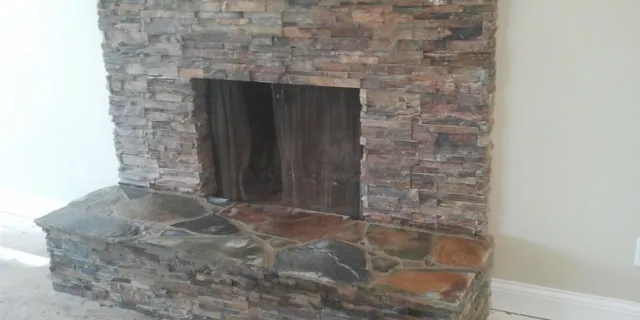
Stacked-stone fireplace wall with a raised hearth, seen at an angle.

Housing age

Built before modern seismic codes

With a 1969 median and 51.2% of homes built before 1970, the City notes that “much of Lemon Grove was developed prior to modern building seismic codes”. No known active fault crosses the city — Rose Canyon and Coronado Bank are about 14 miles west — but older unreinforced chimneys are vulnerable to shaking from afar: after the 2014 South Napa quake, FEMA teams counted more than 100 damaged brick chimneys.

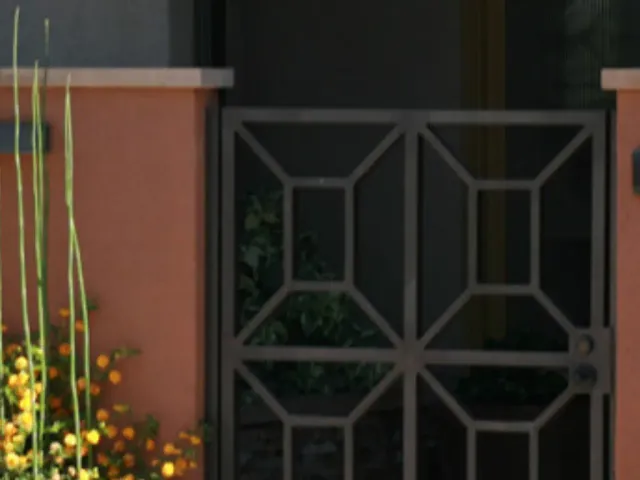
Stucco masonry pilasters framing a decorative wrought-iron gate at a home’s entry.

Front yards

Single-family streets, 42-inch front walls

With 61.5% of homes detached and 52.5% owner-occupied, Lemon Grove is a front-yard town — and its code is specific: solid masonry is capped at 42 inches in the front and street-side setbacks, with open material such as wrought iron above, pilasters no wider than 16 inches and posts at least 8 feet apart. Height counts from the highest adjoining grade. We design block and pilaster walls to that rule from the start.

Fire

Fire risk the City calls low

CAL FIRE’s 2025 map puts just 49 acres of Lemon Grove in a fire hazard zone — 22 High and 27 Moderate, none Very High — a strip along SR-94 at the foot of a hill in La Mesa. The Safety Element calls the risk of wildland fire low. Heartland Fire & Rescue serves the city. For most homes the fire question is the chimney and the fire pit, not the wildland edge.

An In-Person Permit Counter and a 30-Day Review

Lemon Grove still runs permits the old way. The Building Division at City Hall, 3232 Main Street, takes in-person applications only — no online or digital submittals — at a counter open Monday to Thursday, 7:30 a.m. to noon, closed Fridays. It wants four full-size plan sets, and each plan review takes 30 days minimum. Planning should be consulted first, and contractors need a City business license. We plan the schedule around that review so it doesn’t surprise you.

For walls, the zoning code does most of the work. Residential fences up to 6 feet need no building permit; anything taller needs the Community Development Director’s approval. In front and street-side setbacks, solid walls stop at 42 inches with open material above. The City doesn’t publish its own retaining-wall permit height: the state building code exempts walls up to 4 feet measured from the bottom of the footing that hold back no slope, driveway or other load, and we confirm each wall with the Building Division at (619) 825-3847 rather than assume.

Driveway curb cuts, and replacing curb, gutter or sidewalk, are work in the City right-of-way and need an encroachment permit from the Engineering Division (619-825-3810).

City of Lemon Grove handles

  • Building Division — 3232 Main St, in person
  • Planning — check first
  • Engineering — curb cuts and right-of-way

Next door, different rules

  • Spring Valley (east) — County of San Diego
  • La Mesa (north) — City of La Mesa
  • San Diego (west and south) — City of San Diego
Front and street-side setback
42 in solid
Open material only above 42 inches.§17.24.050(J)
Masonry pilasters
≤ 16 in wide
Posts or columns at least 8 ft on centre.§17.24.050(J)(6)
Side and rear fences
6 ft — no building permit
Over 6 ft only with Director approval. Measured from the highest adjoining grade.§17.24.040–.050
Corner sight triangle
3.5 ft · 20 ft legs
Nothing taller inside the triangle.§17.24.030(B)(5)
Driveway curb cut
Encroachment permit
Engineering Division, for any work in the right-of-way.City encroachment permit
Retaining wall
State baseline: ≤ 4 ft, no load
Measured from the bottom of the footing. Confirmed with the City per wall.CBC §105.2

Masonry Work We Do in Lemon Grove

Built for clay, drawn to the City’s front-yard rules, and walked through the in-person permit counter for you — every job quoted in writing after a site visit.

Retaining walls

Engineered walls for the City-named slopes off Federal Boulevard, Golden Avenue and Lawton Drive, with gravel backfill — never native clay — and a perforated drain behind every wall.

Brick and stone repair

Repointing in matched mortar, cracked brick replaced, and stone veneer and planters rebuilt on older homes.

Pool decks

Paver and stone pool decks and coping, with drainage and expansion details that suit clay soil.

Not sure which of these your property needs? Shaun will look at it with you — free, on site, no obligation.

(619) 581-2492

What Masonry Costs in Lemon Grove

These are the 2026 ranges we quote across San Diego County, and Lemon Grove jobs fall inside them. Clay and slope push footing depth and drainage up the range; a front wall with pilasters and iron sits higher per foot than plain block.

What Masonry Costs in Lemon Grove
ProjectTypical 2026 range
Retaining wall, CMU block, under 4 ft$35–$55 per sq. face ft.
Retaining wall, engineered, 4–8 ft$45–$120 per sq. face ft.
Block wall, CMU with stucco or veneer$250–$400 per linear ft.
Patio or pavers$18–$40 per sq. ft.
Masonry chimney repair$1,500–$8,000+ by scope

Ranges are for comparison, not a quote. Engineering, geotechnical studies where grading is involved, City permit and encroachment fees, and wrought-iron work are priced separately and shown on the proposal.

Around Lemon Grove

Lemon Grove is small — 3.88 square miles — so we describe it by its streets. Each note says what tends to drive masonry work there.

  • Broadway & the giant lemonThe city’s centre, by the 1930 lemon at Broadway and Lemon Grove Avenue and the Lemon Grove Depot trolley stop. Front walls, brick repair, walkways.
  • East BroadwayThe one area the Safety Element leaves out of its high-clay finding. Footings still get a soils check, but the ground is kinder here.
  • Federal BoulevardThe City’s main flood zone, with steep slopes to the south. Retaining walls with real drainage, and slabs that shed water.
  • Golden AvenueNamed for steep slopes to the north and east. Engineered retaining walls and terracing.
  • Lawton Drive & Camino de las PalmasSteep ground to the east, named in the Safety Element. Hillside walls, steps and drainage.
  • Massachusetts AvenueAround the Orange Line’s Massachusetts Avenue stop. Older homes on clay: footings, block walls and chimneys.

Lemon Grove Masonry Questions

Straight answers to what Lemon Grove homeowners ask before they hire. Anything else — call, and Shaun answers it himself.

(619) 581-2492

How tall can a front-yard wall be in Lemon Grove?

Solid walls in the front yard and street-side setback are capped at 42 inches; anything above that must be open material, such as wrought iron. Masonry pilasters can be up to 16 inches wide, with posts at least 8 feet apart (Lemon Grove Municipal Code §17.24.050). Height is measured from the highest adjoining finished grade.

Do I need a permit for a block wall or fence in Lemon Grove?

Residential fences up to 6 feet don’t need a building permit, but they must meet the zoning heights; anything over 6 feet needs the Community Development Director’s approval. For retaining walls the City doesn’t publish its own height, so we confirm each wall with the Building Division — the state baseline exempts only walls up to 4 feet from the bottom of the footing that hold back no slope or load.

Why does Lemon Grove soil crack walls and driveways?

Because, according to the City’s Safety Element, almost all of it is high-clay soil with high shrink-swell potential — everywhere except the east Broadway area. It swells when wet and shrinks when dry, moving footings and slabs. Reinforced footings, gravel backfill, drainage and well-placed control joints keep that movement from cracking the work.

My house is on a slope near Federal Boulevard or Golden Avenue. What changes?

Those are among the steep areas the City names, along with east of Lawton Drive and Camino de las Palmas and parts of Lemon Grove Avenue. The City requires geotechnical studies for projects that involve grading, so a retaining wall there is engineered and drained rather than built to a rule of thumb.

Do I need a permit to widen my driveway?

If it involves a curb cut or replacing curb, gutter or sidewalk, yes — that’s work in the City right-of-way and needs an encroachment permit from the Engineering Division (619-825-3810).

How long does a Lemon Grove permit take?

Plan on at least 30 days per plan review. The Building Division accepts applications in person only, Monday to Thursday mornings, with four full-size plan sets. We handle the counter visits and build the review time into your schedule.

Is my 1950s chimney safe?

Maybe not without a look. The City notes that much of Lemon Grove was built before modern seismic codes, and unreinforced chimneys are the part of an older house most likely to crack in an earthquake — even one centred miles away. An inspection, and a rebuild above the roofline where needed, is the fix.

How do I check that you’re licensed?

Shaun Bagwell Masonry holds California C-29 Masonry licence #979389, issued 14 December 2012. Look it up at cslb.ca.gov → “Check a License”. California requires a licensed contractor for any job of $1,000 or more, or any job that needs a permit.

Get Your Lemon Grove Wall or Patio Priced

Call Shaun at (619) 581-2492 or send the form. He’ll check the ground and the slope, tell you what the City will require, and put a written, itemised price in your hands — then take care of the permit counter.

(619) 581-2492

Call Now(619) 581-2492Estimate