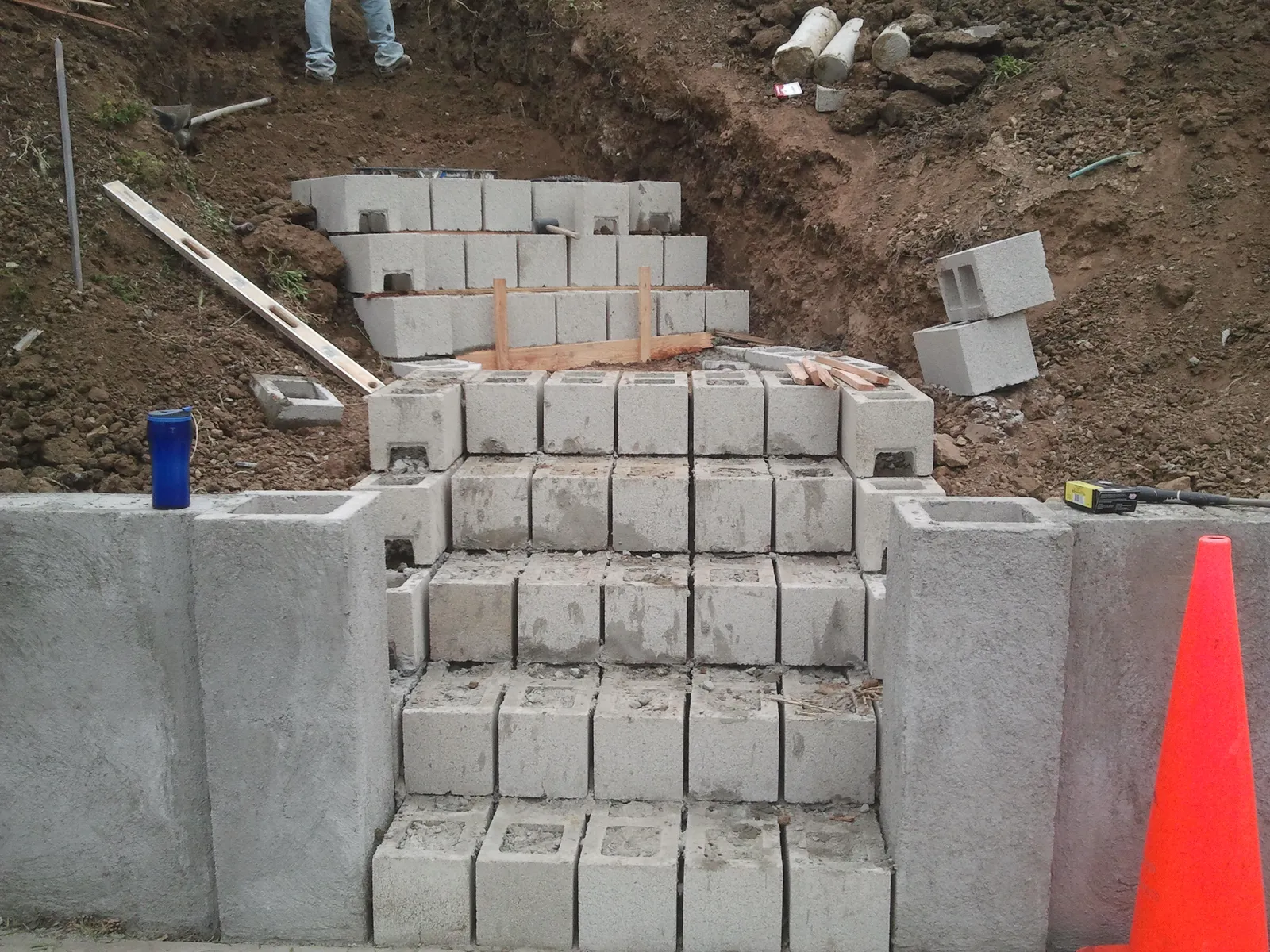
Concrete block stair and stepped retaining walls being laid into an excavated slope, with block coursing staged on the cut.

El Cajon Masonry Contractor for Block Walls, Retaining Walls and Brick

Walls, brick and stone for El Cajon homes, designed for the valley’s clay, slopes and summer heat and permitted with the right agency. Built by a licensed C-29 mason based just up I-8 in Alpine. Call for a free on-site estimate — Shaun answers himself.

CSLB #979389 · C-29 Licensed · Bonded $25,000 · Free on-site estimates

El Cajon by the numbers

What El Cajon’s Homes and Ground Ask of a Mason

El Cajon — “the Box”, after the valley ringed by hills that gave Rancho El Cajón its name — is a city of about 102,000 people on 14.5 square miles, incorporated in 1912. Its homes are mostly from one era: the median house was built in 1974, and two in three went up before 1980. That shows in the work: block walls from the 1960s and ’70s that have leaned or cracked, mortar that has eroded out of brick, chimneys built before today’s reinforcement rules, and footings poured without a soils check.

The ground is less uniform than the valley floor suggests. Clay hills on the west, a sandy valley with a clay subsoil in the middle and decomposed granite to the east each need a different footing and drainage detail — the section below shows where. Add NOAA’s count of 56.8 days a year at 90°F or hotter and a rainy season that delivers 83% of the year’s rain between November and March, and the cracks El Cajon homeowners call about start to make sense.

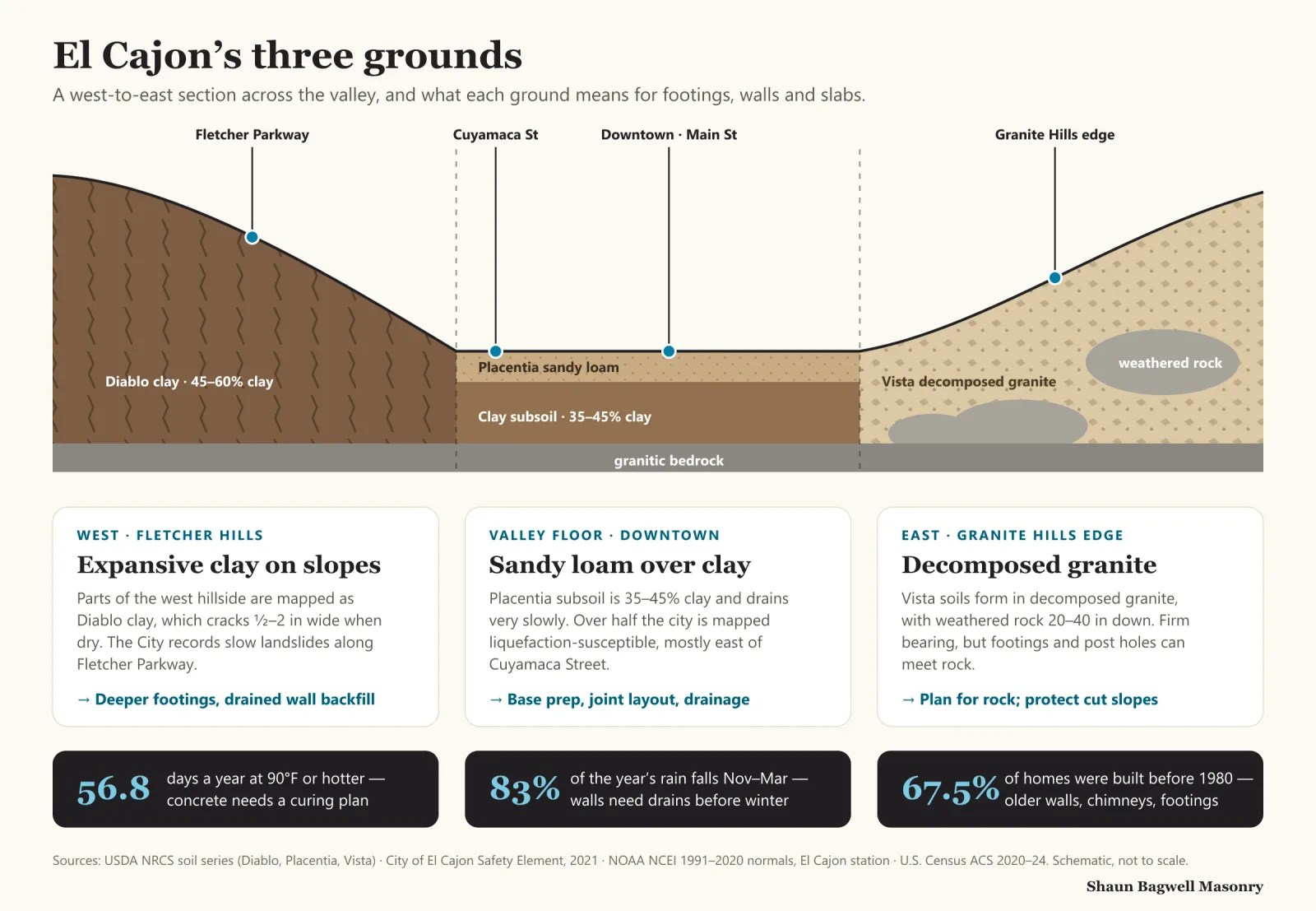
Infographic: a schematic west-to-east cross-section of the El Cajon valley. West, Fletcher Hills: expansive Diablo clay, 45–60% clay, with historic slow landslides along Fletcher Parkway — deeper footings and drained wall backfill. Valley floor downtown: Placentia sandy loam over a 35–45% clay subsoil, liquefaction-susceptible soils mostly east of Cuyamaca Street — base prep, joint layout and drainage. East, Granite Hills edge: Vista decomposed granite with weathered rock 20–40 inches down — plan for rock and protect cut slopes. Below: 56.8 days a year at 90°F or hotter, 83% of rain falls November to March, and 67.5% of homes were built before 1980.
Three grounds, three footing details. Expansive clay on the west hillside, sandy loam over slow-draining clay on the valley floor, and decomposed granite over rock to the east. Schematic, not to scale — a site visit (and, for tall walls, a soils report) decides the real design.Sources: USDA NRCS soil series (Diablo, Placentia, Vista); City of El Cajon Safety Element 2021; NOAA NCEI normals, El Cajon; Census ACS 2020–24.

Clay Hills, a Clay-Bottomed Valley and Long Hot Summers

Six local conditions decide how masonry has to be built in El Cajon. Each comes from the City’s own Safety Element, federal soil surveys or NOAA records — not from a generic San Diego spec.

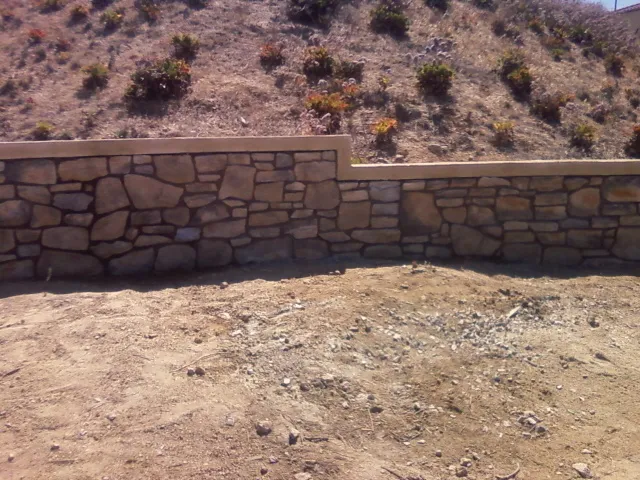
Finished stone-veneer retaining wall with a mortar cap holding back a dry, planted hillside.

Fletcher Hills · west slopes

Expansive clay and slow landslides

Parts of the west hillside are mapped as Diablo clay — 45 to 60 percent clay that opens cracks ½ to 2 inches wide when dry and closes them when wet. The City’s Safety Element records historic “slow, rotational slides” along Fletcher Parkway and puts the highest landslide risk in northwest El Cajon. A retaining wall here needs clean gravel backfill, a perforated drain at the heel and a footing designed for the soil — never native clay packed behind the wall.
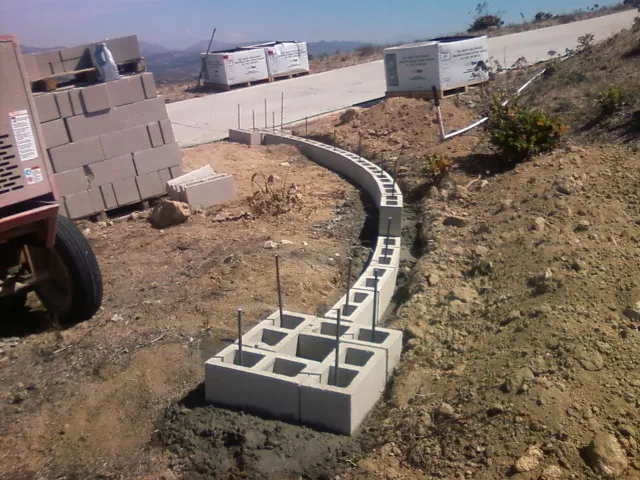
Concrete block wall core laid on a new footing beside a driveway, cells open for grout and reinforcing steel.

Downtown · valley floor

Sandy loam over a slow-draining clay

Downtown sits on Ramona and Placentia sandy loams. Placentia’s subsoil is 35–45% clay with “very slow permeability”, so water that gets under a slab or patio stays there. The Safety Element maps liquefaction-susceptible soils across more than half the city, mostly east of Cuyamaca Street, and puts much of central El Cajon and the I-8 corridor in a 500-year floodplain. Slabs, patios and footings need the right base depth, fall away from the house and joints placed to control cracking.

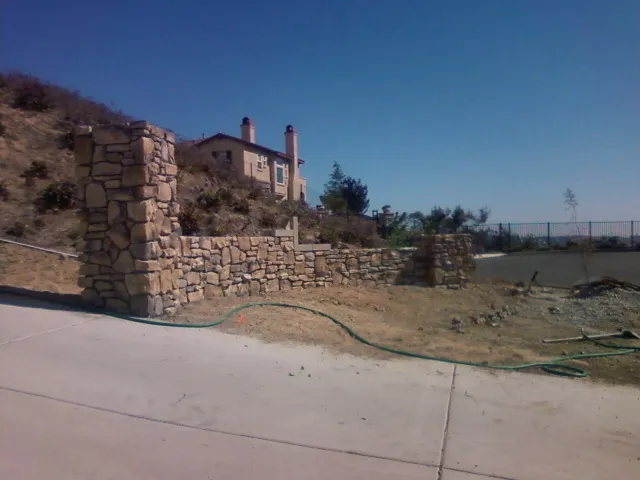
Stone pillar and low stone wall at the edge of a concrete driveway on a dry hillside lot.

Granite Hills · east side

Decomposed granite over rock

East-side hills are Vista and Cieneba soils, formed in decomposed granite, with weathered rock 20 to 40 inches down on Vista ground. It is firm bearing for a block wall footing, but trenches and post holes regularly meet rock, and cut DG slopes need drainage and cover once they are opened. We price for rock where the soil says to expect it, so it isn’t a surprise change order.

Climate

Fifty-seven days over 90°F

NOAA’s El Cajon station averages 56.8 days a year at 90°F or hotter, 6.9 at 100°F, and a 24–27°F swing between day and night. The City’s Safety Element expects extreme-heat days (over 97°F) to rise from about 4 a year to 9 by 2050. Hot, dry air pulls water out of fresh concrete and mortar before they cure, so summer pours start early, mortar isn’t retempered past its working life, and new work is kept damp.

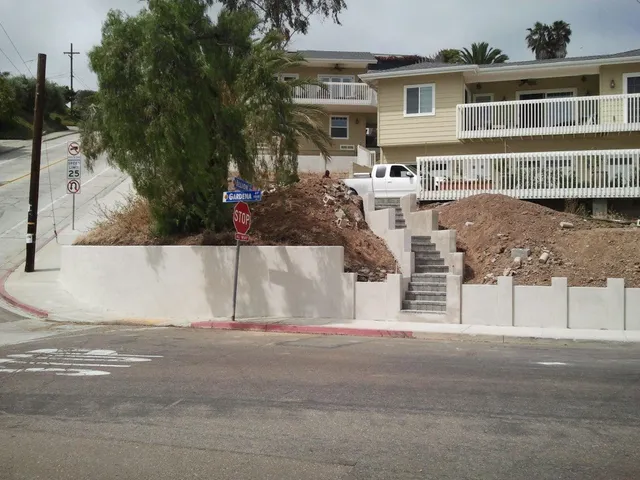
Finished stucco-faced concrete block retaining wall and paver stairway stepping up a corner lot.

Fire

Pockets of very high fire hazard

El Cajon adopted a new Fire Hazard Severity Zone map on 25 March 2025 (Municipal Code Ch. 15.86). The Safety Element places portions of east and west El Cajon — including Grossmont College and single-family neighbourhoods — in the Very High zone, where new construction follows California’s wildland-urban interface rules. Just east of the city, Crest lost more than 300 homes in the 2003 Cedar Fire. Block, stone and concrete don’t burn, which makes a masonry wall a fence that also works as a firebreak. Zone status is set parcel by parcel; we check yours on the City map.

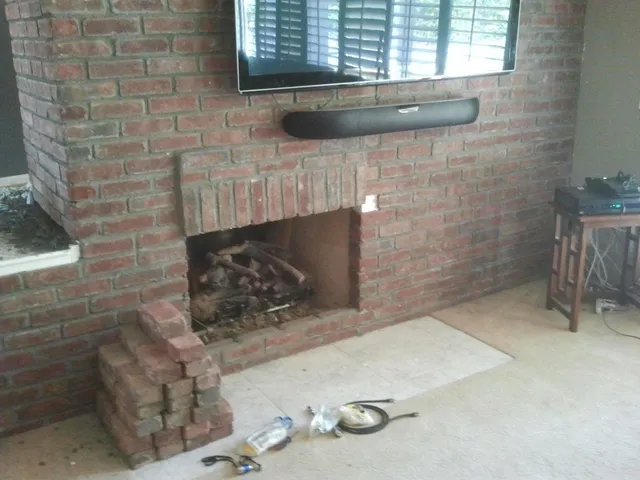
An older painted brick fireplace with worn mortar joints before refinishing.

Housing age

Two in three homes predate 1980

With 67.5% of the city’s homes built before 1980, much of El Cajon’s masonry predates current seismic detailing. The Safety Element counts over 35,000 residential buildings exposed to earthquake hazard and notes that “older residential structures are at a greater risk.” Unreinforced chimneys, ungrouted block walls and brick with eroded joints are the repairs we see most — and the ones worth fixing before the next shake, not after.

City of El Cajon or County? Check the Address Before the Design

An El Cajon mailing address doesn’t mean the City issues your permit. Rancho San Diego, Bostonia, Crest, Harbison Canyon and part of Granite Hills are unincorporated — they share El Cajon’s 92019 and 92021 ZIP codes but answer to the County of San Diego’s Planning & Development Services. Inside city limits, building permits come from the City’s Building & Fire Safety Division at 200 Civic Center Way. We confirm which side of the line you’re on before anything is drawn.

Height is where most wall projects in El Cajon get tripped up. The zoning code allows a fence or wall 42 inches tall anywhere on a lot and up to 6 feet behind the required front-yard line. Anything taller — including many retaining walls on sloped lots — needs an Administrative Zoning Permit on top of the building permit. The City has granted those for an 8.8-foot driveway retaining wall and a 10-foot retaining and screen wall, so a tall wall is possible; it takes an engineered design and the right paperwork.

For the building permit, the California Building Code exempts retaining walls up to 4 feet measured from the bottom of the footing — but not walls that hold back a slope, a driveway or another load. El Cajon adopts the 2025 code with its own amendments, so we confirm the threshold with the Building Division for each wall rather than assume. Driveway aprons, curb cuts and sidewalk panels sit in the public right-of-way and need an encroachment permit from the City’s Engineering Services.

City of El Cajon permits

  • Downtown, Main Street and Magnolia Ave
  • Most of Fletcher Hills
  • Granite Hills neighbourhood inside city limits
  • Gillespie Field industrial area

County of San Diego permits

  • Rancho San Diego
  • Bostonia
  • Crest and Harbison Canyon
  • Unincorporated Granite Hills
  • Casa de Oro–Mount Helix
Fence or wall, anywhere on the lot
42 inches
City of El Cajon zoning limit.§17.130.170
Behind the front-yard line
Up to 6 feet
Reverse-corner lots: over 42 in sets back 10 ft from the street side.§17.130.170
Taller wall or fence
Administrative Zoning Permit
Director of Community Development may approve extra height.Ch. 17.40
Retaining wall, state permit exemption
≤ 4 ft from bottom of footing
Only with no surcharge (slope, driveway, structure). Local amendments confirmed per job.CBC §105.2
Unincorporated “El Cajon” addresses
42 in front · 6 ft rear
County of San Diego fence and wall limits apply instead.County §6708

Masonry Work We Do in El Cajon

From replacing a leaning 1970s block wall in Fletcher Hills to repointing a brick fireplace downtown, these are the jobs El Cajon properties need most — every one quoted in writing after a site visit.

Retaining walls

CMU, poured concrete, segmental block and natural stone walls for sloped west- and east-side lots, with gravel backfill and a perforated drain behind every one. Engineered where the wall is tall or carries a slope or driveway; failed timber and railroad-tie walls replaced.

Block walls

Property-line and privacy walls in reinforced, grouted CMU — stucco, split-face or slump stone — built to El Cajon’s 42-inch and 6-foot limits, or taller with an Administrative Zoning Permit. Leaning or cracked 1960s–’70s walls taken down and rebuilt on a proper footing.

Brick repair and tuckpointing

Eroded mortar raked out and repointed in a matched colour and strength, cracked brick replaced, and brick planters, steps, columns and garden walls rebuilt. Softer, older brick gets a mortar that won’t be harder than the brick around it.

Stone veneer and pillars

Natural and manufactured stone on walls, house fronts, entry pillars and mailbox columns, set over a properly lathed and drained backing so it stays on through El Cajon’s heat and the winter rains.

Concrete

Footings, slabs, walkways and driveways with the right base, reinforcement and joint spacing, poured early and cured damp through El Cajon’s heat. Driveway aprons in the street right-of-way need a City encroachment permit.

Not sure which of these your property needs? Shaun will look at it with you — free, on site, no obligation.

(619) 581-2492

What Masonry Costs in El Cajon

These are the ranges we quote across San Diego County in 2026, and El Cajon jobs fall inside them. Slope, access, rock, soil and engineering move a job within the range. A free on-site visit gets you the real number, itemised and in writing.

What Masonry Costs in El Cajon
ProjectTypical 2026 range
Retaining wall, CMU block, under 4 ft$35–$55 per sq. face ft.
Retaining wall, engineered, 4–8 ft$45–$120 per sq. face ft.
Natural stone retaining wall$80–$250 per sq. face ft.
Block wall, CMU with stucco or veneer$250–$400 per linear ft.
Patio or pavers$18–$40 per sq. ft.
Masonry chimney repair$1,500–$8,000+ by scope

Ranges are for comparison, not a quote. Engineering, City or County permit fees, and an Administrative Zoning Permit where a wall exceeds the height limits are priced separately and shown on the proposal.

El Cajon Neighbourhoods and Nearby Communities

We work across El Cajon and the unincorporated communities that share its ZIP codes. Each note says what usually drives masonry work there — and who issues the permit.

  • Fletcher HillsWest-side hillside lots, part mapped as expansive Diablo clay, with historic slow landslides along Fletcher Parkway. Retaining walls and drainage. City permits.
  • Downtown & Main StreetValley-floor homes on sandy loam over clay, near the Magnolia Performing Arts Center. Block walls, brick repair, patios. City permits.
  • Granite HillsDecomposed granite over rock on the east side. The name covers a city neighbourhood and an unincorporated area — we check which before permitting.
  • BostoniaUnincorporated, ZIP 92021, north of downtown: 16,882 people at the 2020 Census, outside city limits, with fire service from San Miguel Fire & Rescue. Block walls and concrete. County of San Diego permits.
  • Rancho San DiegoUnincorporated, ZIP 92019, around Cuyamaca College. Retaining walls on sloped lots, pavers. County permits and County fence limits.
  • Crest & Harbison CanyonUnincorporated hills east of the city; Crest lost more than 300 homes in the 2003 Cedar Fire. Noncombustible walls and hardscape. County permits.
  • Casa de Oro–Mount HelixUnincorporated, west and south-west of the city. Hillside retaining walls and stone work. County permits.
  • Gillespie Field areaThe industrial district around the County airport, where the City requires a wall and setback when new industrial or commercial use meets homes.

El Cajon Masonry Questions

Straight answers to what El Cajon homeowners ask before they hire. Anything else — call, and Shaun answers it himself.

(619) 581-2492

Do I need a permit for a retaining wall in El Cajon?

Often, yes. State code exempts a retaining wall only if it is 4 feet or less measured from the bottom of the footing and holds back no slope, driveway or other load — and El Cajon adopts that code with its own amendments, so we confirm with the City’s Building & Fire Safety Division for each wall. Walls over the zoning height limits also need an Administrative Zoning Permit. If you’re in Rancho San Diego, Bostonia or another unincorporated area, the County’s rules apply instead.

How tall can a block wall or fence be in El Cajon?

Inside city limits, 42 inches anywhere on the lot and up to 6 feet behind the required front-yard line (El Cajon Zoning Code §17.130.170). Taller walls are possible with an Administrative Zoning Permit — the City has approved retaining walls of 8.8 and 10 feet. In unincorporated areas with El Cajon addresses, County limits of 42 inches in front and 6 feet at the rear apply.

My address says El Cajon. Does the City or the County issue my permit?

It depends on whether the parcel is inside city limits. Rancho San Diego, Bostonia, Crest, Harbison Canyon and part of Granite Hills use El Cajon ZIP codes but are unincorporated, so the County of San Diego’s Planning & Development Services issues permits there. We check your parcel before designing anything.

How much does a block wall cost in El Cajon?

Most reinforced CMU walls with a stucco or veneer finish run $250–$400 per linear foot in 2026, and retaining walls $35–$120 per square foot of face depending on height and engineering. Rock in the trench, slope, access and permits move the price; you get an itemised written proposal after a free site visit.

Why do walls and concrete crack so much in El Cajon?

Mostly soil and water. West-side Diablo clay shrinks and swells with the seasons, the valley’s Placentia subsoil is 35–45% clay and drains very slowly, and 83% of the year’s rain arrives between November and March. Add 56.8 days a year at 90°F or hotter, which dries concrete before it cures, and footings without drainage or control joints crack. Building for the specific ground prevents most of it.

Can pavers qualify for a turf-replacement rebate?

Permeable pavers can. SoCal WaterSmart turf-replacement projects — which Helix Water District customers in El Cajon use — don’t allow hardscape in the converted area except permeable hardscape — concrete and grouted surfaces disqualify that area — and you need pre-approval before work starts. The residential rate is $2 per square foot as of 2026; check socalwatersmart.com before you plan.

Is a masonry wall a good choice in a fire hazard zone?

Yes. Block, stone and concrete are noncombustible, so a masonry wall doesn’t carry fire to the house the way a wood fence can. Portions of east and west El Cajon are in the City’s Very High Fire Hazard Severity Zone (map dated 25 March 2025); new construction there follows California’s wildland-urban interface rules. Zone status is per parcel, and we check yours.

What happens at the free estimate?

Shaun comes out, looks at the slope, the soil and any old work, measures, and talks through options and materials. You then get a written, itemised proposal that shows what permits and engineering the job needs. There’s no charge and no obligation.

How do I check that you’re licensed?

Shaun Bagwell Masonry holds California C-29 Masonry licence #979389, issued 14 December 2012, with a $25,000 contractor bond. Look it up yourself at cslb.ca.gov → “Check a License” — we’d rather you verified it than took our word for it.

Get Your El Cajon Wall, Brick or Stone Job Priced

Call Shaun at (619) 581-2492 or send the form. He’ll look at the ground and the old work, tell you what the City or County will require, and put a written, itemised price in your hands.

(619) 581-2492

Call Now(619) 581-2492Estimate