
Indoor
New masonry fireplaces
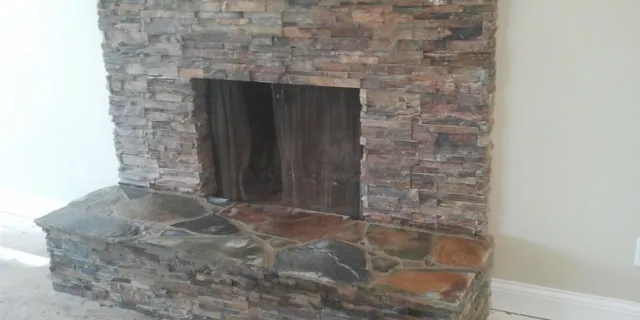
A true site-built firebox — firebrick-lined, on a 12-inch footing, with the hearth, smoke chamber and flue sized to the opening and the chimney reinforced and anchored to the framing. Brick, stone or stucco finish.
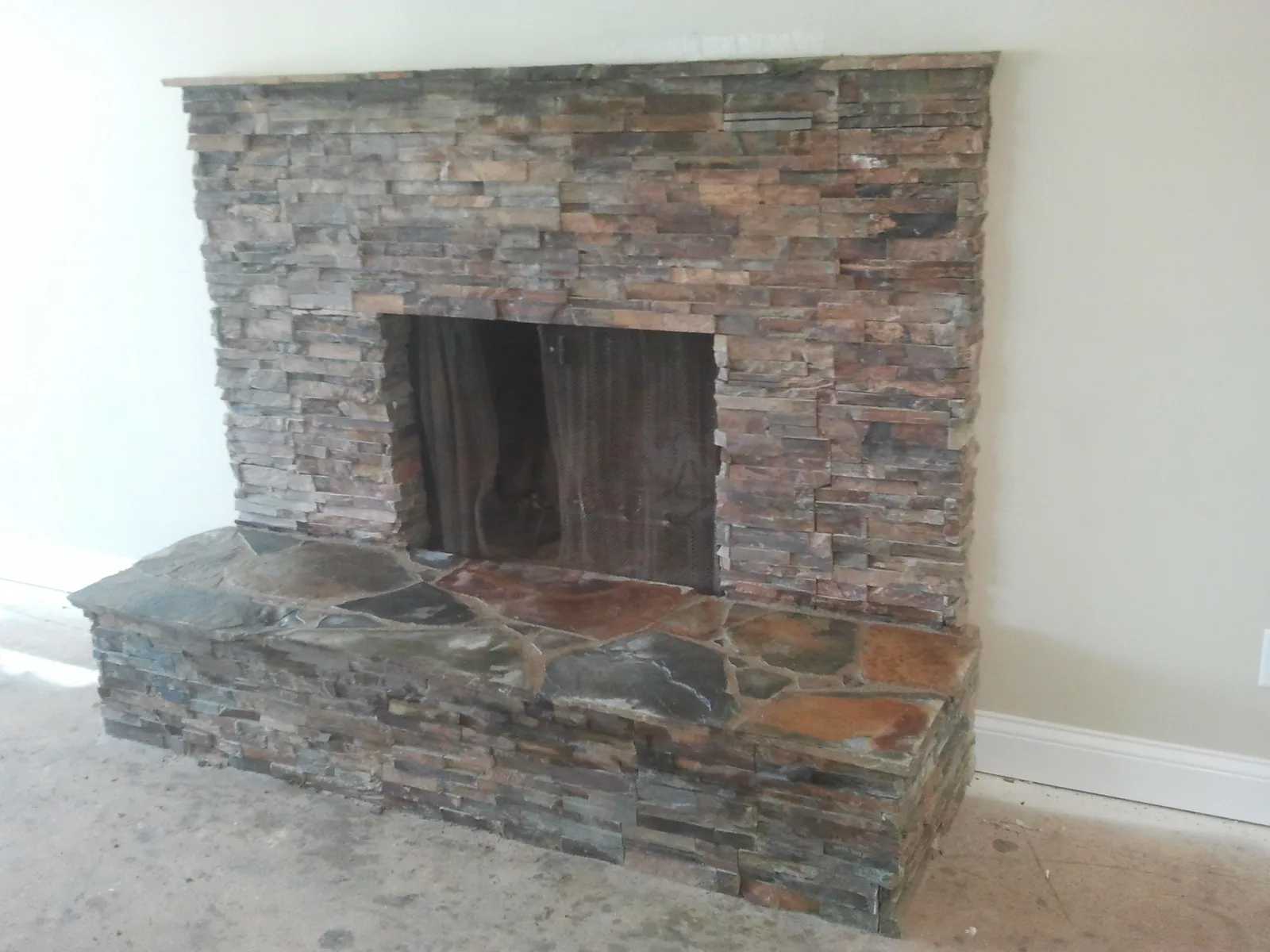
New indoor and outdoor masonry fireplaces, built-in fire pits and stacked-stone refacing — reinforced and anchored to California’s seismic fireplace code, permitted, and finished in the stone you choose. Licensed C-29 mason; call for a free design visit.
CSLB #979389 · C-29 Licensed · Bonded $25,000 · Free on-site estimates
Fireplaces by the numbers
Fire features top the list of what people want outside: in the American Society of Landscape Architects’ 2016 trends survey, 75% of residential designers ranked fire pits and fireplaces as the most popular outdoor element. Realtors who studied a typical stone fire feature put its cost at about $9,000 and its recovered value at 56% — but its “Joy Score” at 9.7 out of 10. It’s a project you build for how you’ll use the yard, not for resale.
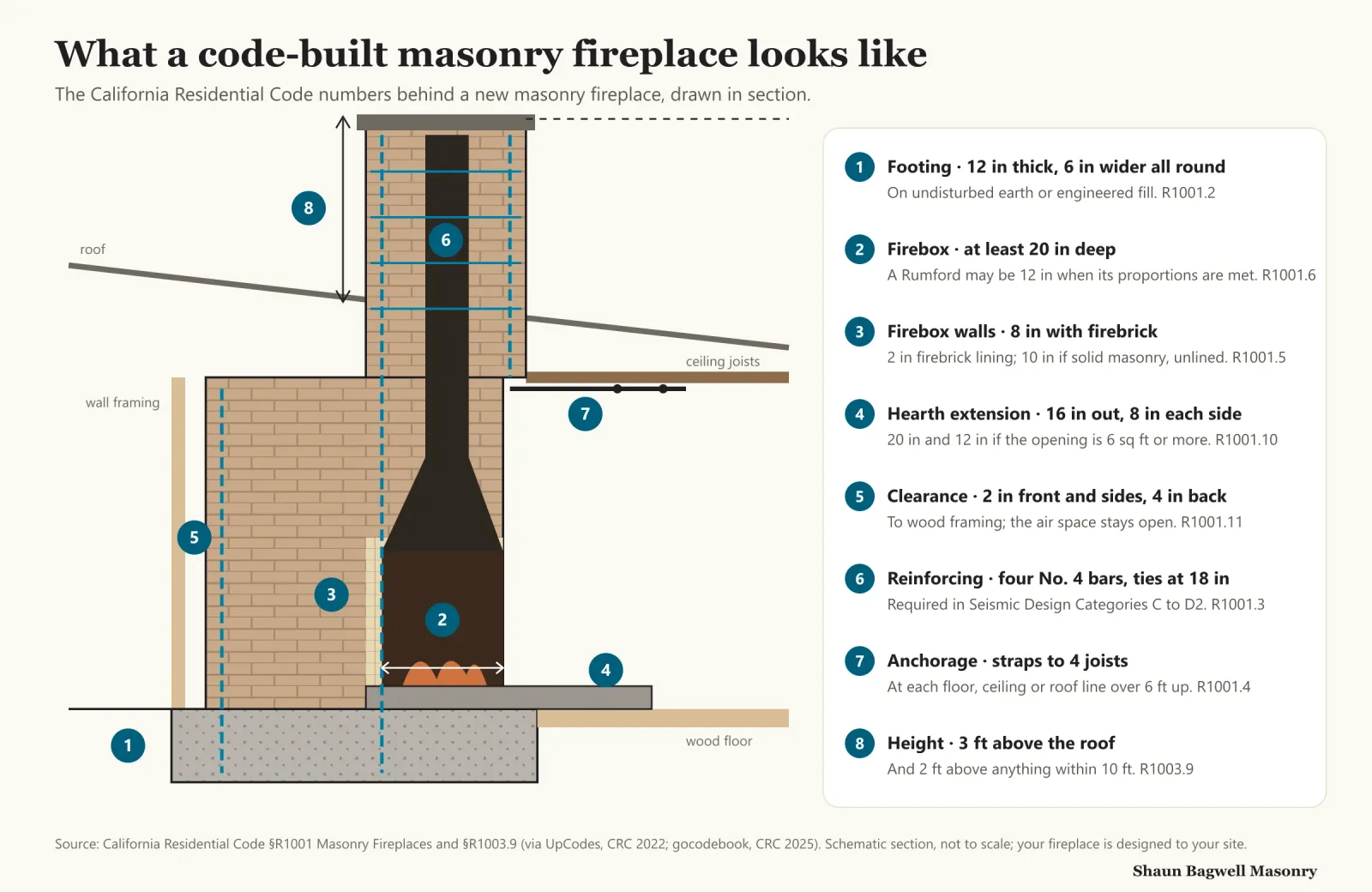
A fireplace is also the most regulated piece of masonry on a house. The California Residential Code sets its footing, firebox, hearth and clearances to the inch, and in seismic country it must carry vertical steel and be strapped to the framing. Home heating is the second-leading cause of house fires nationally — the U.S. Fire Administration estimates 32,200 in 2021 — which is why the code is so specific, and why we build to it on every job.
Site-built masonry, wood or gas, indoors or out. Need an existing fireplace or chimney repaired? That’s on our chimney and fireplace repair page.
Indoor
A true site-built firebox — firebrick-lined, on a 12-inch footing, with the hearth, smoke chamber and flue sized to the opening and the chimney reinforced and anchored to the framing. Brick, stone or stucco finish.
Outdoor
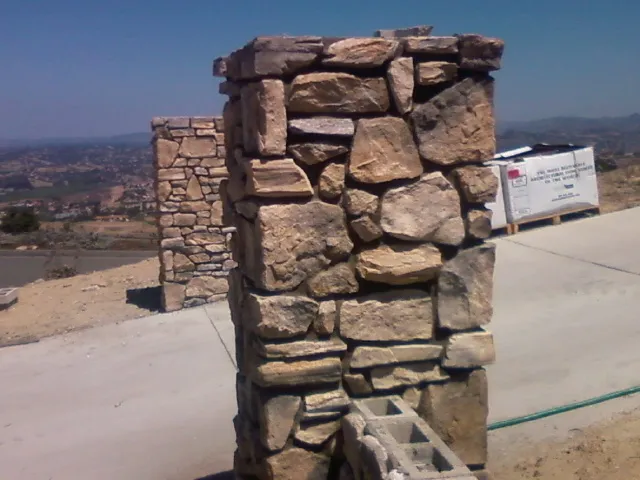
Wood-burning or gas outdoor fireplaces on a reinforced block core, faced in natural or manufactured stone, with a chimney tall enough to draw and a hearth you can actually sit on. Sited to your fire district’s setback before anything is poured.
Fire pits
Round, square and linear pits in block and stone with a firebrick or steel liner, built into a patio or seat wall. Distance from the house and fuel rules vary by fire district — we confirm yours first.
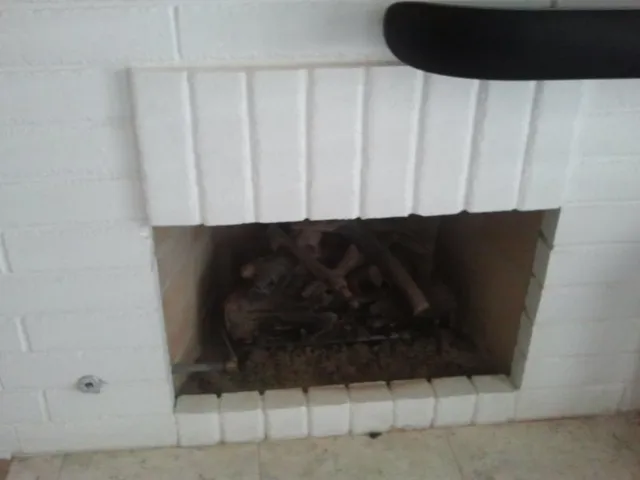
Refacing
Dated brick or tile fireplaces refaced in stacked stone, natural stone or fresh brick, fixed back properly to the existing masonry — a new look without a new firebox.
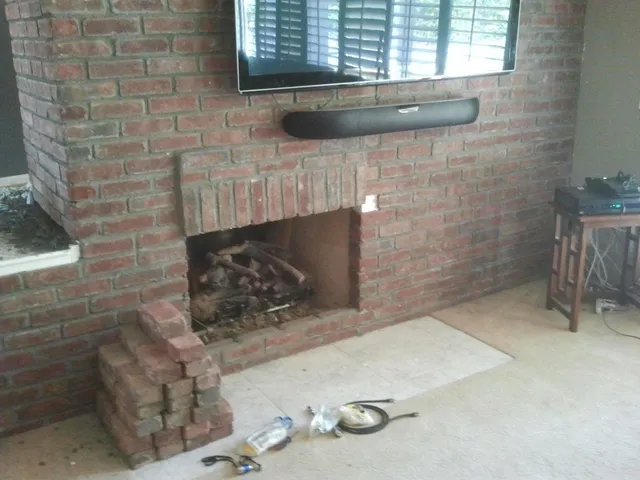
Hearths & surrounds
Raised and flush hearths extended to code, stone and precast surrounds, and mantels set at a safe distance above the opening. Often the whole difference between a dated fireplace and a finished room.
Rumford
The tall, shallow firebox with angled sides that throws heat into the room. The code allows a Rumford to be 12 inches deep instead of 20 when its proportions are met — so it has to be laid out exactly.
Section R1001 of the California Residential Code governs every masonry fireplace, and in high seismic design categories it adds steel: four No. 4 vertical bars in the chimney, ¼-inch ties every 18 inches, and steel straps tying the chimney to at least four joists at each floor, ceiling or roof line more than 6 feet up. Unreinforced, unanchored chimneys are the part of an older house most likely to come down in a quake; a new one shouldn’t be.
California adds its own rule for factory-built wood fireplaces: they must meet the U.S. EPA’s Voluntary Fireplace Program Phase 2 emission level (CRC R1004.1.1). We’ll tell you which route — site-built masonry or a listed unit inside a masonry surround — suits your fuel, budget and permit.
In the City of San Diego, “a building or combination permit is required to construct any masonry fireplace or wood-burning prefabricated fireplace” (Information Bulletin 201). Some gas decorative fireplaces and fire pits need only a plumbing or electrical permit. The submittal always includes a foundation plan, and the City inspects the foundation, framing, the fireplace installation and the wall covering. A fireplace enclosure can project into a required yard but must stay at least 2 feet 6 inches from the property line.
Outdoor fire is governed by your fire district, and the numbers differ. San Diego Fire-Rescue requires an open recreational fire to be 25 feet from a structure, 15 feet if it’s in an approved container, and keeps portable outdoor fireplaces 15 feet from structures — but its definition of a recreational fire excludes outdoor fireplaces and barbecue pits. Our home district, Alpine Fire Protection District, applies the 25-foot rule to built-in fire pits and adds a charged hose, adult supervision and a 2-foot flame limit. County and other cities set their own; we confirm the rules for your address before design.
Three different builds with different permits, footings and setbacks. Here’s how they compare in the City of San Diego and Alpine — other jurisdictions vary, which is why the site visit comes first.
| Indoor masonry fireplace | Outdoor fireplace | Built-in fire pit | |
|---|---|---|---|
| What it is | Firebox, hearth and chimney built into the house | Freestanding firebox and chimney on a block core | Open pit in block or stone, often in a patio or seat wall |
| City of San Diego permit | Building or combination permit (IB 201) | Building permit if masonry or wood-burning; gas may need plumbing/electrical only | Often plumbing/electrical only if gas (IB 201) |
| Footing | 12 in thick, 6 in wider all round (R1001.2) | Engineered to the size and height | Sized to the pit and wall |
| Setback | 2 ft 6 in from the property line (IB 201) | Set by your fire district — confirm first | Alpine FPD: 25 ft from structures; City excludes built-in pits from its 25-ft rule |
| Fuel | Wood or gas | Wood or gas | Wood or gas, subject to district rules |
Sources: City of San Diego IB 201; San Diego Fire-Rescue recreational fire policy; Alpine Fire Protection District; CRC §R1001.
Shaun looks at where it will go, what’s around it and what your fire district allows, and you decide wood or gas, indoor or out.
Drawings with the foundation plan and details the City or County asks for, submitted and permitted before work starts.
Excavated and poured to size — 12 inches thick and 6 inches beyond the fireplace on every side — then inspected.
Masonry laid with vertical bars and ties, the firebox lined in firebrick, the smoke chamber parged and the flue set.
Stone or brick face, hearth extension to code, and straps tied into the framing at each level for indoor builds.
Final sign-off, a walk-through on safe use, and a reminder: the U.S. Fire Administration advises a yearly chimney inspection and keeping combustibles 3 feet back.
Planning one? Shaun will walk the site with you and tell you what it needs — free, no obligation.
Call (619) 581-2492Based in Alpine and working county-wide. These local pages cover the permit rules, soils and conditions that change the job in each place.
Straight answers before you hire. Anything else — call, and Shaun answers it himself.
Call (619) 581-2492In the City of San Diego, yes for any masonry fireplace or wood-burning prefabricated fireplace — a building or combination permit (Information Bulletin 201). Some gas decorative fireplaces and fire pits need only a plumbing or electrical permit. County and other cities have their own rules; we handle the permit either way.
It depends on your fire district. San Diego Fire-Rescue requires an open recreational fire to be 25 feet from a structure (15 feet in an approved container) but excludes outdoor fireplaces and barbecue pits from that definition. Alpine Fire Protection District applies 25 feet to built-in fire pits. We confirm your district’s rule before we design.
The California Residential Code requires concrete or solid masonry at least 12 inches thick, extending at least 6 inches beyond the fireplace on all sides, on undisturbed earth or engineered fill (R1001.2). An outdoor fireplace footing is sized to its height and weight.
A tall, shallow firebox with angled sides that reflects more heat into the room. The code lets a Rumford be 12 inches deep instead of the usual 20 when its proportions are met (R1001.6), so it has to be laid out exactly.
Yes. Refacing puts stacked stone, natural stone or new brick over a sound existing fireplace without rebuilding the firebox. If the firebox, flue or chimney needs repair first, that’s covered on our chimney and fireplace repair page.
It varies widely with size, fuel and finish. For reference, the 2023 NAR/NALP Remodeling Impact Report priced a typical stone fire feature with a gas burner and flagstone patio at about $9,000 nationally. We give you an itemised, written price after a free site visit.
Both are possible. Gas is cleaner, starts instantly and often needs only a plumbing permit for a fire pit; wood gives a real fire but needs a true masonry firebox and chimney and must meet your fire district’s rules. We’ll lay out both options for your site.
Built to code, it’s designed to be. In high seismic design categories the code requires four No. 4 vertical bars, ¼-inch ties every 18 inches and steel straps anchoring the chimney to the framing (R1001.3–R1001.4) — the details older unreinforced chimneys lack.
Shaun Bagwell Masonry holds California C-29 Masonry licence #979389, issued 14 December 2012, with a $25,000 contractor bond. Look it up at cslb.ca.gov → “Check a License”.
Call Shaun at (619) 581-2492 or send the form. He’ll look at the spot, tell you what your city and fire district allow, and put a written, itemised price in your hands.