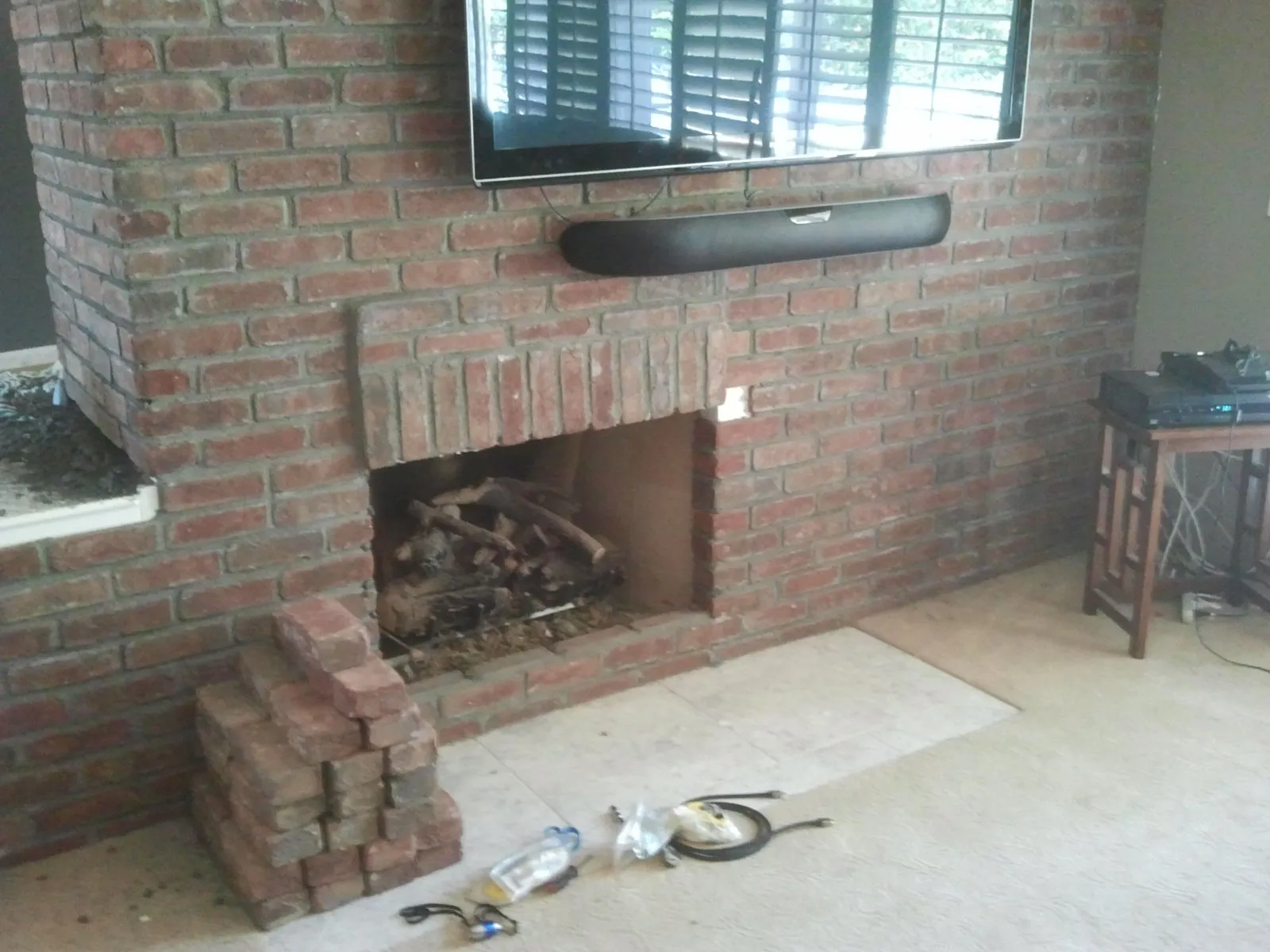
A brick fireplace wall partway through a hearth repair, with the old hearth bricks stacked on the floor.

Chimney Repair & Fireplaces in Campo and the Mountain Empire

When a wood fire heats the house, a cracked crown or open joint isn’t cosmetic. Shaun repairs and rebuilds masonry chimneys and fireplaces for homes in Campo, Lake Morena, Potrero, Boulevard and Jacumba — capped, screened and built to stand up to hot afternoons, freezing nights and fire season.

CSLB #979389 · C-29 Licensed · Bonded $25,000 · Free on-site estimates

Mountain Empire chimneys by the numbers

One Home in Four Burns Wood — at 40 Times the County Rate

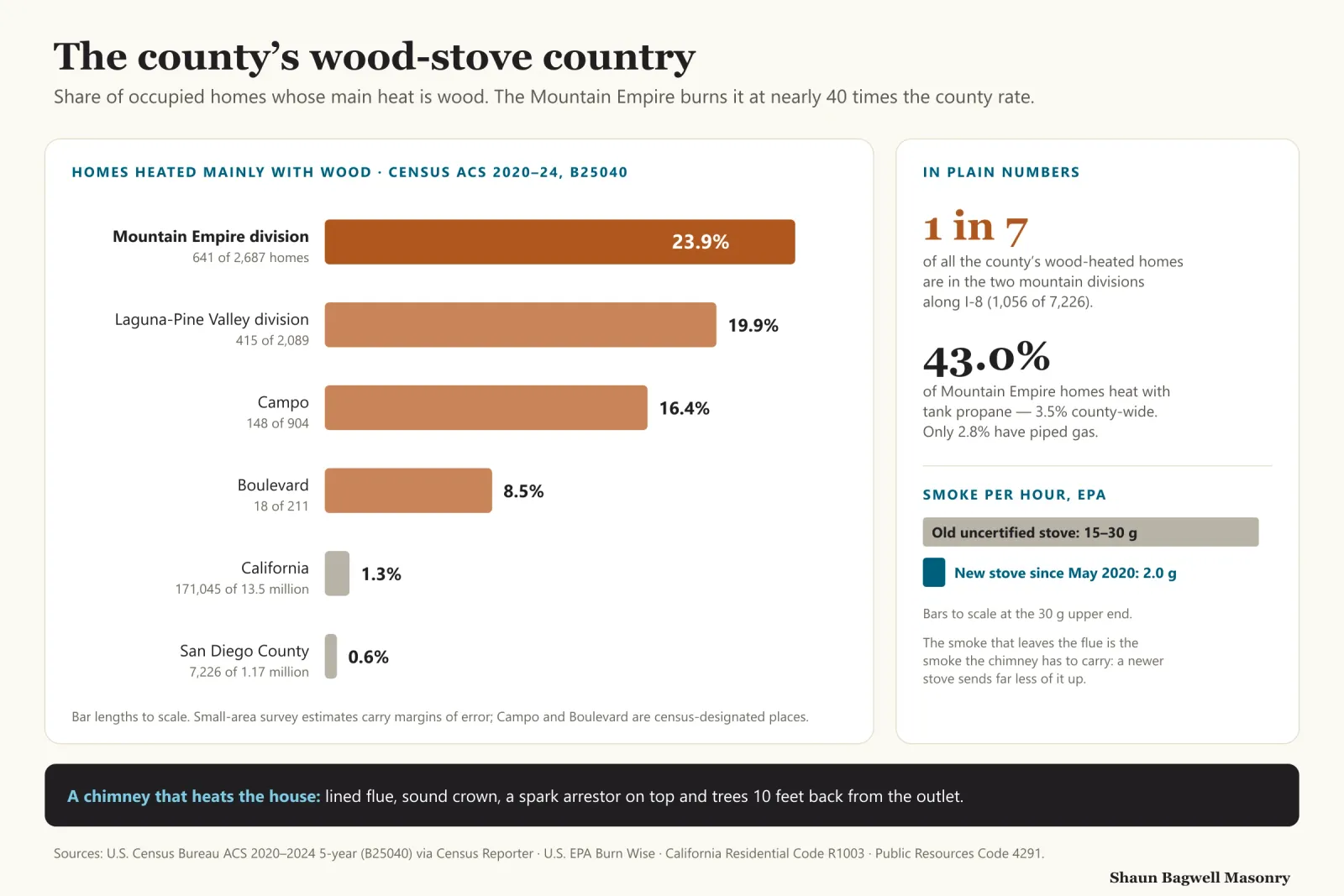
Census figures for the Mountain Empire division count 641 of 2,687 occupied homes heating mainly with wood: 23.9%, against 0.6% for San Diego County and 1.3% for California. Add the Laguna-Pine Valley division over the hill and the two mountain divisions hold one in seven of all the wood-heated homes in the county. Another 43.0% of Mountain Empire homes run on tank propane; only 2.8% have piped gas.

Those chimneys work in a hard climate. The Campo station averages 88.2 days a year at 90°F or above and 78.9 nights at or below freezing, so a crown that bakes in the afternoon can have water freezing in its cracks by morning. And in the country of the 2007 Harris Fire — 90,440 acres and 560 structures lost — what leaves the top of a chimney matters as much as what goes on inside it.

Infographic: horizontal bars showing the share of occupied homes heated mainly with wood, Census ACS 2020–2024. Mountain Empire division 23.9% (641 of 2,687 homes); Laguna-Pine Valley division 19.9% (415 of 2,089); Campo 16.4% (148 of 904); Boulevard 8.5% (18 of 211); California 1.3%; San Diego County 0.6% (7,226 of 1.17 million). Side panel: one in seven of the county’s wood-heated homes are in the two mountain divisions along I-8 (1,056 of 7,226); 43.0% of Mountain Empire homes heat with tank propane against 3.5% county-wide, and only 2.8% have piped gas; EPA figures put old uncertified stoves at 15 to 30 grams of smoke an hour against 2.0 grams for new stoves since May 2020.
Wood heat is concentrated in the mountains. Out here the chimney is part of the heating system, so it gets inspected and maintained like one.Sources: Census ACS B25040; Census ACS, CDPs; EPA Burn Wise.

Chimney and Fireplace Work in the Mountain Empire

What we do to keep a working chimney sound in this climate. For the county-wide view see our chimney repair and fireplace pages.

Repair

Crowns built for heat and frost

A thin mortar wash bonded tight to the flue cracks as the two heat and cool at different rates. We replace it with a proper cap — concrete, metal or stone, sloped, with a drip edge — and a caulked bond break so the liner can move without splitting the crown.
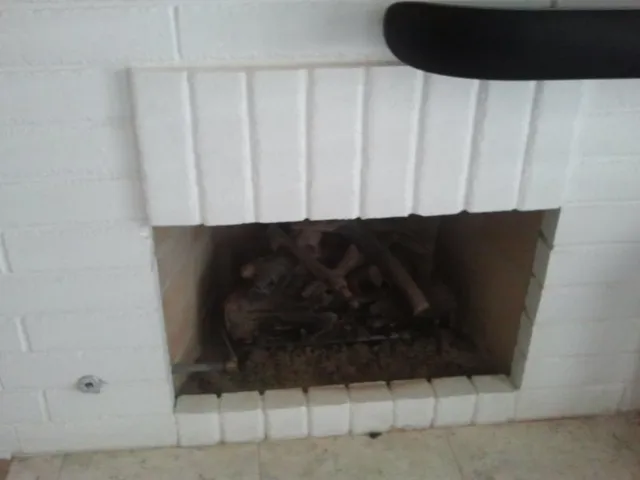
A brick fireplace refinished in white with a rebuilt hearth course.

Repair

Repointing heat-and-frost damage

Open, sandy joints on the exposed stack are cut out and repointed with mortar no harder than the brick or stone around it, then kept from freezing while they cure. Bricks whose faces have spalled off are replaced, and flashing is re-set into the new joints.

Fire

Spark arrestors and clear outlets

Every chimney serving a wood fireplace or stove gets an approved arrestor, and we point out any branch within 10 feet of the outlet before we leave. In fire country it is one of the least expensive protections a wood-heated house can have.

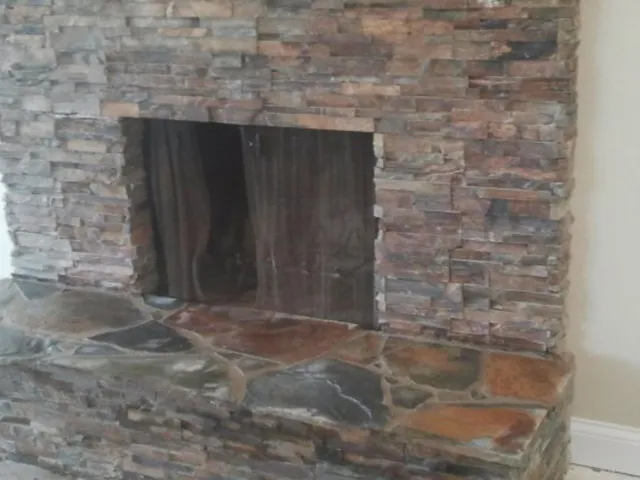
A stacked-stone fireplace surround with a flagstone hearth.

Heating

Masonry ready for a modern stove

If you are replacing an open fireplace or an old stove with an EPA-certified one, the dealer fits the appliance and liner and we make the masonry right: hearth extension, firebox, smoke chamber and a crown that will carry the new cap.

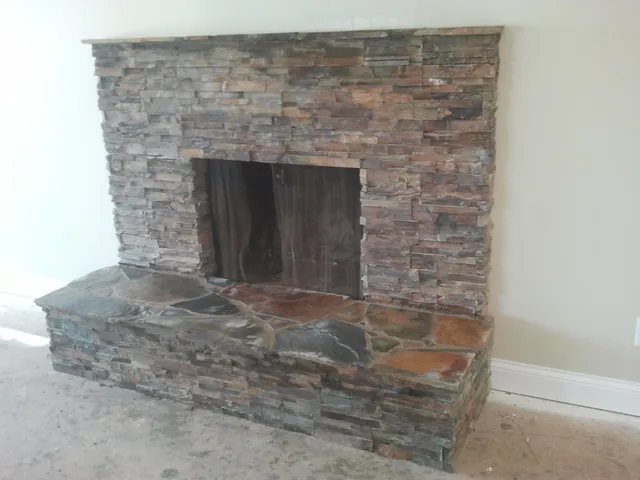
A finished floor-to-ceiling stacked-stone fireplace with a raised stone hearth.

Seismic

Rebuilding above the roof

A stack that has loosened above the roofline is taken down to sound masonry and rebuilt with the vertical steel, ties and straps the code calls for in seismic regions — then capped and screened.

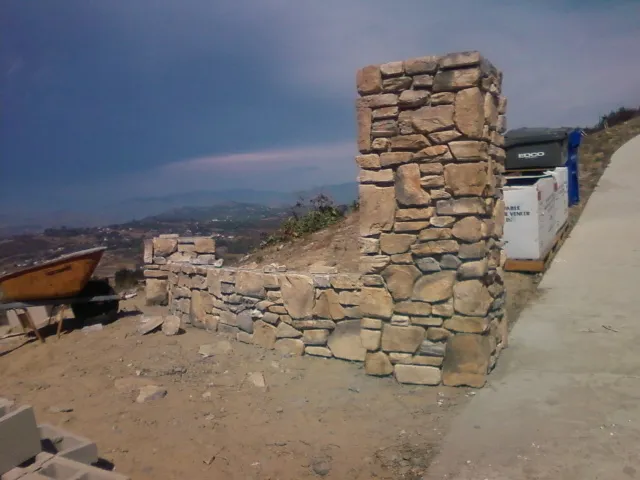
Tall fieldstone pillar with a flat stone cap beside a driveway.

Outdoors

Outdoor fireplaces sited first

Outdoor fireplaces and fire pits in stone or block, placed at least 25 feet from the house and anything that burns, with gas as an option on lots where a wood fire is hard to place safely.

What the Code Asks of a Working Chimney

The California Residential Code treats a masonry chimney as a structure and a fire barrier at once. Its walls are at least 4 inches of solid masonry or hollow units grouted solid; the flue must be lined; and it stands 2 inches clear of framing where it runs inside the house, 1 inch where it runs fully outside. It ends 3 feet above the roof and 2 feet above anything within 10 feet.

The top is where Mountain Empire weather does its work, so the cap rules matter most: a concrete, metal or stone cap with a drip edge and a caulked bond break, sloped to shed water. Any chimney attached to a fireplace or appliance that burns solid fuel carries an approved spark arrestor with a net free area at least four times the flue outlet.

Chimney walls
4 in minimum
Solid masonry, or hollow units grouted solid; lined flue.CRC R1003.10–11
Cap
Sloped, drip edge, bond break
Concrete, metal or stone cap that sheds water.CRC R1003.9.1
Spark arrestor
Required on solid fuel
Open area of the screen at least four times the flue outlet’s.CRC R1003.9.2
Clearance
2 in inside · 1 in outside
Air space between the chimney and combustible framing.CRC R1003.18
Seismic
Reinforced and anchored
Vertical bars, ties and straps to the framing on rebuilds.CRC R1001

Permits and Fire Rules Around the Chimney

Campo, Potrero, Boulevard and Jacumba are all unincorporated: a new masonry fireplace or a chimney rebuilt above the roofline goes through County of San Diego Planning & Development Services, while like-for-like repairs usually need no permit. State law sets the defensible space: 100 feet around the house, and nothing of any tree within 10 feet of a chimney or stovepipe outlet.

The County’s 2026 wildfire code keeps the first 5 feet around the house free of combustibles and puts firewood 30 feet from buildings — worth knowing when the woodpile is the first thing by the back door. Outdoor recreational fires stay 25 feet from structures and combustible material under the state fire code the County adopts, with someone in attendance.

Trees at the outlet
10 ft clear
Inside a 100-ft defensible-space ring around the home.PRC §4291
Firewood
30 ft from buildings
And nothing combustible in the 0–5 ft zone.2026 County WUI Code
Outdoor fire
25 ft from structures
Attended, with a hose or extinguisher on hand.CFC §307
Rebuild or new fireplace
County PDS permit
Confirmed per job; like-for-like repair usually exempt.
Mortar curing
Protect below 40°F
Cold-weather protection for the first day or two.CMHA TEK 03-01C

Open Fireplace or Certified Stove?

Many Mountain Empire owners ask whether to keep burning in the open fireplace or put a stove into it. Here is how the two compare from the chimney’s side.

Open Fireplace or Certified Stove?
Open masonry fireplaceEPA-certified stove or insert
SmokeNot an EPA-certified heaterNew heaters capped at 2.0 g/h since May 2020; old uncertified stoves 15–30 g/h
What the masonry needsSound firebox, damper area, crown and arrestorSound hearth extension and crown; dealer-fitted liner
Who does whatAll masonry: usAppliance and liner: the dealer · masonry: us
Spark arrestorRequired (solid fuel)Required (solid fuel)

Sources: EPA Burn Wise; California Residential Code R1003.9.2. The stove itself is fitted by its dealer or installer.

How We Handle a Mountain Empire Chimney

  1. From the roof

    Cap, crown, arrestor, flashing and nearby branches first — the parts heat, frost and embers attack.

  2. Into the house

    Firebox, smoke chamber, hearth and clearances, and whether a stove is planned.

  3. A written answer

    What needs doing now, what can wait, and what the code and County require, with an itemised price.

  4. Pick the days

    Mortar work on days that stay above 40°F; covered overnight when the forecast drops.

  5. Do it once

    A real sloped cap with a drip edge and bond break, mortar matched to the masonry, reinforced rebuilds where needed.

  6. Hand back

    Arrestor fitted, area checked, and a reminder that the USFA advises an annual inspection.

Planning one? Shaun will walk the site with you and tell you what it needs — free, no obligation.

(619) 581-2492

Chimney Work Across the Mountain Empire

Same climate, different houses. The rest of what we build out here is on the Campo & Mountain Empire page; over the hill, see Pine Valley and Descanso chimneys.

  • Campo & Lake MorenaZIP 9190616.4% of Campo homes heat with wood and 56.5% with propane; median house from 1985. Crowns, arrestors and stove-ready hearths.
  • PotreroZIP 91963Near where the 2007 Harris Fire began. Arrestors, caps and clearing the 10 feet around the outlet come first.
  • BoulevardZIP 91905At 3,638 feet. Wood heats a smaller share here (8.5%) and propane 46.4%; the chimneys are fewer but just as exposed.
  • Jacumba Hot SpringsZIP 91934Where the stub of the burned Hotel Jacumba’s massive central fireplace still stands. Older brick and stone fireplaces for repointing and new caps.

More Masonry in Campo & Mountain Empire

The Campo & Mountain Empire page covers the ground, permits and neighbourhoods across every kind of job. The county-wide pages go deeper on the build itself.

Campo & Mountain Empire Chimney & Fireplace Questions

Straight answers before you hire. Anything else — call, and Shaun answers it himself.

(619) 581-2492

Why does my chimney crown keep cracking?

Usually because it is a thin mortar wash stuck to the flue rather than a true cap. With Campo averaging 88 days a year at 90°F or more and 79 nights at or below freezing, it is constantly expanding and contracting. A sloped cap with a drip edge and a bond break around the flue fixes the cause.

Does a wood-burning chimney in Campo need a spark arrestor?

Yes. The California Residential Code requires an approved spark arrestor on any chimney attached to a fireplace or appliance that burns solid fuel, with mesh openings between 3/8 and 1/2 inch.

Should I put a stove in my fireplace?

If the fireplace is your main heat, it is worth considering: EPA figures put new certified stoves at 2.0 grams of smoke an hour against 15–30 for old uncertified ones. The dealer installs the stove and liner; we make sure the hearth, firebox and crown are sound first.

How far from the house can I keep firewood?

The County’s 2026 wildfire code puts firewood 30 feet from buildings and keeps the first 5 feet around the house free of anything that burns.

Can I have an outdoor fire pit?

Usually, if it’s sited right. The state fire code the County adopts keeps recreational fires 25 feet from structures and combustible material, attended, with a hose or extinguisher at hand.

Does a Campo chimney rebuild need a County permit?

A rebuild above the roofline or a new fireplace goes through County PDS. Like-for-like repairs such as a new cap or repointing usually don’t; we confirm it for each job.

Do you really come out to Jacumba and Boulevard?

Yes. We’re based in Alpine at 2351 Eltinge Dr and cover the Mountain Empire. California C-29 masonry licence #979389, issued 2012, bonded and insured.

Get Your Chimney Looked At Before Winter

Call Shaun at (619) 581-2492 or send the form. He’ll start at the top of the chimney, tell you what the code and the fire rules require, and give you a written, itemised price.

(619) 581-2492

Call Now(619) 581-2492Estimate