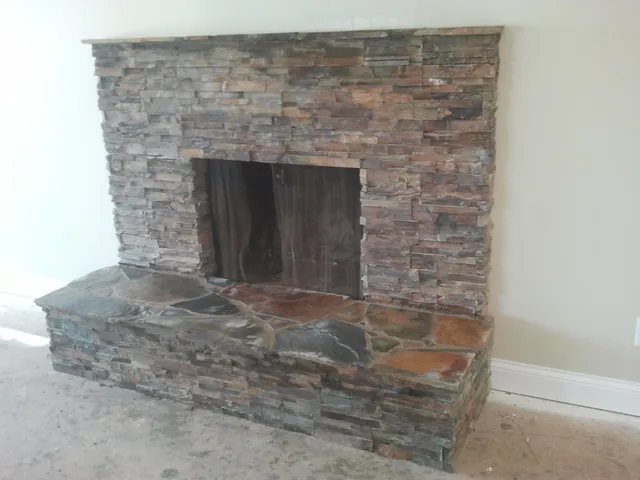
Concrete block stair rising up a freshly cut slope between new block retaining walls, with block coursing staged on the excavation.

Jamul Masonry Contractor for Retaining Walls, Block Walls and Driveways

Building pads, long driveways, perimeter walls and outdoor living on Jamul’s rocky, clay-capped ground — designed for County rules and fire country, priced with the rock already counted. Licensed C-29 mason, a short drive from our Alpine base.

CSLB #979389 · C-29 Licensed · Bonded $25,000 · Free on-site estimates

Jamul by the numbers

Big Lots, Hard Ground and a Fire History

Jamul — from the Kumeyaay Ha-mul, “sweet water” — is an unincorporated community of about 6,200 people spread over 16.8 square miles along SR-94, roughly a tenth of Spring Valley’s density. It is almost entirely detached homes their owners live in: 95.8% single-family detached and 95.6% owner-occupied, with a median value just over a million dollars. That makes the work different from a tract suburb — long driveways, perimeter and entry walls, building-pad retaining walls, patios, pool decks and fireplaces.

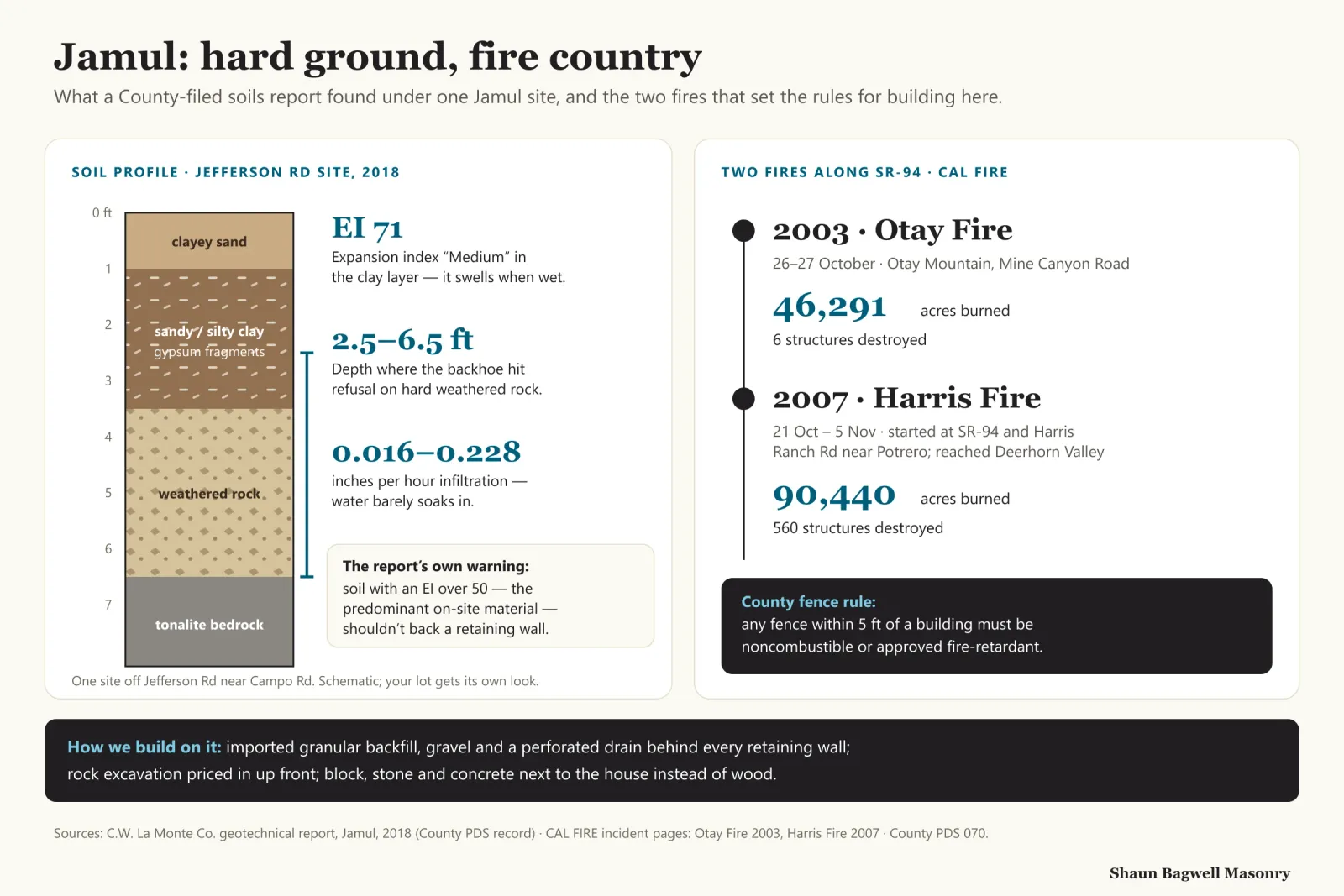
The ground is the other difference. A soils report filed with the County for a site off Jefferson Road found a clay layer with a medium expansion index of 71 over weathered tonalite that stopped a backhoe 2.5 to 6.5 feet down — and warned that the on-site soil shouldn’t go behind a retaining wall. Add the 2003 Otay Fire and the 2007 Harris Fire along the SR-94 corridor, and the case for drained, properly backfilled, noncombustible masonry makes itself.

Infographic, Jamul: hard ground, fire country. Left, a soil column from a 2018 County-filed geotechnical report for a Jefferson Road site: clayey sand topsoil, sandy and silty clay with gypsum fragments, weathered rock and tonalite bedrock. Expansion index 71, medium; backhoe refusal at 2.5 to 6.5 feet; infiltration 0.016 to 0.228 inches per hour; the report warns soil with an expansion index over 50 should not back a retaining wall. Right, a CAL FIRE timeline: the 2003 Otay Fire on Otay Mountain at Mine Canyon Road, 46,291 acres and 6 structures destroyed; the 2007 Harris Fire, started at SR-94 and Harris Ranch Road near Potrero and reaching Deerhorn Valley, 90,440 acres and 560 structures destroyed. County fence rule: any fence within 5 feet of a building must be noncombustible or approved fire-retardant.
Rock, clay and fire, from the record. One County-filed soils report and two CAL FIRE incident pages explain most of how we build in Jamul: imported backfill and real drainage behind walls, rock excavation priced up front, and masonry rather than wood next to the house.Sources: C.W. La Monte geotechnical report, 2018; CAL FIRE — Otay Fire; CAL FIRE — Harris Fire; County PDS 070.

Rock, Expansive Clay and Long Driveways

Six things set Jamul jobs apart from work closer to the city. Most come straight from a geotechnical report filed with the County for a site off Jefferson Road near Campo Road — your lot gets its own look, but the pattern is a useful starting point.

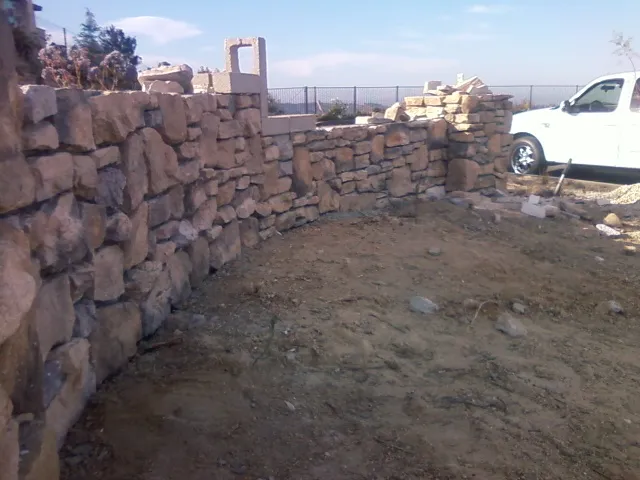
Natural stone veneer going onto a curved block wall, with stone staged on site.

Bedrock

Granite and tonalite that weather to boulders

The report places Jamul in the county’s Foothills province, where the source rock “varies from granite to gabbro” and tends “to weather to disintegrated boulders to a considerable depth.” At the Jefferson Road site, Cretaceous tonalite stopped a backhoe at 2.5 to 6.5 feet, and excavation took “moderate to difficult effort” with cobble-size rock. Footings sit well in it; digging them costs more. We price rock in up front.

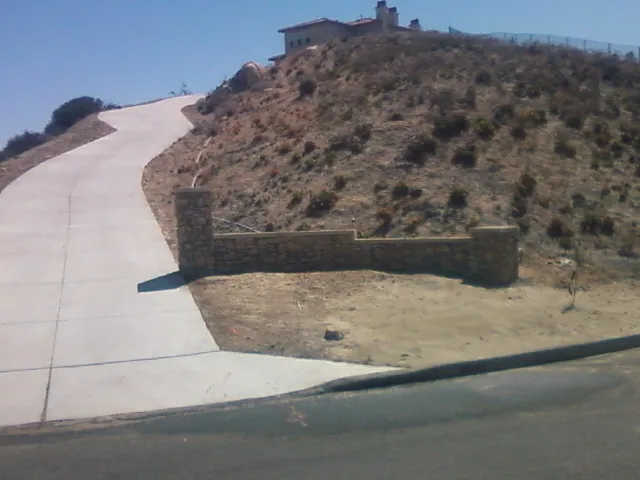
Finished stone wall and pillar at the foot of a long, dry hillside driveway.

Backfill

Clay that shouldn’t sit behind a wall

Above the rock is residual sandy and silty clay, “very stiff to hard” with gypsum fragments, tested at an expansion index of 71 — “Medium”. The report is blunt: soil with an EI over 50, which includes the predominant on-site material, “should not be used as backfill material behind retaining walls.” So our retaining walls here get imported granular backfill and a gravel drain wrapped in filter fabric around a perforated pipe — the same detail the report specifies.

Drainage

Water barely soaks in

Measured infiltration at the site was 0.016 to 0.228 inches per hour — very low — on soils in hydrologic group C. That matters for patios and pavers: we don’t count on native soil to drain a permeable surface here. Hardscape gets a planned fall and somewhere for the water to go, and walls get weep and drain outlets that discharge where they won’t undercut the next slope down.

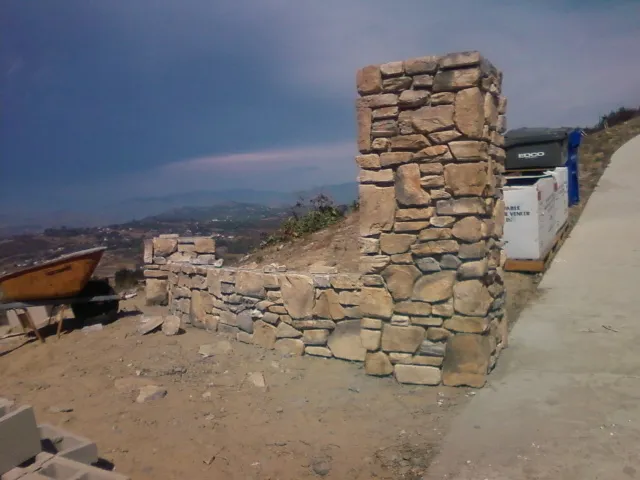
Tall fieldstone pillar with a mailbox beside a concrete driveway.

Property

Owner-occupied homes on big parcels

With 95.6% of homes owner-occupied and about 390 people per square mile, Jamul jobs run larger: driveway approaches and long concrete drives, entry pilasters and perimeter block walls, retaining walls that create building pads, and outdoor living. Where a driveway meets a County road, the apron needs a County encroachment permit ($217).

Fire

The Otay and Harris fires

The 2003 Otay Fire burned 46,291 acres from Otay Mountain. Four years later the Harris Fire started at SR-94 and Harris Ranch Road near Potrero, burned 90,440 acres, destroyed 560 structures and took homes in Deerhorn Valley. County rules now require any fence within 5 feet of a building to be noncombustible or approved fire-retardant, and the County adopted a new 2026 Wildland-Urban Interface Code. Block, stone and concrete next to the house are the straightforward answer; check your parcel on the state fire-zone map.

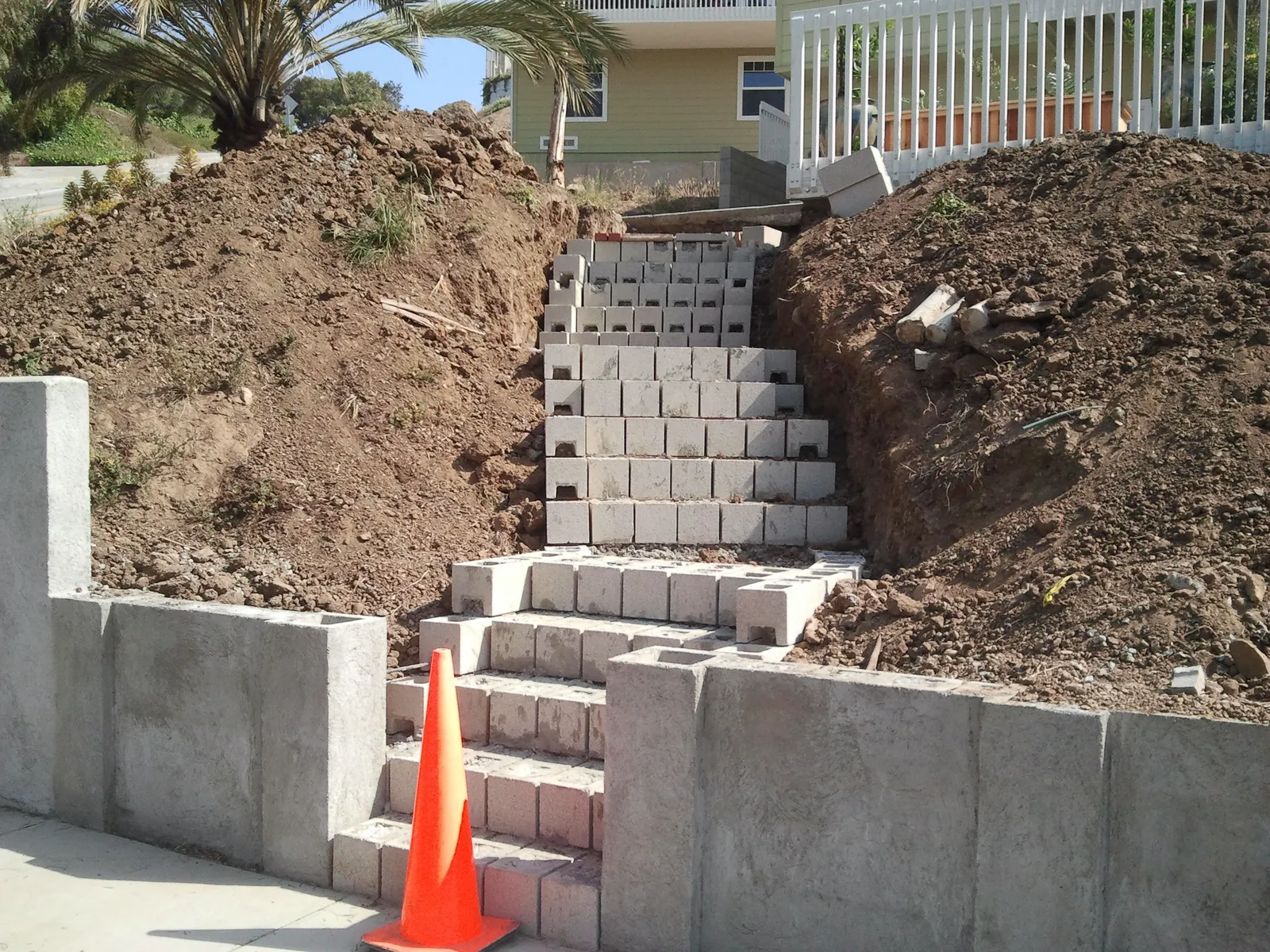
Finished stacked-stone fireplace with a raised hearth.

Outdoor living

Patios, pool decks and fireplaces

On big lots the work often moves outdoors. County code exempts at-grade decks, walks and driveways no more than 30 inches above grade, and patio covers up to 300 square feet attached to the house, from a building permit — but not pool barriers, and not retaining walls that fail the exemption test. Stone fireplaces and chimneys are built and repaired to current reinforcement rules.

County Permits — and Why Pads Need Them

Jamul is unincorporated, so the County of San Diego Planning & Development Services issues permits and County zoning sets wall heights. A retaining wall avoids a building permit only if it retains 3 feet of soil or less measured from the top of the footing, stands no more than 6 feet from the lowest grade, has level backfill, no structure within 6 feet and no surcharge. Building-pad and driveway walls on Jamul slopes rarely meet all five.

If the job needs a grading permit — common when a pad or driveway is cut — the County requires a building permit to cover all the retaining walls and drainage structures on it. Driveway aprons and anything else in a County road right-of-way need an Encroachment Permit ($217; $87 renewal; DigAlert 811 before digging). Larger projects that need discretionary approval may also go to the Jamul/Dulzura Community Planning Group. Whether a driveway on your own lot needs its own building permit is something we confirm with PDS for each job.

Long drives here are also fire roads. Jamul’s own station is County Fire Station 36 on Peaceful Valley Ranch Road, County-owned and staffed by CAL FIRE, while San Miguel Fire & Rescue covers parts of the community. San Miguel’s published access rules are a good guide to what either will ask for: 16 feet wide for one or two homes, no steeper than 20%, broom-finished concrete above 15%, and a turnaround on any dead end longer than 150 feet.

County of San Diego issues

  • Building and grading permits (PDS)
  • Encroachment permits in County roads
  • Fire access through County Fire Station 36 (CAL FIRE-staffed)

Also in the picture

  • Jamul/Dulzura Community Planning Group (discretionary)
  • San Miguel Fire & Rescue (parts of Jamul)
  • Otay Water District
Retaining wall, permit exemption
All 5 conditions, or permit
≤3 ft retained (top of footing), ≤6 ft total, level backfill, nothing within 6 ft, no surcharge.PDS 110 · Sec. 91.1.105.2(a)(7)
Grading permit on the job
Every wall needs a permit
The building permit must cover all retaining walls and drainage structures.Sec. 91.1.105(c)
Block wall or fence
Exempt to 6 ft · 42 in front
72 in in rear and interior side yards; pool barriers always need a permit.PDS 070 · Sec. 6708
Fence within 5 ft of a building
Noncombustible
Or approved fire-retardant material meeting Building Code 707A.PDS 070
Driveway apron in a County road
Encroachment permit · $217
$87 renewal; DigAlert 811 required before excavation.County DPW

Masonry Work We Do in Jamul

Mostly larger builds on big, owner-occupied parcels — pads, drives, entries and outdoor living — every job quoted in writing after a site visit.

Stone veneer, pillars and entries

Natural stone on walls, entry pillars and mailbox columns, set over a drained backing — the finish many Jamul properties use for gates and drives.

Fire-access driveways and turnarounds

Concrete drives laid out to fire-access width and grade, with a deep broom finish on steep stretches and a turnaround where the drive dead-ends at the house.

Not sure which of these your property needs? Shaun will look at it with you — free, on site, no obligation.

(619) 581-2492

What Masonry Costs in Jamul

These are the 2026 ranges we quote across San Diego County. In Jamul the swing factors are rock excavation, imported backfill and the County engineering a pad or driveway wall usually needs.

What Masonry Costs in Jamul
ProjectTypical 2026 range
Retaining wall, CMU block, under 4 ft$35–$55 per sq. face ft.
Retaining wall, engineered, 4–8 ft$45–$120 per sq. face ft.
Natural stone retaining wall$80–$250 per sq. face ft.
Block wall, CMU with stucco or veneer$250–$400 per linear ft.
Patio or pavers$18–$40 per sq. ft.
Masonry chimney repair$1,500–$8,000+ by scope

Ranges are for comparison, not a quote. Rock excavation, imported backfill, engineering, County permit fees and any encroachment permit are priced separately and shown on the proposal.

Jamul and the SR-94 Corridor

All unincorporated, all County permits — but the ground and the jobs change from the Jefferson Road flats to the backcountry valleys.

JamulZIP 91935

  • 6,179 residents (2020)
  • Median home built 1985
  • 95.6% owner-occupied
  • Median value $1,047,300

Large owner-occupied parcels along SR-94, Lyons Valley Road, Jefferson Road and Proctor Valley Road, with Lyons Peak (3,741 ft) to the east. Ground ranges from clay-capped tonalite to boulder-strewn slopes, so building-pad walls, driveways and drainage are the core of the work. The Jamul Indian Village, a federally recognised Kumeyaay tribe, is here too.

Lyons Valley & Proctor Valley roads

Building sites reached by long, climbing private drives. Cut-bank walls that carry a driveway are engineered and permitted, and the drive itself is laid out to fire-access width, grade and turnaround rules.

Dulzura & Rancho Jamul Ecological Reserve

East along SR-94, where the state’s roughly 5,600-acre Rancho Jamul Ecological Reserve lies between Jamul and Dulzura. Rural parcels, long drives and fire-country masonry.

Deerhorn Valley

Homes here burned in the 2007 Harris Fire. Rebuild-era properties where noncombustible walls and hardscape near the house make sense.

Rancho San Diego & Spring Valley

North-west along SR-94 and Jamacha Road, with tract housing and different jobs — see our Rancho San Diego and Spring Valley pages.

Jamul Masonry Questions

Straight answers to what Jamul homeowners ask before they hire. Anything else — call, and Shaun answers it himself.

(619) 581-2492

Do I need a permit for a retaining wall in Jamul?

Usually. Jamul is unincorporated, so County rules apply: a wall is exempt only if it retains no more than 3 feet of soil measured from the top of the footing, is no more than 6 feet tall from the lowest finished grade, has level backfill with no structure within 6 feet, and carries no surcharge. Pad and driveway walls on slopes rarely pass all five, and if the job needs a grading permit, every wall on it needs a building permit.

Why do retaining walls cost more in Jamul?

Rock and clay. A County-filed soils report for a site off Jefferson Road hit hard weathered tonalite 2.5 to 6.5 feet down, took “moderate to difficult effort” to excavate, and warned that the on-site clay (expansion index 71) shouldn’t be used as wall backfill. That means rock excavation and imported granular backfill — we price both up front.

How wide and steep can my Jamul driveway be?

Where the drive is your fire access, San Miguel Fire & Rescue’s published rules ask for 16 feet of width for one or two homes, no more than a 20% grade, broom-finished concrete on any stretch over 15%, and a turnaround on dead ends over 150 feet. Jamul is served by County Fire Station 36 and, in places, San Miguel, so we confirm with the right one for your parcel.

Can I build a wood fence next to my house in Jamul?

Not within 5 feet of it unless it’s an approved fire-retardant material. County rules require any fence within 5 feet of a building to be noncombustible or meet Building Code Section 707A. After the Otay and Harris fires, most owners choose block or stone there anyway.

Do I need a permit for my driveway?

Where the apron meets a County road, yes — a County DPW Encroachment Permit ($217, $87 renewal) and a DigAlert ticket before digging. Whether the driveway on your own lot needs a building permit depends on the job, so we confirm it with County PDS.

Will permeable pavers drain on my Jamul lot?

Don’t count on the native soil. The Jefferson Road soils report measured infiltration of only 0.016 to 0.228 inches per hour. We design hardscape with a planned fall and an outlet for the water rather than relying on it soaking in.

Are there rebates for replacing lawn?

Otay Water District, which serves Jamul, points to the regional turf-replacement rebate (at least $2 per square foot) and the County Waterscape program (up to $5 per square foot in unincorporated areas). Both require approval before work starts and limit hardscape in the converted area.

How do I check that you’re licensed?

Shaun Bagwell Masonry holds California C-29 Masonry licence #979389, issued 14 December 2012, with a $25,000 contractor bond. Look it up at cslb.ca.gov → “Check a License”.

Get Your Jamul Project Priced

Call Shaun at (619) 581-2492 or send the form. He’ll look at the slope and the ground, tell you what the County will require, and put a written, itemised price — rock included — in your hands.

(619) 581-2492

Call Now(619) 581-2492Estimate