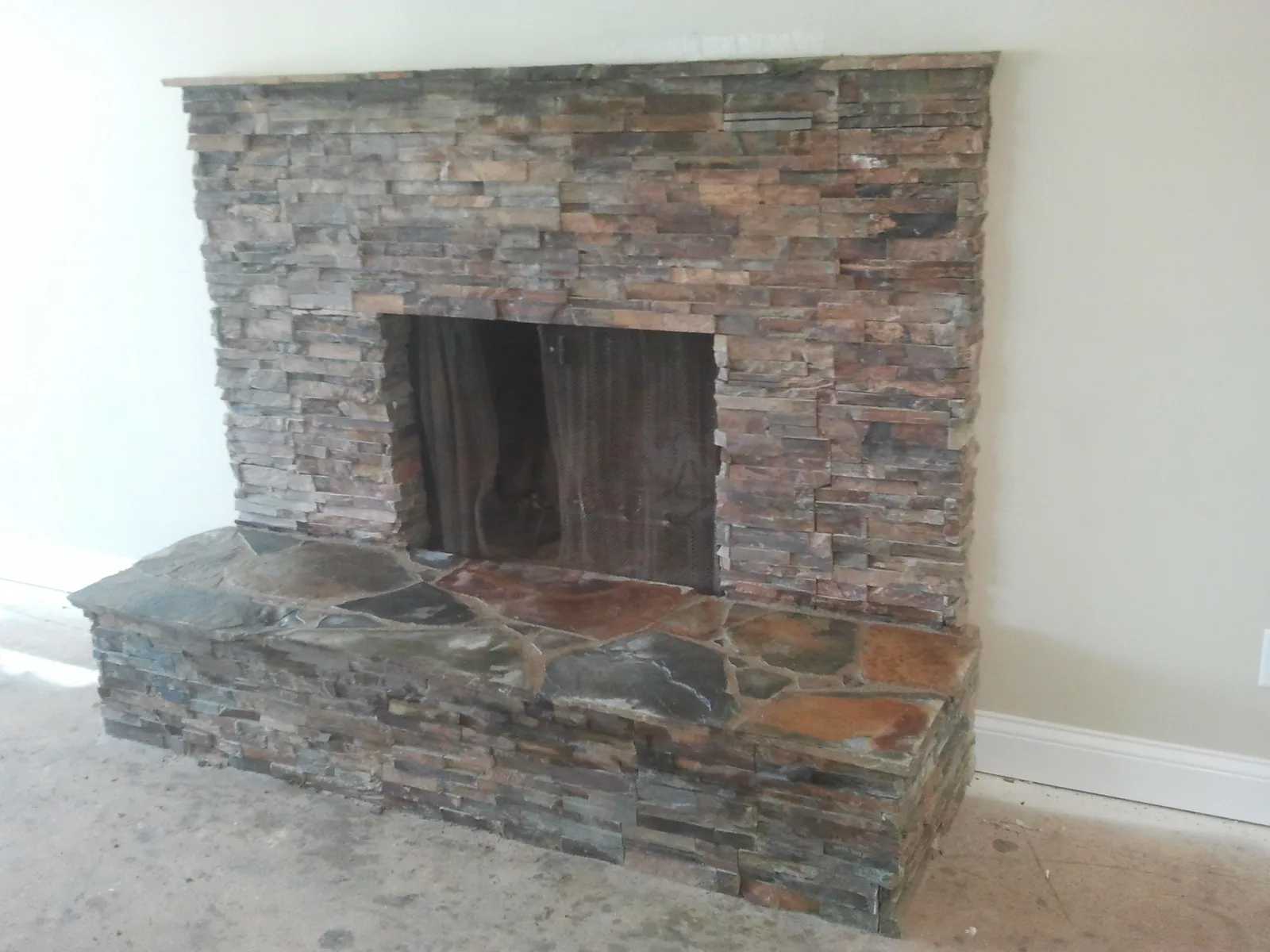
A finished floor-to-ceiling stacked-stone fireplace with a raised stone hearth and a wood mantel shelf.

Chimney Repair & Fireplaces in Rancho San Diego

Water stains by the chimney, a crumbling crown, or a 1980s brick fireplace you are tired of looking at? We repair what is worth keeping, rebuild what is not with the steel the code requires, and reface or build new — indoors or out. Licensed C-29 mason; call for an inspection.

CSLB #979389 · C-29 Licensed · Bonded $25,000 · Free on-site estimates

Rancho San Diego chimneys by the numbers

A Generation of Chimneys Built in One Decade — on Shaking Ground

The median Rancho San Diego home was built in 1985, and half of all homes here went up between 1980 and 1989. Masonry chimneys from that building wave are now about forty: crowns cracked by four decades of sun, the top courses losing mortar, flashing working loose where the stack meets the roof. Most need maintenance, not replacement — but when a chimney does have to come down to the roofline, the rebuild is held to today’s seismic rules.

Those rules are not academic here. A soils study on Jamacha Boulevard, just over the line in Spring Valley, lists the Newport-Inglewood–Rose Canyon fault zone 11 miles west with a modelled maximum of magnitude 7.5, and four more active faults within 38 miles. Even the granite under Sundale Road, rated seismic Site Class B, came out in Seismic Design Category C — and the California Residential Code requires reinforced masonry chimneys in category C as well as D.

  • 1985Median year Rancho San Diego homes were builtCensus ACS 2020–24
  • 11 miTo the Rose Canyon fault zone, modelled up to M7.5Geocon 2015/17
  • SDC CSeismic category even on Sundale Road graniteAGS 2021
  • 4 barsNo. 4 vertical bars in a rebuilt chimney up to 40 in wideCRC R1001.3
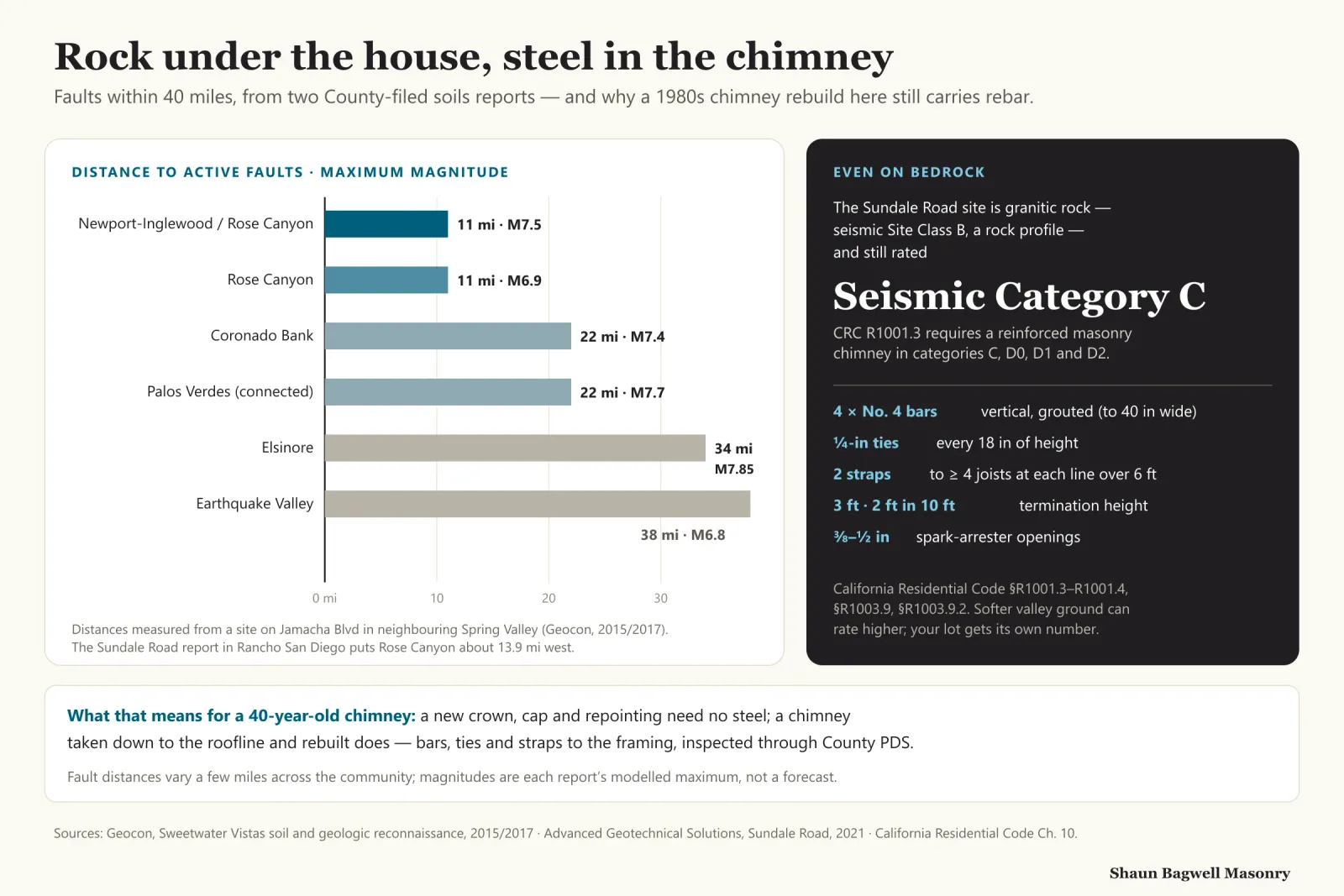
Infographic, rock under the house, steel in the chimney. Bar chart of distance to active faults and modelled maximum magnitude from a soils study on Jamacha Boulevard in neighbouring Spring Valley: Newport-Inglewood/Rose Canyon 11 miles, M7.5; Rose Canyon 11 miles, M6.9; Coronado Bank 22 miles, M7.4; Palos Verdes connected 22 miles, M7.7; Elsinore 34 miles, M7.85; Earthquake Valley 38 miles, M6.8. The Sundale Road report in Rancho San Diego puts Rose Canyon about 13.9 miles west. Even on bedrock: the Sundale Road site is granitic rock, seismic Site Class B, and still rated Seismic Design Category C; California Residential Code R1001.3 requires a reinforced masonry chimney in categories C, D0, D1 and D2 — four No. 4 vertical bars grouted for chimneys up to 40 inches wide, quarter-inch ties every 18 inches, two straps to at least four joists at each floor or roof line over 6 feet, 3 feet above the roof and 2 feet above anything within 10 feet, spark-arrester openings between three-eighths and one-half inch. A new crown, cap and repointing need no steel; a chimney rebuilt from the roofline does, inspected through County PDS.
Hard ground does not mean no rebar. Fault distances come from two County-filed soils reports; the steel comes from the state chimney code, which reaches down to Seismic Design Category C.Sources: Geocon, Sweetwater Vistas, 2015/2017; AGS, Sundale Road, 2021; CRC Ch. 10.

Chimney and Fireplace Work in Rancho San Diego

Repairs to the chimney you have, and fireplaces built or refaced from the footing up. County-wide detail is on our chimney repair and fireplace pages; the community overview is on our Rancho San Diego page.

Top of the stack

Crowns, caps and spark arresters

A thin mortar wash on top of a 1980s chimney cracks and lets water into the brick below. We form and pour a real crown with an overhang and drip edge, and fit a cap whose screen meets the code’s spark-arrester sizing.
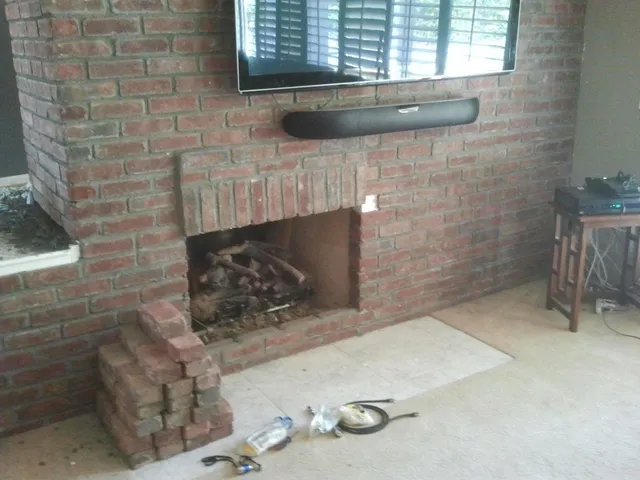
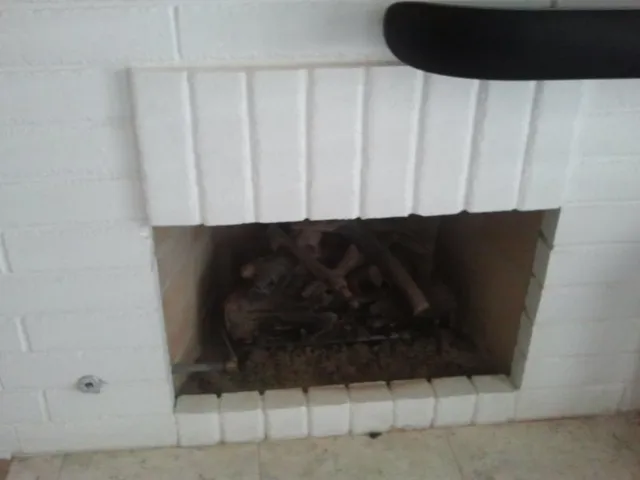
An older brick fireplace with a worn hearth, before repair and refinishing.

Leaks

Flashing and repointing

Many “chimney leaks” start at the roof line. We reset step and counter-flashing into the masonry, cut out washed-out joints and relay them in matched mortar, and replace spalled brick.

Seismic

Rebuilds from the roofline

When the top of the stack is loose or cracked through, it comes down to sound masonry and goes back with vertical bars, ties every 18 inches and steel straps to the framing — permitted and inspected through County PDS.

A brick fireplace refinished in white with a rebuilt hearth course.

Refacing

Refacing 1980s fireplaces

Brick or tile surrounds of that era refaced in stacked stone, ledgestone or fresh brick, with a new or extended hearth sized to the opening.

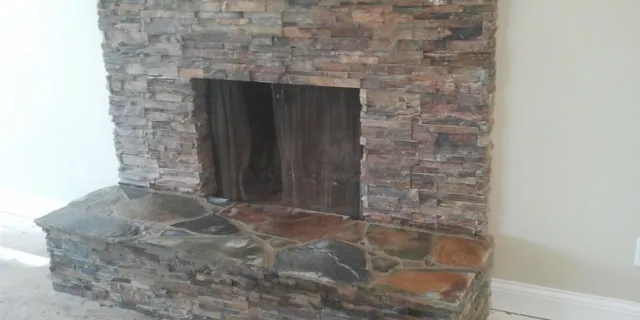
A stacked-stone fireplace surround seen at an angle, with a raised hearth.

New builds

New masonry fireplaces

Site-built fireboxes on a 12-inch footing, at least 20 inches deep, firebrick-lined, with smoke chamber and flue sized to the opening, for additions and remodels.

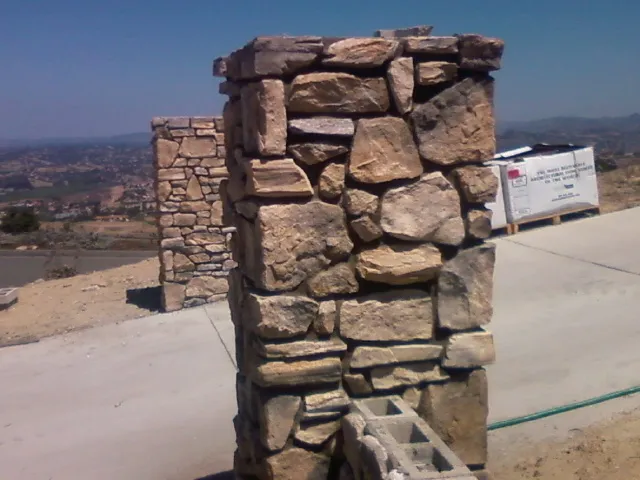
Close-up of a fieldstone pillar with a flat stone cap.

Outdoors

Outdoor fireplaces and fire pits

Block-core outdoor fireplaces and built-in fire pits faced in stone, placed to the distances San Miguel Fire & Rescue applies — wood or gas, we build the masonry for either.

The Chimney Code, Line by Line

A rebuilt masonry chimney in Seismic Design Category C or D carries four No. 4 vertical bars for a chimney up to 40 inches wide, grouted in place, with ¼-inch ties every 18 inches of height (CRC R1001.3). At each floor, ceiling or roof line more than 6 feet above grade it is anchored with two steel straps fastened to at least four joists (R1001.4). That is what keeps a chimney tied to the house rather than falling through the roof in a strong quake.

At the top, the chimney ends at least 3 feet above where it passes through the roof and 2 feet higher than anything within 10 feet (R1003.9), and any chimney serving a wood fire carries a spark arrester whose openings will stop a ½-inch sphere and pass a ⅜-inch one (R1003.9.2). A new firebox sits on a footing at least 12 inches thick that runs 6 inches past the fireplace on every side (R1001.2), and its hearth extension reaches at least 16 inches in front — 20 inches for openings of 6 square feet or more (R1001.10).

Vertical steel
4 No. 4 bars
Chimneys up to 40 in wide, grouted; required in SDC C and D.CRC R1001.3
Ties
¼ in every 18 in
In the bed joints, two at each bend in the bars.CRC R1001.3
Anchorage
2 straps to 4 joists
At each floor, ceiling or roof line over 6 ft above grade.CRC R1001.4
Termination
3 ft · 2 ft in 10 ft
Above the roof penetration, and above anything within 10 ft.CRC R1003.9
Hearth extension
16 in · 20 in
In front of the opening; 20 in where the opening is 6 sq ft or more.CRC R1001.10

County Permits and San Miguel Fire Rules

Chimney rebuilds and new masonry fireplaces in Rancho San Diego are permitted through County PDS; we draw them and book the inspections. A new crown, cap, flashing or repointing is maintenance. Outdoor fire is San Miguel Fire & Rescue’s department, since the district protects the community; its 2025 hazard-map update means it is worth checking your address on the district’s map before you plan a wood-burning feature.

Neighbouring Alpine Fire Protection District applies the California Fire Code’s 25 feet from structures to built-in fire pits and open fires and 15 feet to portable outdoor fireplaces; we confirm San Miguel’s figures for your lot before design. Near the house, County rules already require any fence within 5 feet of a building to be noncombustible or fire-retardant — so a firewood rack against a wood fence by the back door is worth rethinking.

Chimney rebuild or new fireplace
County permit
Drawings, inspections and final through County PDS.CRC Ch. 10
Built-in fire pit (Alpine FPD)
25 ft from structures
CFC 307.4.2; we confirm San Miguel’s rule for your lot.Alpine FPD
Portable outdoor fireplace
15 ft
CFC 307.4.3 as Alpine FPD applies it.Alpine FPD
Fence within 5 ft of a building
Noncombustible
Or approved fire-retardant material (CBC 707A).PDS 070
Fire authority
San Miguel Fire & Rescue
Check your address on the district’s 2025 hazard map.San Miguel Fire

Repair, Rebuild or Reface?

What a forty-year-old Rancho San Diego chimney or fireplace usually needs, by symptom.

Repair, Rebuild or Reface?
What you seeLikely causeUsual fixSteel required?
Water stain on the ceiling by the chimneyFlashing or crownReset flashing, new crown and capNo
Sand and mortar on the roofWashed-out top jointsRepoint the top coursesNo
Loose or cracked brick above the roofStack failing at the topRebuild from the rooflineYes — bars, ties, straps
Dated surround, sound fireboxStyle, not structureReface in stone or brickNo

A rebuild is the only case here that pulls in the code’s seismic steel; we tell you plainly which one you have.

How a Rancho San Diego Chimney Job Runs

  1. Inspection

    Crown, cap, top courses and flashing from the roof; firebox, hearth and damper from inside; photos so you can see what we see.

  2. Written options

    Repair, rebuild or reface, each priced, with what each fixes and what it does not.

  3. Permit if needed

    County PDS drawings and permit for rebuilds and new fireplaces; fire-district check for outdoor features.

  4. Masonry

    Repair or rebuild with the code’s steel, ties and anchorage; firebrick and hearth sized to the opening.

  5. Crown, cap, flashing

    A poured crown with a drip edge, a cap with a code spark arrester, and flashing set into the masonry.

  6. Final and yearly check

    Inspection where permitted and a written workmanship guarantee — then a yearly check, as the U.S. Fire Administration advises for every chimney.

Planning one? Shaun will walk the site with you and tell you what it needs — free, no obligation.

(619) 581-2492

What Chimney and Fireplace Work Costs

From our county-wide chimney repair page. On a two-storey Rancho San Diego house, roof access and scaffolding can add to the total.

What Chimney and Fireplace Work Costs
ProjectTypical range
Chimney cap (install)$150–$500
Crown rebuild (form and pour new)$1,200–$2,500
Flashing repair / replacement$200–$800
Repointing — full exterior$2,500–$5,000
Partial rebuild (top few feet)$1,500–$3,500
Full rebuild (roofline up)$4,000–$8,000+

Ranges are for comparison, not a quote. Refacing, new fireplaces and outdoor fire features are priced from a design; see our fireplace page for what drives the cost.

Where Hearth Work Comes Up in Rancho San Diego

The same code applies everywhere; the houses differ.

  • 1980s tracts across the communityZIP 92019The bulk of the chimney work: crowns, caps, flashing and refacing on stacks around forty years old.
  • Sweetwater Village WestZIP 92019The earliest tracts, from the phase the County dates to 1970 — the oldest chimneys in the community, inspected top to bottom before we quote.
  • Larger homes on the hillsidesZIP 92019Stone fireplaces, outdoor fireplaces and fire pits — sited to San Miguel’s distances and the slope.
  • NearbySee our Spring Valley and Jamul chimney pages for those fire authorities’ rules.

Chimneys & Fireplaces Questions

Straight answers before you hire. Anything else — call, and Shaun answers it himself.

(619) 581-2492

Does my 1980s chimney need to be rebuilt?

Usually not. Most chimneys this age need a new crown, a cap and some repointing at the top. If the brick above the roof is loose or cracked through, a rebuild from the roofline is the safe fix, and it goes back with the vertical steel, ties and anchorage the code now requires.

Why does a rebuilt chimney need rebar on solid granite?

Because the code is set by seismic design category, not by how hard the ground feels. A 2021 soils report on Sundale Road rated that granite site Category C, and California’s Residential Code requires reinforced masonry chimneys in Category C as well as D. The Rose Canyon fault zone is about 11 to 14 miles west.

My ceiling is stained next to the chimney. Is the chimney cracked?

More often it is the flashing or the crown. Water gets in where the chimney meets the roof or through a cracked top, then runs down inside. We check both before quoting anything bigger.

Do I need a spark arrester?

Yes, on any chimney serving a wood-burning fireplace or stove. The code requires one with openings that stop a ½-inch sphere and a free area at least four times the flue outlet.

How far from the house can a fire pit be?

Check with San Miguel Fire & Rescue, which protects Rancho San Diego. Neighbouring Alpine Fire Protection District applies the California Fire Code’s 25 feet to built-in fire pits and 15 feet to portable outdoor fireplaces; we confirm the figures for your lot before design.

Can you change my brick fireplace without tearing it out?

Yes. If the firebox and chimney are sound, the surround can be refaced in stone or new brick and the hearth rebuilt or extended, without touching the structure. We confirm with the County whether your scope needs a permit.

Do I need a permit for chimney work?

For a rebuild or a new masonry fireplace, yes — through County PDS. Crowns, caps, flashing and repointing are repairs. We tell you which applies and handle the paperwork when one is needed.

How often should my chimney be checked?

Once a year, which is the U.S. Fire Administration’s advice for every chimney; it counted an estimated 32,200 home heating fires in 2021. On a forty-year-old masonry stack, that yearly look is also when a cracked crown or loose flashing gets caught before water does more damage.

Are you licensed for chimney work?

Yes — California C-29 Masonry licence #979389 with a $25,000 bond. Verify it at cslb.ca.gov under “Check a License”.

Book a Rancho San Diego Chimney Inspection

Call Shaun at (619) 581-2492 or send the form. He’ll check the chimney top to bottom or walk the yard for a fire feature, show you what he finds, and give you a written, itemised price.

(619) 581-2492

Call Now(619) 581-2492Estimate