
Repair
Crowns, caps and spark arrestors
Cracked mortar crowns replaced with a sloped cap that has a drip edge and a bond break around the flue, and a code spark arrestor fitted — the two things that keep water out and embers in.
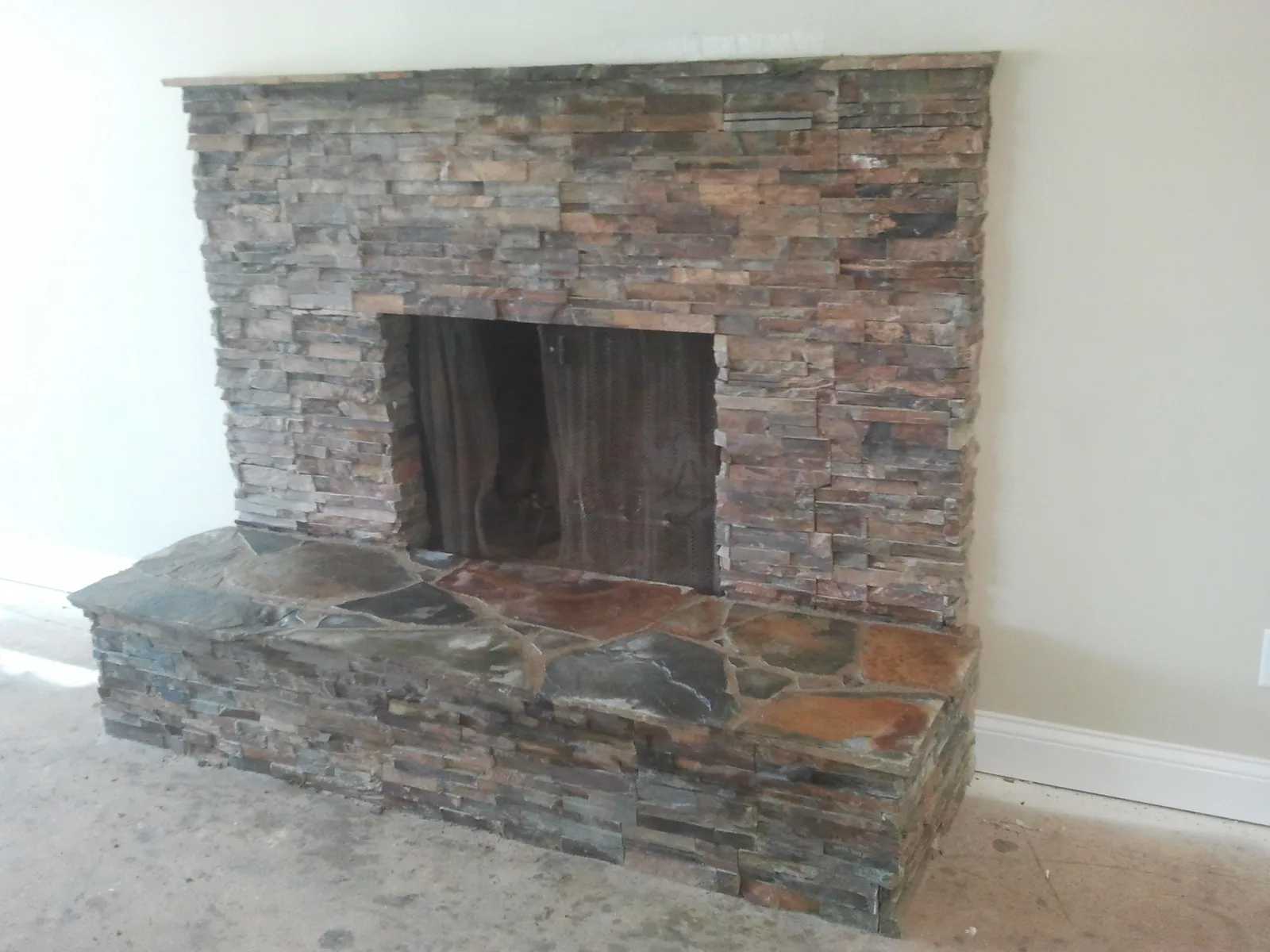
Alpine nights are cold enough to want a fire and the hills dry enough to fear one. Shaun rebuilds crowns and caps, fits spark arrestors, repairs and reinforces old chimneys, and builds new fireplaces and fire pits placed where the Alpine Fire Protection District allows them.
CSLB #979389 · C-29 Licensed · Bonded $25,000 · Free on-site estimates
Alpine fireplaces by the numbers
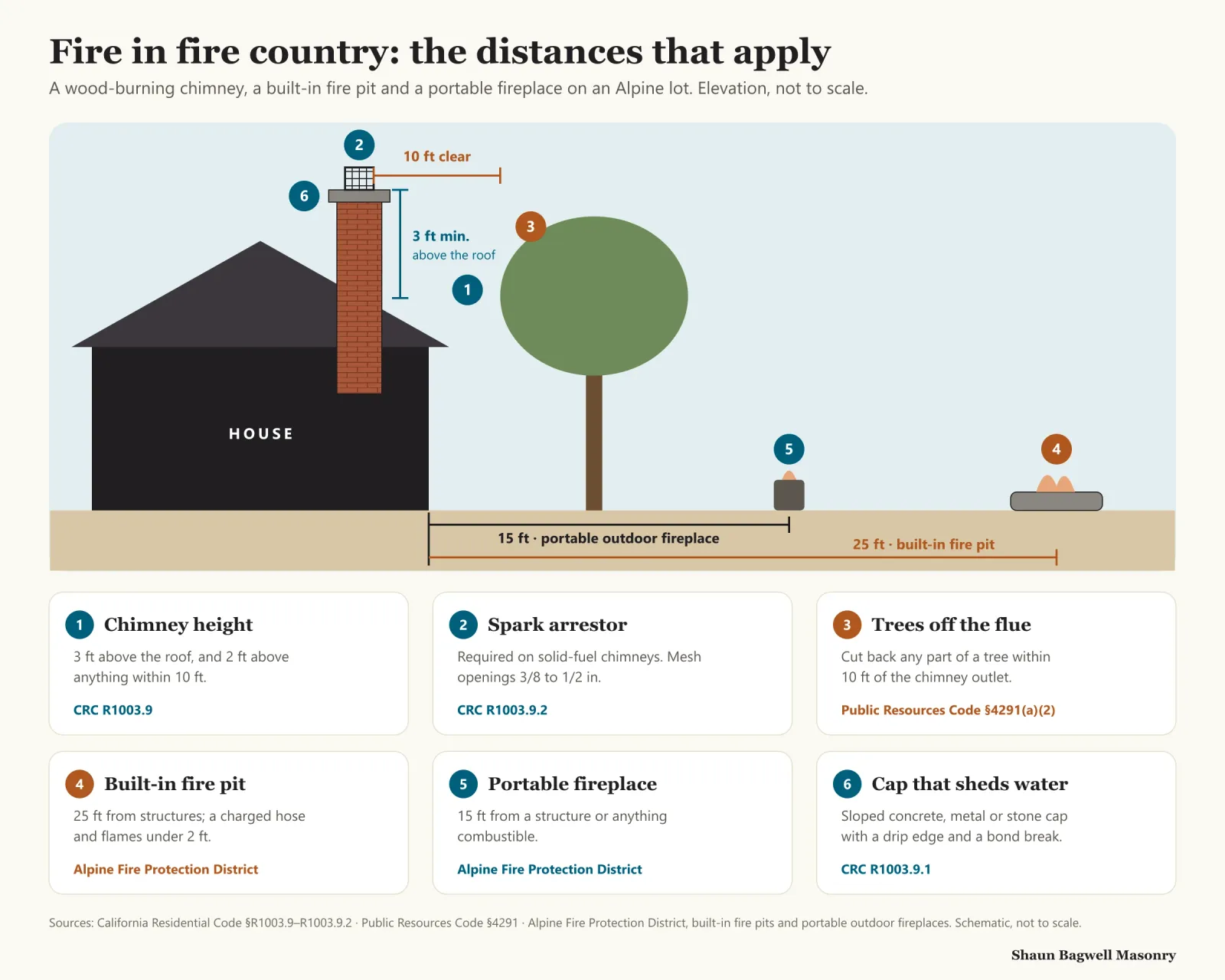
Alpine’s average December and January lows sit around 42°F, with about 6.6 nights a year at or below freezing — enough that a lot of homes here still burn wood. That makes the top of the chimney the part that matters most. California’s residential code requires an approved spark arrestor on every chimney serving a solid-fuel fireplace or appliance, with mesh openings between 3/8 and 1/2 inch, and state law requires any part of a tree within 10 feet of the chimney outlet to be cut back.
The reason is local. The 2018 West Fire started off I-8 and West Willows Road and destroyed 48 structures in Alpine. Outdoors, the Alpine Fire Protection District keeps built-in fire pits 25 feet from structures and combustible material and portable outdoor fireplaces 15 feet away. Indoors and out, the job is the same: a fire you can enjoy that stays where it belongs.
Repairs to the masonry you have and new fireplaces built from the footing up. County-wide detail is on the chimney repair and fireplace pages.
Repair
Cracked mortar crowns replaced with a sloped cap that has a drip edge and a bond break around the flue, and a code spark arrestor fitted — the two things that keep water out and embers in.
Repair
Eroded joints raked out and repointed, spalled brick replaced, flashing re-set where the chimney meets the roof. Alpine’s hot days and cold nights work old mortar hard.
Seismic
Where a chimney above the roofline is loose or leaning, we take it down and rebuild it reinforced and anchored to the framing as the residential code requires for seismic regions.
Fireplaces
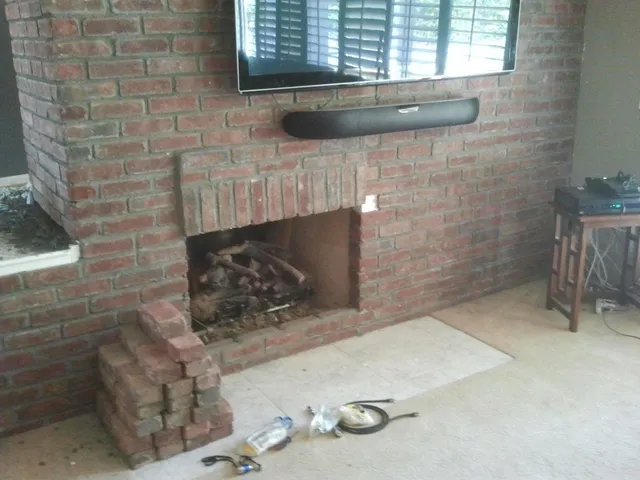
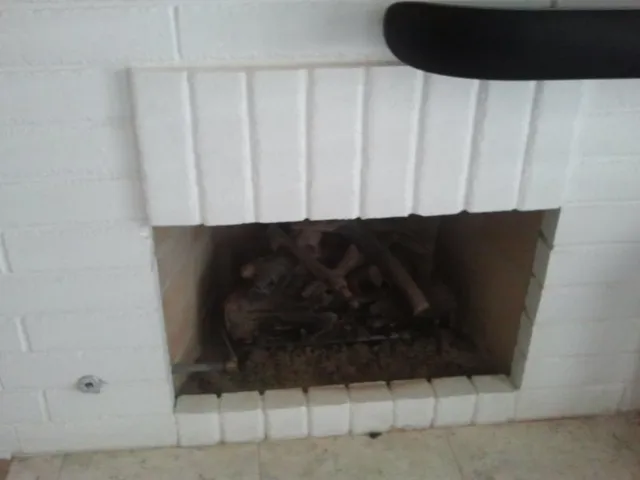
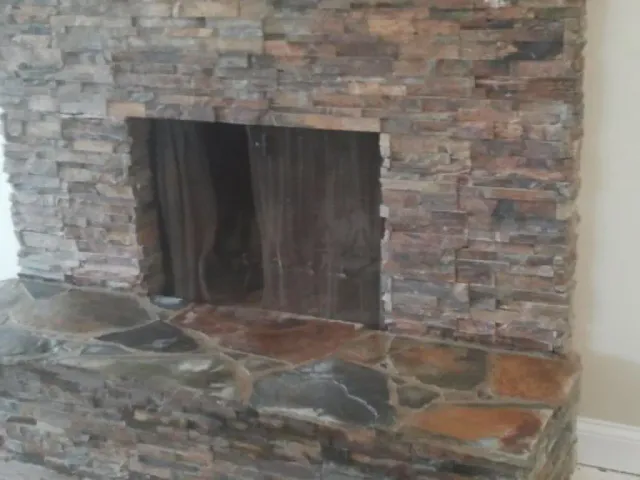
Dated brick refaced in stacked stone or fresh brick, hearths rebuilt and extended to code.
Fireplaces
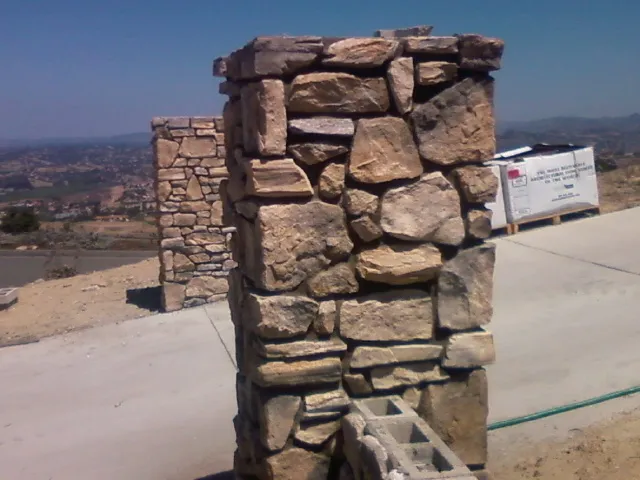
Site-built fireboxes on a proper footing with the chimney sized, reinforced and topped to code — wood or gas, in stone the ranch-style Alpine house suits.
Outdoors
Sited first, built second: a built-in pit 25 feet from structures and combustibles under Alpine FPD rules, with gas as an option where a wood fire doesn’t fit the lot.
Most chimney trouble starts at the top. California’s residential code wants a masonry chimney to end at least 3 feet above the roof and 2 feet above anything within 10 feet, finished with a concrete, metal or stone cap that is sloped to shed water with a drip edge and a caulked bond break around the flue. The walls must be at least 4 inches of solid or grouted masonry, and the chimney must be lined.
Down at the firebox, the fireplace code sets a 12-inch footing extending 6 inches past the fireplace, a firebox at least 20 inches deep and, in seismic regions, four No. 4 vertical bars with ties and straps tying the chimney to the house. When we rebuild an old chimney in Alpine, that is the standard it goes back to.
Alpine is unincorporated, so a new masonry fireplace or a chimney rebuild goes through County of San Diego Planning & Development Services. Outdoor fire is the Alpine Fire Protection District’s call: the district has adopted the 2026 County fire and wildland-urban interface codes, and publishes its own rules for recreational fires.
For a built-in fire pit the district requires 25 feet from any structure or combustible material, a charged garden hose, adult supervision and flames no more than 2 feet above the pit. Portable outdoor fireplaces must be 15 feet from structures and combustibles. State law adds the tree rule at the chimney and 100 feet of defensible space around the house.
What an Alpine chimney or fireplace needs depends on where the damage is. Here is how we decide.
| Repair | Rebuild above the roof | New fireplace or fire pit | |
|---|---|---|---|
| Typical signs | Cracked crown, eroded joints, missing arrestor | Loose or leaning stack, cracks through the masonry | No fireplace, or one that can’t be saved |
| What we do | New cap, arrestor, repointing, flashing | Take down and rebuild reinforced and anchored | Footing, firebox, chimney or pit built to code |
| Permit | Usually none for like-for-like repair | County PDS | County PDS; Alpine FPD siting for outdoor fire |
| Code points | R1003.9.1 cap · R1003.9.2 arrestor | R1001.3–4 steel and anchorage | R1001 footing, firebox, hearth · 25-ft pit rule |
Sources: California Residential Code §R1001 and §R1003; Alpine Fire Protection District recreational fire rules. Permit needs are confirmed per job with County PDS.
Crown, cap, arrestor, flashing and nearby trees — the fire-season risks — then the firebox and hearth.
Repair, rebuild or leave it: what’s needed, what isn’t, and what the code and the fire district say.
County PDS for rebuilds and new fireplaces; Alpine FPD rules for any outdoor fire feature.
Steel and anchorage on rebuilds, a sloped cap with a drip edge, a code arrestor, and mortar suited to Alpine’s heat swings.
We point out branches within 10 feet of the outlet so they can be cut before the first fire.
Final check, safe-use notes and a written workmanship guarantee. The USFA advises an inspection every year.
Planning one? Shaun will walk the site with you and tell you what it needs — free, no obligation.
Call (619) 581-2492The same chimney faces different exposure depending on where in Alpine it stands.
The Alpine page covers the ground, permits and neighbourhoods across every kind of job. The county-wide pages go deeper on the build itself.
Straight answers before you hire. Anything else — call, and Shaun answers it himself.
Call (619) 581-2492If it serves a wood-burning fireplace or any solid-fuel appliance, yes. California’s residential code requires an approved spark arrestor with mesh openings no larger than 1/2 inch and no smaller than 3/8 inch, and a net free area at least four times the flue outlet.
The Alpine Fire Protection District requires a built-in fire pit to be 25 feet from any structure or combustible material, with a charged garden hose, an adult in attendance and flames no higher than 2 feet. Portable outdoor fireplaces must be 15 feet away.
Yes. State law requires any part of a tree within 10 feet of the outlet of a chimney or stovepipe to be removed. We flag it on every Alpine chimney we look at.
It lets water into the masonry, and Alpine’s freezing nights and hot days make that worse over time. A replacement cap sloped to shed water, with a drip edge and a bond break around the flue, is a modest job compared with a rebuild later.
Only if the masonry above the roof is loose, leaning or cracked through. If it is, a rebuild goes back reinforced and anchored to the framing as the code requires in seismic regions — the details older chimneys lack.
It varies with size, fuel and stone. For reference, the 2023 NAR/NALP Remodeling Impact Report put a typical stone fire feature with a gas burner and flagstone patio at about $9,000 nationally. We give you an itemised written price after a free visit.
Yes — based at 2351 Eltinge Dr, Alpine. California C-29 masonry licence #979389, issued 2012, bonded and insured. Check it at cslb.ca.gov.
Call Shaun at (619) 581-2492 or send the form. He’ll look at the top of the chimney first, tell you what the code and the fire district require, and give you a written, itemised price.