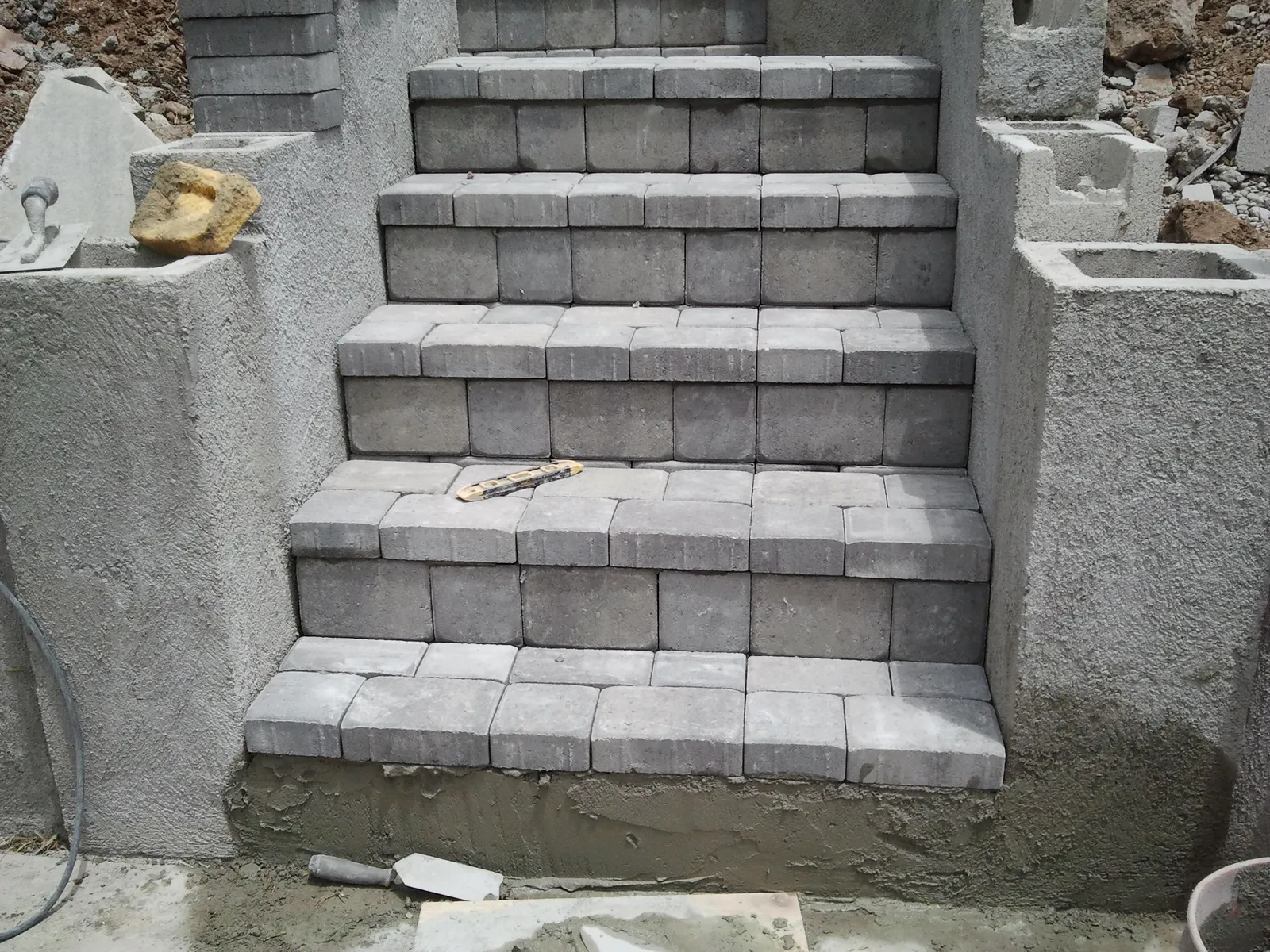
Close-up of paver stair treads set between smooth plastered block walls.

Pavers, Patios & Pool Decks in Alpine, CA

A patio you can stand on barefoot in August, a pool deck that stays put, and hardscape where the bark and lawn used to meet the house. Built from Alpine, on a properly compacted base — with samples tested in your own sun before you pick a colour.

CSLB #979389 · C-29 Licensed · Bonded $25,000 · Free on-site estimates

Alpine hardscape by the numbers

Inland Heat and Fire Rules Shape an Alpine Patio

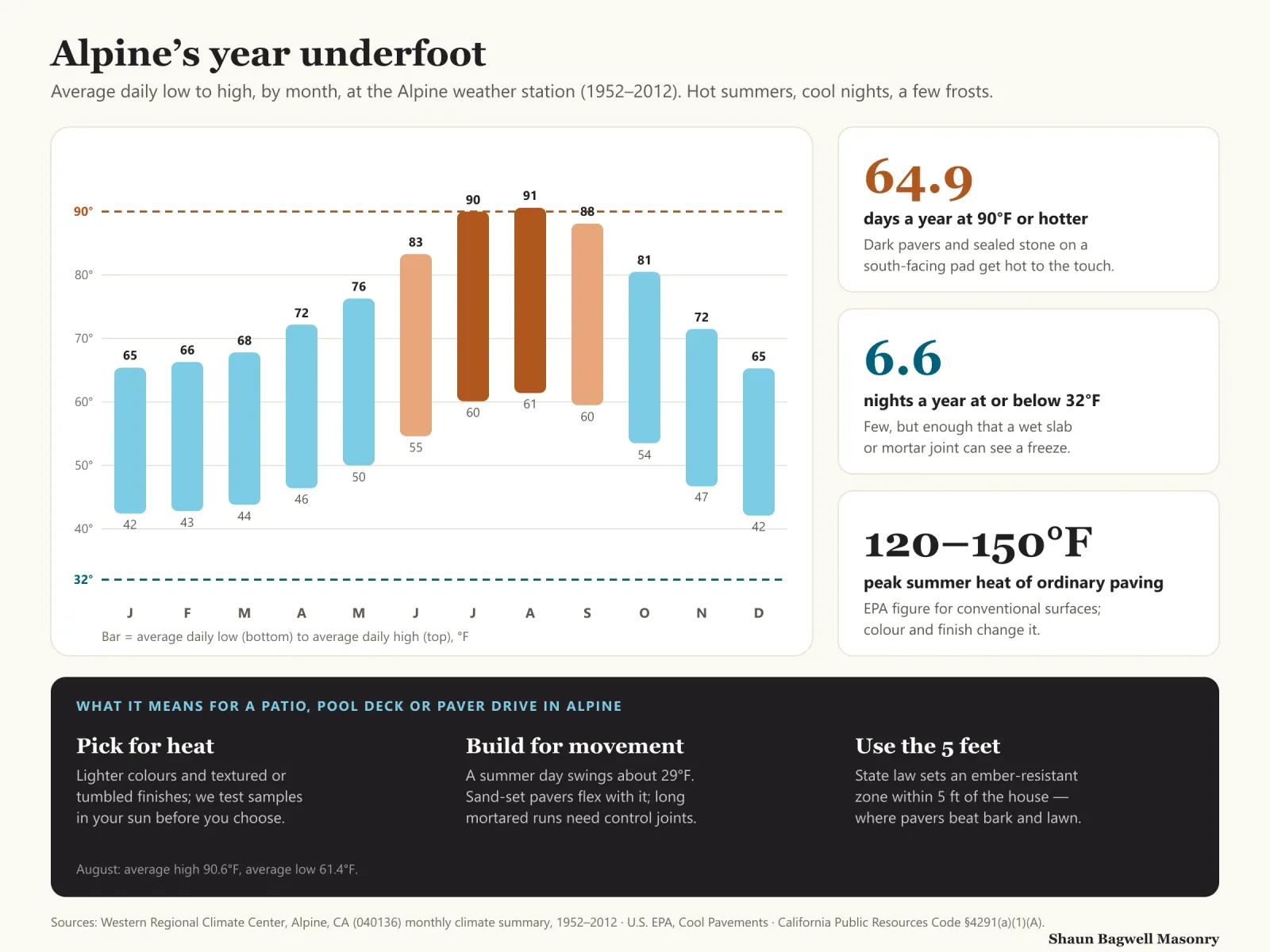
The Alpine weather station has averaged 64.9 days a year at 90°F or hotter, with July and August highs around 90 and nights near 60. The EPA puts the peak summer temperature of conventional paving at 120–150°F. So the first question on an Alpine patio or pool deck isn’t pattern — it’s how hot the surface gets on your exposure, and the answer depends on colour and finish.

The same station logs about 6.6 nights a year at or below freezing, and most of the 15.69 inches of yearly rain falls January through March. That mix of summer heat, winter frost and heavy storms is why we set pavers on a compacted base with flexible joints, slope every surface to drain, and keep long mortared runs broken up with control joints.

  • 64.9Days a year at 90°F or hotter in AlpineWRCC
  • 120–150°FPeak summer heat of conventional pavingU.S. EPA
  • 5 ftEmber-resistant zone around the housePRC §4291
  • 60 inMinimum pool-enclosure heightH&SC §115923
Infographic chart of average daily low and high temperatures by month at the Alpine weather station, 1952 to 2012. Highs run from 65°F in January to 90°F in July and 91°F in August; lows from 42°F to 61°F. Side cards: 64.9 days a year at 90°F or hotter; 6.6 nights at or below 32°F; conventional paving reaches 120 to 150°F in summer per the EPA. A dark strip explains what this means for a patio, pool deck or paver drive: choose lighter, textured finishes and test samples; build for a roughly 29°F daily swing with sand-set pavers and control joints; and use the 5-foot ember-resistant zone for hardscape.
Alpine runs hot by day and cool by night. The bars show the average daily range each month — the case for heat-tested colours, flexible joints and hardscape in the 5 feet next to the house.Sources: WRCC Alpine (040136); U.S. EPA; PRC §4291.

Hardscape We Lay in Alpine

Interlocking pavers, natural stone and brick, on patios, walks, drives and around pools. The county-wide detail is on the paver, patio and pool deck pages; this page covers what changes up here.

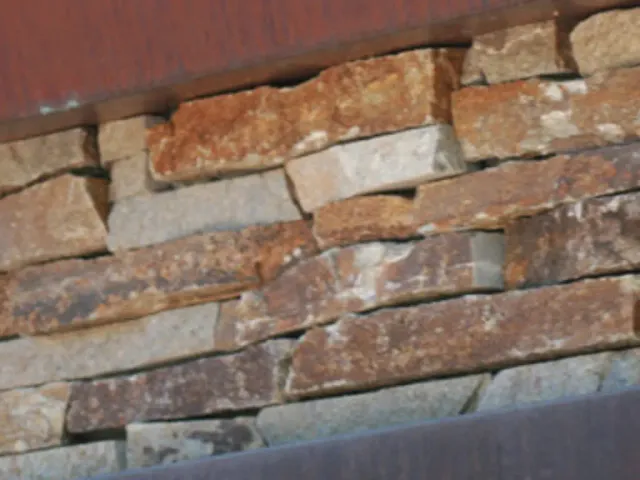
Close-up of stacked natural stone in warm rust and grey tones.

Patios

Paver and stone patios

Concrete pavers, flagstone, travertine or brick, laid on a compacted aggregate base with edge restraint. We put two or three sample pieces in your sun for an afternoon and check them with an infrared thermometer before you choose.
Pool decks

Pool decks and coping

Pavers, travertine or natural stone decks sloped away from the water to drains, with bullnose or flagstone coping set to the pool edge. Light, textured surfaces for bare feet in July.

Fire

Hardscape for the first 5 feet

State law sets an ember-resistant zone within 5 feet of the house. Replacing bark, shrubs and lawn there with pavers or flagstone walks is one of the most practical ways to meet it — and it looks finished.

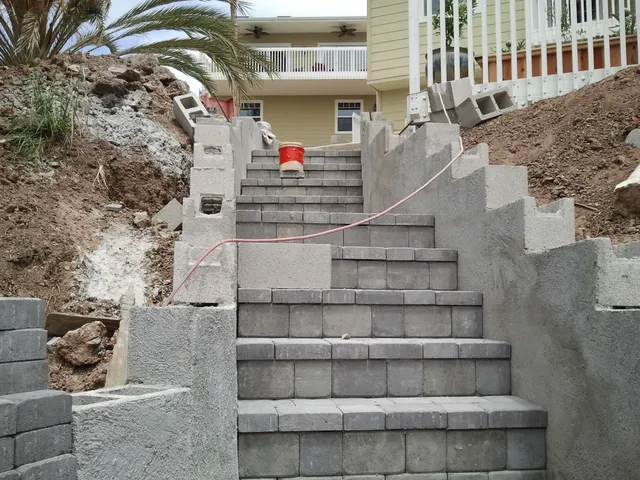
A paver stairway climbing between stepped, plastered block walls.

Drives

Paver driveways and courtyards

Long Alpine drives and motor courts in pavers rated for vehicles, on a deeper base. Individual pavers can be lifted and relaid if the ground moves, without a jackhammer.

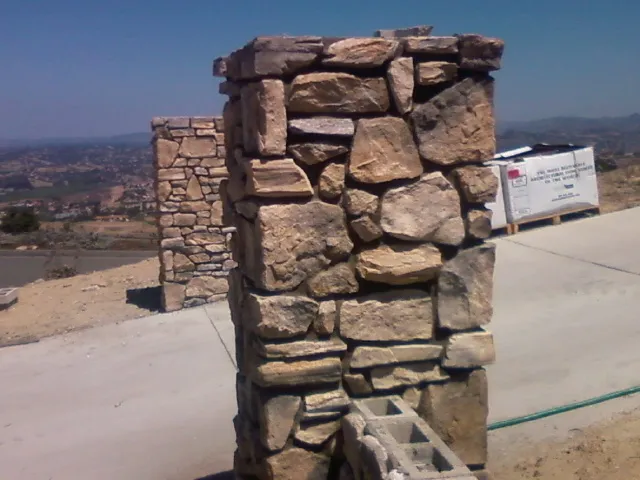
Fieldstone pillar with a flat stone cap, showing the stone and mortar joints.

Grade

Steps, landings and seat walls

On sloped lots the patio rarely sits alone: block-cored steps with paver treads, landings and low seat walls that double as a retaining edge.

Safety

Masonry pool barriers

Block or stone walls that form part of a pool enclosure: at least 60 inches tall, with no handholds or footholds a small child could climb. Pool barriers are not covered by the 6-ft wall exemption, so they are permitted.

What Goes Under an Alpine Patio

A paver surface is only as good as its base. We excavate to firm ground, place and compact aggregate base in lifts, screed a bedding layer, lay the pavers to a slope that drains, lock the edges, and sweep and compact joint sand. Driveways get a thicker base than patios.

On decomposed granite the excavation is usually straightforward; where we hit clay, the base gets deeper and the drainage more deliberate. Mortared stone patios and pool decks go on a reinforced slab with control joints, because a 29°F swing between an August afternoon and the night after it moves a rigid surface.

Patio and walk permit
Exempt to 30 in high
Not over a basement or story below, not part of an accessible route.County Code §91.1.105.2(a)(9)
August in Alpine
90.6°F high · 61.4°F low
A daily swing of about 29°F that rigid surfaces must allow for.WRCC
Freezing nights
6.6 a year
Enough to matter for wet mortar joints and fresh concrete.WRCC
Wettest months
Jan–Mar
2.90, 3.15 and 2.95 inches on average — slope and drains are not optional.WRCC

Permits, Pools and Fire Rules in Alpine

Alpine is unincorporated, so the County building code applies. Patios, walks and driveways no more than 30 inches above grade don’t need a building permit; raised decks, pools and anything structural do. If a new drive apron reaches a County road, the work in the right-of-way needs a County DPW encroachment permit.

For pools, state law requires a new or remodelled pool at a single-family home to have at least two of seven drowning-prevention features when it’s permitted — and an enclosure is one of them. The Alpine Fire Protection District has adopted the 2026 County fire and wildland-urban interface codes, so hardscape near the house is a fire decision as much as a design one.

At-grade patio or walk
No building permit
Up to 30 in above adjacent grade.PDS 110
Apron in a County road
Encroachment permit
$217 fee; drawings; call 811 two working days before digging.County DPW
New or remodelled pool
2 of 7 safety features
An enclosure isolating the pool is one option.H&SC §115922
Pool enclosure
60 in tall minimum
Gaps under 4 in; no more than 2 in at the bottom; self-closing, self-latching gates.H&SC §115923
Next to the house
5-ft ember-resistant zone
Part of the 100-ft defensible space the state requires.PRC §4291

Pavers, Flagstone or Travertine in Alpine Sun?

All three work here. The differences that matter on an Alpine lot are heat, how the surface handles ground movement and how it’s repaired. Heat depends on colour and finish more than material, so we test your shortlist on site.

Pavers, Flagstone or Travertine in Alpine Sun?
Concrete paversFlagstoneTravertine
Set onCompacted base and sandSand-set or mortared on a slabSand-set or mortared on a slab
If the ground movesLift and relay the areaSand-set flexes; mortared can crackSand-set flexes; mortared can crack
Underfoot in summerChoose light coloursVaries widely by stoneLight, tumbled or honed finishes
Around a poolTextured face, bullnose copingNatural slip resistance, stone copingClassic for decks and coping
Best Alpine useDrives, courtyards, Zone-0 walksRanch-style patios and pathsPool decks and shaded patios

Heat guidance: U.S. EPA notes conventional paving can reach 120–150°F in summer; no published study ranks these materials by surface temperature, which is why we test samples in your yard.

How an Alpine Patio or Pool Deck Gets Built

  1. Site visit and samples

    Shaun checks slope, drainage, sun and any County-road apron, and leaves samples to heat-test in your yard.

  2. Layout and drainage

    Grades set so water runs away from the house and pool to a drain or a safe outlet — before anything is dug.

  3. Excavate and base

    Dug to firm ground, aggregate base placed and compacted in lifts; deeper for driveways.

  4. Lay and lock

    Bedding screeded, pavers or stone laid to pattern, edges restrained, coping set at the pool.

  5. Joints and compaction

    Joint sand swept in and plate-compacted; mortared work cured and joints cut.

  6. Walk-through

    A final look together, care notes for sealing, and a written workmanship guarantee.

Planning one? Shaun will walk the site with you and tell you what it needs — free, no obligation.

(619) 581-2492

What Patios and Pool Decks Cost

These are national cost-guide figures, not our prices. San Diego jobs usually run higher, and on an Alpine lot access, slope and base depth move the number most. You get an itemised written quote after the visit.

What Patios and Pool Decks Cost
Item (national guide)Typical installed range
Paver patio$10–$25 per sq. ft.
Flagstone patio$16–$30 per sq. ft.
Brick patio$12–$20 per sq. ft.
Natural stone pool deck$10–$40 per sq. ft.
Pool coping$40–$50 per linear ft.

Sources: Fixr patio cost guide (August 2022) and pool deck cost guide (January 2025), national averages. If you’re removing lawn, ask about the County Waterscape rebate for unincorporated areas before demolition — pre-approval is required and hardscape area generally doesn’t count.

Patio and Pool Work Around Alpine

Where a lot sits in Alpine changes the sun, the slope and the fire exposure — and with them the right surface.

  • The village along Alpine BoulevardZIP 91901Smaller lots and older patios. Most jobs replace cracked slabs with pavers and turn the strip beside the house into a hardscape walk.
  • Hillside homes south of the villagePools and patios on cut pads with views. Drainage off the slope above, steps and seat walls tying levels together.
  • Harbison CanyonCanyon lots with afternoon shade on one side and full sun on the other — the same paver can feel very different on each. More on our Crest, Dehesa and Harbison Canyon paver page.
  • Dehesa and the western ranchesBig outdoor areas, long drives and courtyards. Vehicle-rated pavers on a deeper base, and stone that suits a ranch setting.
  • Brush-edge lots near the forestThe 5 feet next to the house matters most here. Paver and flagstone walks in place of bark and shrubs.

More Masonry in Alpine

The Alpine page covers the ground, permits and neighbourhoods across every kind of job. The county-wide pages go deeper on the build itself.

Alpine Paver, Patio & Pool Deck Questions

Straight answers before you hire. Anything else — call, and Shaun answers it himself.

(619) 581-2492

Do I need a permit for a patio in Alpine?

Not for an at-grade patio. The County exempts patios, walks and driveways no more than 30 inches above grade, not over a basement and not part of an accessible route. Raised decks, pools, covers over 300 sq ft and any apron in a County road need permits.

Which pavers stay coolest in Alpine summers?

Lighter colours and textured, tumbled or honed finishes generally stay cooler, but no published study ranks materials reliably. Alpine averages about 65 days a year at 90°F or more, so we put your shortlisted samples in the sun and measure them with an infrared thermometer before you decide.

Are pavers better than concrete on Alpine ground?

On ground that can move, often yes: pavers on a compacted base flex, and a section can be lifted and relaid. A concrete slab is fine when the base and joints are right — see our Alpine concrete page for that side.

What does a pool enclosure need?

State law requires at least two of seven drowning-prevention features when a new pool is permitted or an existing one is remodelled, and an enclosure is one. It must be at least 60 inches tall with no gaps a 4-inch sphere can pass and gates that self-close and self-latch. A masonry wall can form part of it.

Can a patio help with fire safety?

Yes. State law sets an ember-resistant zone within 5 feet of the house, and hardscape is the simplest way to keep that ring free of anything that burns. Pavers or flagstone there also give you a clean edge to the planting beyond.

Who will actually do the work?

Shaun Bagwell, from Alpine — California C-29 licence #979389, bonded and insured since 2012. Check it at cslb.ca.gov.

Plan Your Alpine Patio or Pool Deck

Call Shaun at (619) 581-2492 or send the form. He’ll look at the sun, slope and drainage, leave samples to test, and give you a written, itemised price.

(619) 581-2492

Call Now(619) 581-2492Estimate