Close-up of interlocking concrete paver stair treads set between plastered block walls.

Pavers, Patios and Pool Decks in Lakeside, CA

Paver driveways that replace rutted gravel, stone and brick patios, and pool decks with proper coping — built on a compacted base over Lakeside’s river sand or granite, and used to make the 5 feet around your house ember-safe. Free on-site design visit from neighbouring Alpine.

CSLB #979389 · C-29 Licensed · Bonded $25,000 · Free on-site estimates

Lakeside hardscape by the numbers

In Lakeside, the First 5 Feet Around the House Is Hardscape by Rule

Lakeside Fire Protection District asks for a Zone Zero — the first 5 feet out from the house, decks included — that is non-combustible: rock, stone pavers, cement, gravel or bare earth, with no bark or mulch. The district adopted the new state fire-hazard maps by Ordinance 25-01 in June 2025 and treats every property in a mapped zone as Very High. A paver band or patio against the walls is the most usable way to meet that.

Water is the other driver. Lakeside Water District, which serves 17.6 square miles from Eucalyptus Hills to Wintergardens, is a member of the San Diego County Water Authority, so its customers can use the regional SoCal WaterSmart turf rebate — $2 per square foot — but only permeable hardscape is allowed in the converted area. Pavers on an open-graded base can qualify; a grouted patio or poured slab cannot.

  • 0–5 ftZone Zero: rock, stone pavers or cement — no mulchLakeside FPD
  • $2/sq ftTurf rebate; only permeable hardscape countsSoCal WaterSmart
  • 60 inMinimum height of a pool enclosure wallH&SC §115923
  • 30 inFlatwork up to this height above grade needs no County building permitPDS 110
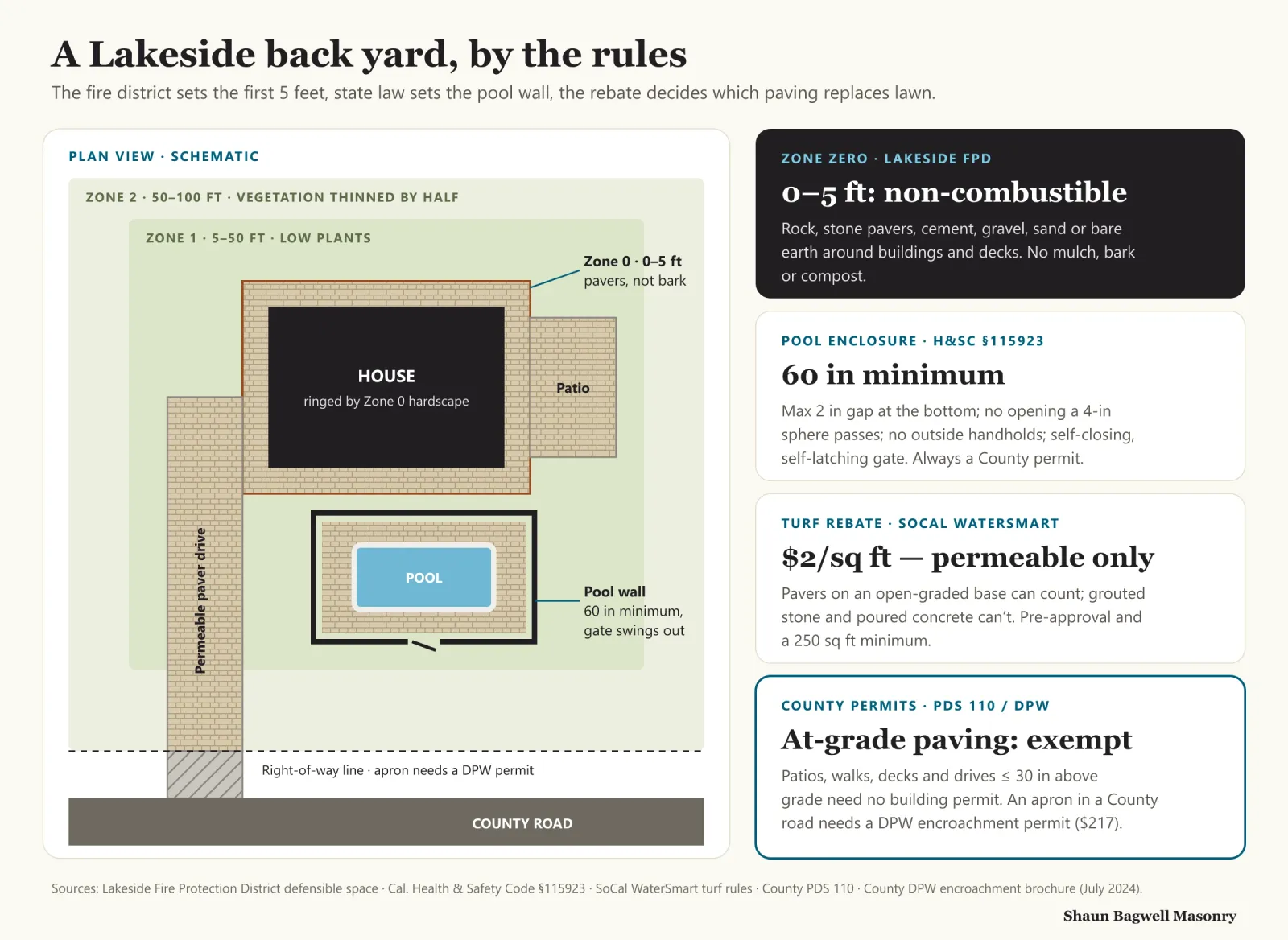
Infographic: plan view of a Lakeside house and back yard. A hardscape band runs around the house as Zone Zero, 0 to 5 feet out, labelled for stone pavers, rock, cement or gravel and no bark or mulch, per Lakeside Fire Protection District. Zone One runs 5 to 50 feet with low vegetation, and Zone Two 50 to 100 feet with natural vegetation thinned by half. In the yard, a paver patio and a pool with a coping edge and paver deck are surrounded by a pool enclosure wall at least 60 inches high with no handholds or footholds on the outside and a self-closing, self-latching gate, per California Health and Safety Code 115923. A permeable paver driveway runs to the street, noting that an apron in the County road right-of-way needs a Department of Public Works encroachment permit, and that only permeable hardscape counts toward the $2 per square foot SoCal WaterSmart turf rebate.
One back yard, three sets of rules. The fire district sets the first 5 feet, state law sets the pool enclosure, and the turf rebate decides which paving can replace lawn. Schematic, not to scale.Sources: Lakeside FPD defensible space; H&SC §115923; SoCal WaterSmart rules.

Paving, Patios and Pool Decks We Build in Lakeside

Concrete pavers, natural stone, brick and travertine, laid over a base built for the ground — the county-wide detail is on our paver, patio and pool deck pages.

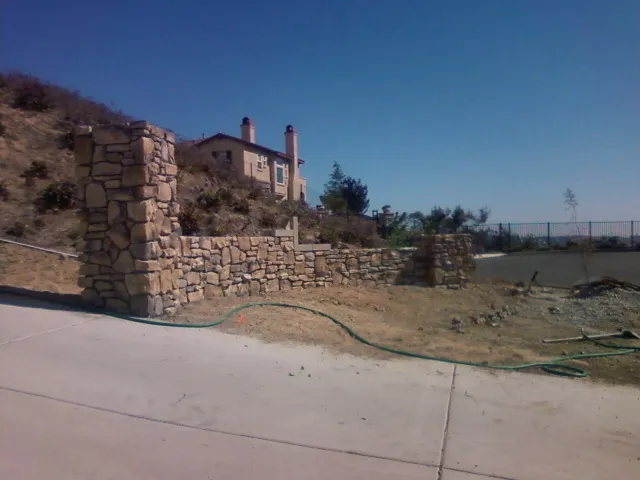
A stone pillar and low stone wall at the edge of a driveway entrance.

Driveways

Paver driveways and aprons

Long rural drives and gravel turnarounds converted to interlocking pavers on a thicker, compacted base for trucks and trailers — permeable where the rebate or drainage calls for it, with the County encroachment permit where the apron meets the road.

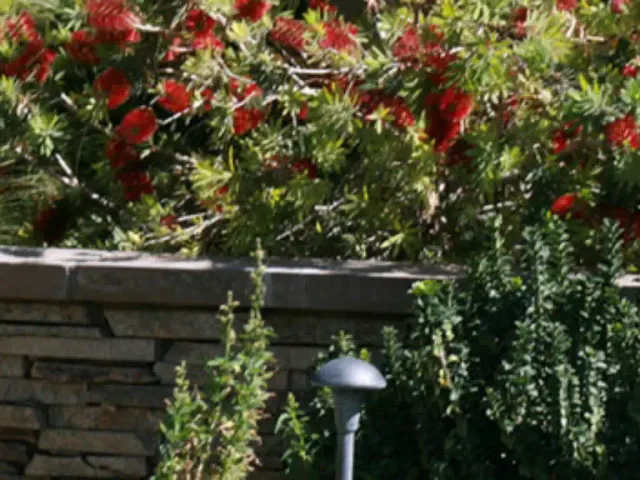
A stacked natural-stone garden wall with a flat stone cap.

Patios

Stone, brick and paver patios

Flagstone set dry or in mortar, brick, and concrete pavers — sized for how you use the yard, sloped away from the house, and run tight to the walls so the patio doubles as Zone Zero.

Ember-safe

Zone Zero hardscape bands

Paver or stone bands around the footprint and under decks, replacing bark and shrubs in the first 5 feet — the materials Lakeside Fire Protection District lists for that zone.

Pool decks

Pool decks and coping

Concrete paver, travertine and natural-stone decks with bullnose or cantilevered coping, a flexible joint between coping and deck, and textured finishes — never polished stone at the water.

Safety

Pool enclosure walls

Block or stone pool walls at least 60 inches high with a smooth outside face — no veneer ledges or stepped caps a child could climb — and self-closing, self-latching gates. Unlike other freestanding walls, a pool barrier always needs a County permit.

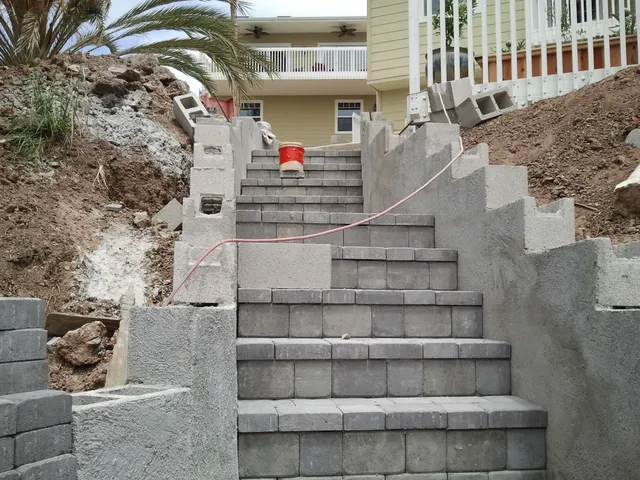
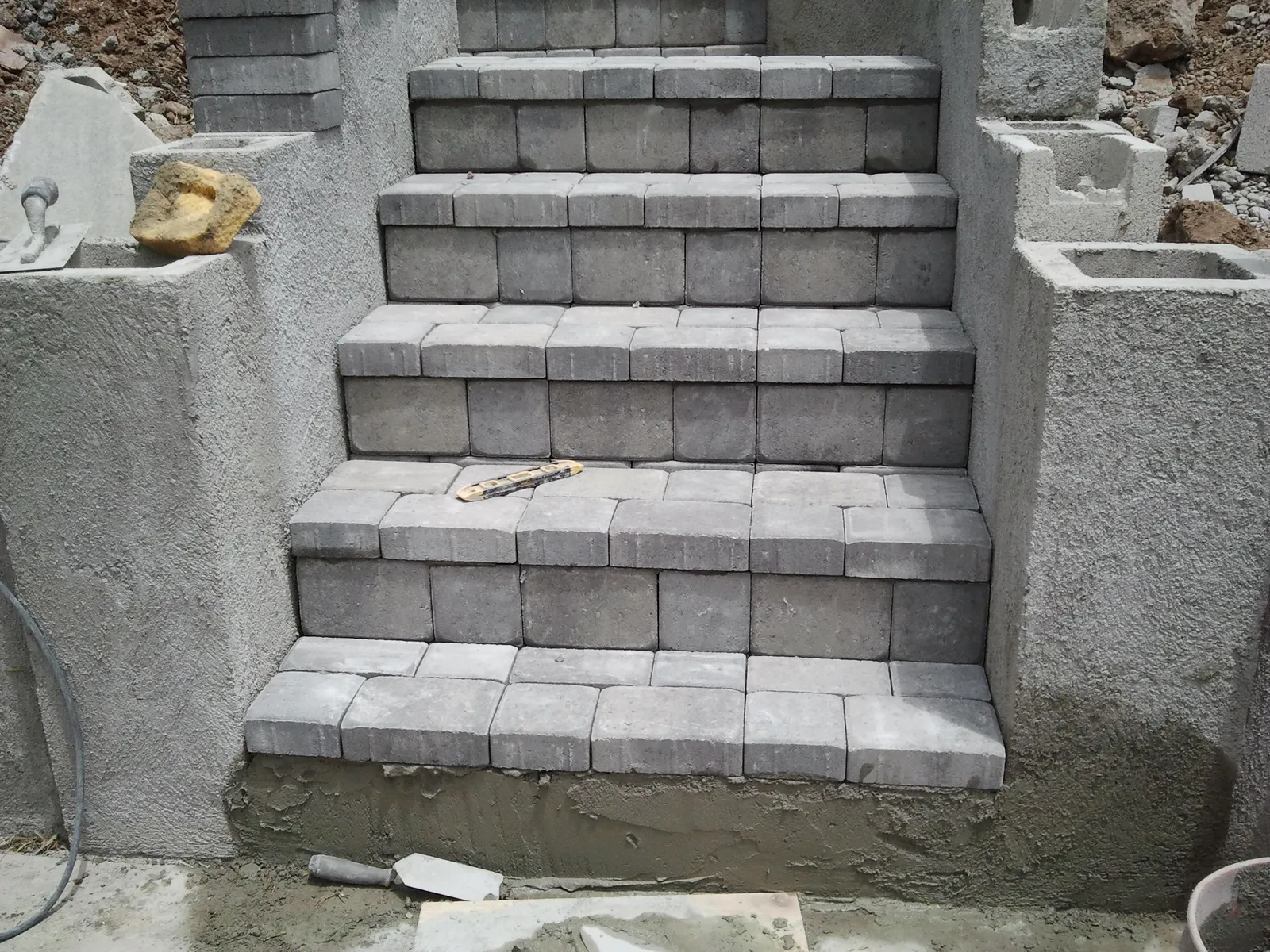
A paver stairway climbing between stepped, plastered block walls on a slope.

Slopes

Paver steps and terraced patios

On sloped lots, stepped patios and paver stairs between low walls turn a hillside yard into usable levels.

Built for River Sand and Granite

A paver surface is only as flat as the base under it. On the valley floor, where the County describes the ground as loose San Diego River sand and gravel, that means digging out loose material and building a compacted aggregate base in lifts; on the granite hillsides it means dealing with rock and getting water off the slope. Edge restraint holds the field together either way.

Pool decks get the most care: slope away from the pool and the house to drains, a flexible joint where deck meets coping so movement doesn’t crack the bond beam, and a textured surface for wet feet. For porcelain or tile, ask for a product rated for exterior wet use under ANSI A326.3 — the familiar 0.42 figure is an interior benchmark, not a pool-deck rule.

At-grade flatwork
≤ 30 in above grade
Patios, walks and driveways at this height are exempt from a County building permit.PDS 110
Pool enclosure
60 in minimum
≤ 2 in gap at the bottom; no gap passes a 4-in sphere; no handholds outside.H&SC §115923
New or remodelled pool
2 of 7 safety features
An enclosure wall is one; alarms, covers and self-latching doors are others.H&SC §115922
Patio cover
≤ 300 sq ft exempt
Projected roof area, accessory to a dwelling (County Code 91.1.105.2).PDS 110

Permits, Fire Rules and Rebates in Lakeside

Because Lakeside is unincorporated, County of San Diego code applies. Patios, walks, pool decks and driveways at grade — no more than 30 inches above the ground beside them — are exempt from a building permit, and so are patio covers up to 300 square feet. The pool itself, and any enclosure wall around it, are not. Where a driveway apron meets a County road, the Department of Public Works requires an encroachment permit ($217 in its July 2024 brochure).

Fire rules come from Lakeside Fire Protection District: a non-combustible Zone Zero 0–5 feet from buildings and decks, low vegetation in Zone One out to 50 feet, and natural vegetation cut by half in Zone Two to 100 feet. Homes sold in a High or Very High zone need a defensible-space inspection under AB 38 — the district charges $100 — so hardscape near the house helps at sale time too.

For lawn conversions, SoCal WaterSmart pays $2 per square foot through Water Authority agencies such as Lakeside Water District, requires pre-approval and at least 250 square feet of turf removed, and allows only permeable hardscape. The County also runs its own Waterscape program for unincorporated areas with the same permeable-only limit. Check both before the lawn comes out.

Zone Zero (0–5 ft)
Non-combustible
Rock, stone pavers, cement, gravel, sand or bare earth; no mulch, bark or compost.Lakeside FPD
Home-sale inspection
AB 38 · $100
Defensible-space inspection for homes sold in High or Very High zones.Lakeside FPD
Turf rebate
$2 per sq ft
Pre-approval, 250 sq ft minimum, permeable hardscape only.SoCal WaterSmart
Driveway apron
DPW encroachment permit
Any work in a County road right-of-way.DPW brochure

Pavers, Stone or Poured Concrete?

What each surface means for a Lakeside yard — including the two local questions, the fire zone and the turf rebate.

Pavers, Stone or Poured Concrete?
Concrete paversFlagstone / natural stonePoured concrete
Zone Zero (0–5 ft)Yes — listed by Lakeside FPDYes — stone is listedYes — cement is listed
Turf-rebate areaYes if permeable, on an open-graded baseYes if dry-laid and permeableNo — solid surfaces don’t count
Driveway loadsGood on a thicker compacted basePatios and walks, not drivewaysGood with steel and control joints
RepairsLift and relay individual unitsReset individual stonesSaw-cut and patch; colour rarely matches
National cost (installed)$10–$25 per sq ft (patio)$16–$30 per sq ft (patio)$6–$17 per sq ft (patio)

Sources: Lakeside FPD defensible space; SoCal WaterSmart eligibility rules; Fixr patio cost guide (national, 2022 — not our price).

How a Lakeside Paving Project Runs

  1. Design visit

    Shaun looks at the ground, the drainage, the fire zone around the house and whether you’re after a turf rebate — before any material is chosen.

  2. Rebate and permits first

    Turf-rebate pre-approval, a County permit for a pool wall, or a DPW encroachment permit for the apron — all lined up before digging.

  3. Excavation and base

    Loose sand dug out or rock dealt with, base built and compacted in lifts, edges set.

  4. Laying

    Pavers, stone or brick laid to pattern and slope, cut clean at walls, coping and drains.

  5. Joints and finish

    Joints swept and compacted — open-graded where it must stay permeable — and stone sealed where it helps.

  6. Walk-through

    A check of slope and drains, and what keeps the first 5 feet clear for the fire district.

Planning one? Shaun will walk the site with you and tell you what it needs — free, no obligation.

(619) 581-2492

What Paving Costs

National cost-guide figures for comparison. Lakeside jobs move with base depth on loose ground, rock on hillsides, and the length of a rural driveway.

What Paving Costs
Project (national)Typical installed cost
Paver patio$10–$25 per sq ft
Flagstone patio$16–$30 per sq ft
Paved driveway, overall$8–$25 per sq ft
Concrete deck, 12 × 24 ft pool$7,500 average

Fixr national cost guides (patio 2022, driveway 2025, pool deck 2025) — not our price. You get an itemised written proposal after a free site visit.

Where Paving Work Differs Across Lakeside

From river-sand flats to granite hillsides, the base and the brief change by neighbourhood.

  • Moreno Valley & El Monte ValleyRural and horse parcels: long gravel drives converted to pavers, turnarounds sized for trailers, aprons onto County roads.
  • Eucalyptus HillsSloped lots in the Lakeside Water District area: terraced patios, paver steps and drainage off the hill.
  • Wildcat Canyon & Muth ValleyNorthern Lakeside fire country: Zone Zero hardscape bands and stone patios tight to the house.
  • Lindo Lake & town centreOlder homes on the valley floor: replacing cracked slabs with pavers on a properly built base.
  • WintergardensZIP 92040Lakeside Water District customers converting lawn with permeable pavers under the turf rebate.
  • Lake Jennings areaHillside yards near the reservoir: patios, pool decks and enclosure walls on cut-and-fill pads.

More Masonry in Lakeside

The Lakeside page covers the ground, permits and neighbourhoods across every kind of job. The county-wide pages go deeper on the build itself.

Pavers, Patios & Pool Decks Questions

Straight answers before you hire. Anything else — call, and Shaun answers it himself.

(619) 581-2492

Do I need a permit for a patio or pool deck in Lakeside?

Not usually for the paving. County code exempts patios, walks, decks and driveways no more than 30 inches above the adjacent grade (PDS 110), and patio covers up to 300 square feet. The pool itself and any pool enclosure wall do need a County permit, and a driveway apron onto a County road needs a DPW encroachment permit.

Can pavers count toward my defensible space?

Yes. Lakeside Fire Protection District’s Zone Zero — the first 5 feet from buildings and decks — calls for non-combustible surfaces such as rock, stone pavers, cement or gravel, with no mulch or bark. A paver band or patio tight to the walls meets that and gives you somewhere to stand.

Can I get a rebate for replacing my lawn with pavers?

Possibly. Lakeside Water District is a San Diego County Water Authority member, so SoCal WaterSmart’s $2-per-square-foot turf rebate applies — with pre-approval, at least 250 square feet removed, and only permeable hardscape in the converted area. Pavers on an open-graded base can qualify; grouted stone and poured concrete can’t.

How high does a pool wall have to be?

At least 60 inches under California Health & Safety Code §115923, with no more than a 2-inch gap at the bottom, no openings a 4-inch sphere can pass, no handholds or footholds on the outside, and a self-closing, self-latching gate that opens away from the pool. It counts as one of the two safety features a new or remodelled pool needs.

Pavers or concrete for a long rural driveway?

Both work if the base is right. Pavers can be lifted and relaid when a section moves and can be built permeable; concrete is cheaper per square foot but cracks are permanent. On loose valley sand either needs a compacted base and, for horse trailers and trucks, extra thickness.

Are pavers too hot around a pool?

Lighter colours and textured natural stone stay cooler underfoot than dark pavers or smooth concrete. We bring samples so you can compare them in your own sun before choosing.

How much do pavers cost in Lakeside?

National cost guides put paver patios at roughly $10–$25 per square foot installed and paved driveways at $8–$25 (Fixr). Base depth, rock and access move the price. You get an itemised written proposal after a free site visit.

How do I check you’re licensed?

Shaun Bagwell Masonry holds California C-29 Masonry licence #979389, issued 14 December 2012, with a $25,000 bond. Look it up at cslb.ca.gov → “Check a License”.

Plan Your Lakeside Patio, Pool Deck or Driveway

Call Shaun at (619) 581-2492 or send the form. He’ll look at the ground, the fire zone and any rebate you’re after, and put a written, itemised price in your hands.

(619) 581-2492

Call Now(619) 581-2492Estimate