
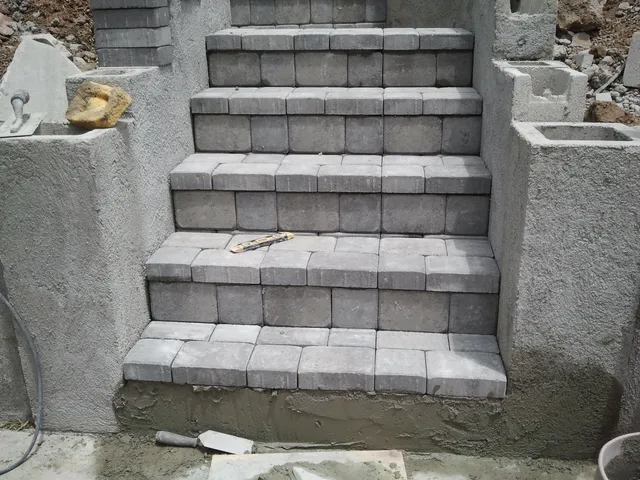
Paver patios
Interlocking paver patios
Concrete or clay pavers on a compacted base, bedding sand and a solid edge restraint, sloped 2% away from the house. When the clay underneath heaves, a corner can be lifted and relaid instead of sawn out.
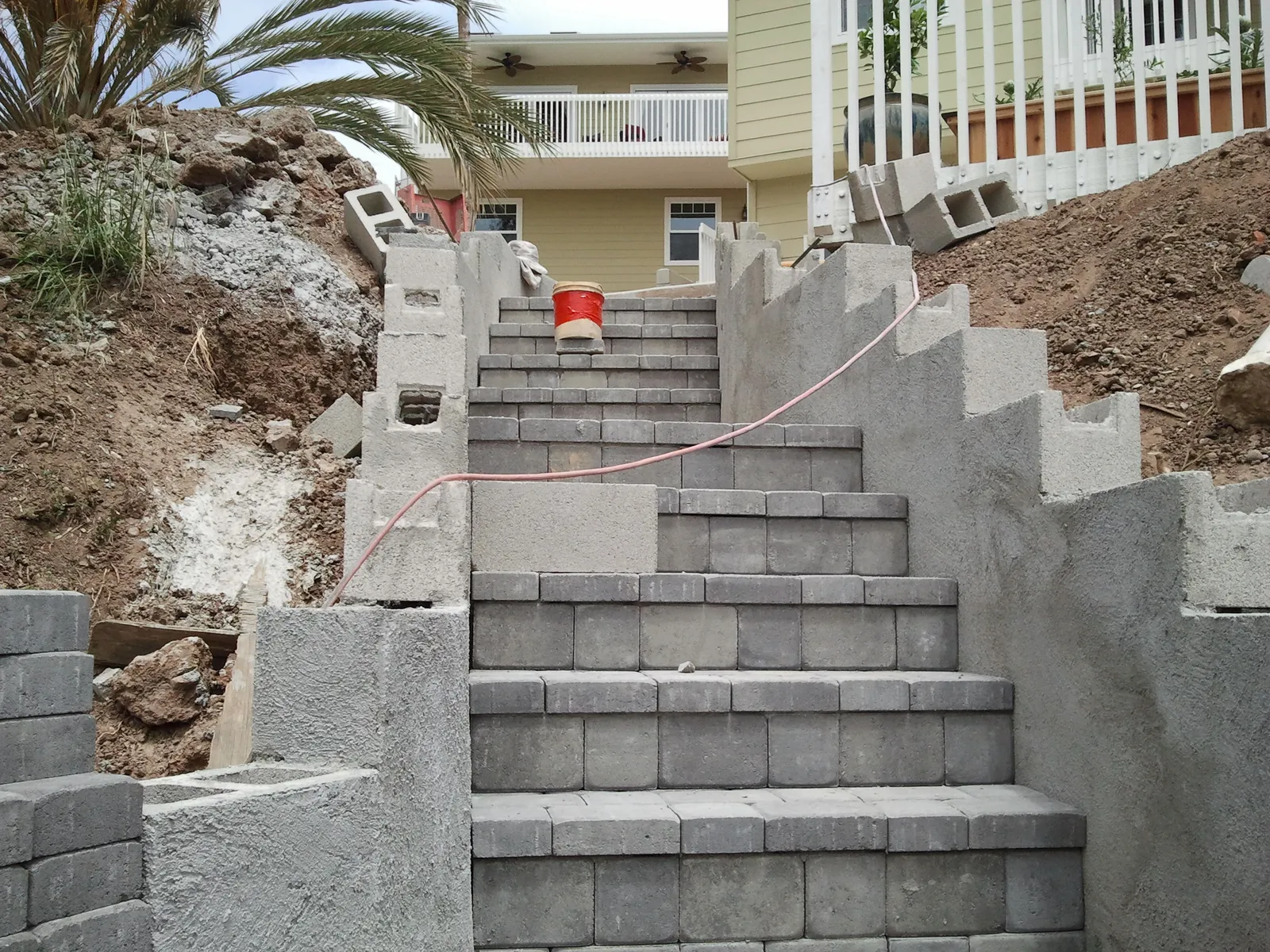
Paver patios and driveways, flagstone and brick terraces, and pool decks with coping — built on a compacted base that lets Lemon Grove’s clay move without cracking your yard, sloped so water leaves the house, and placed where the City’s setback rules allow. One mason, one written price.
CSLB #979389 · C-29 Licensed · Bonded $25,000 · Free on-site estimates
Outdoor paving in Lemon Grove
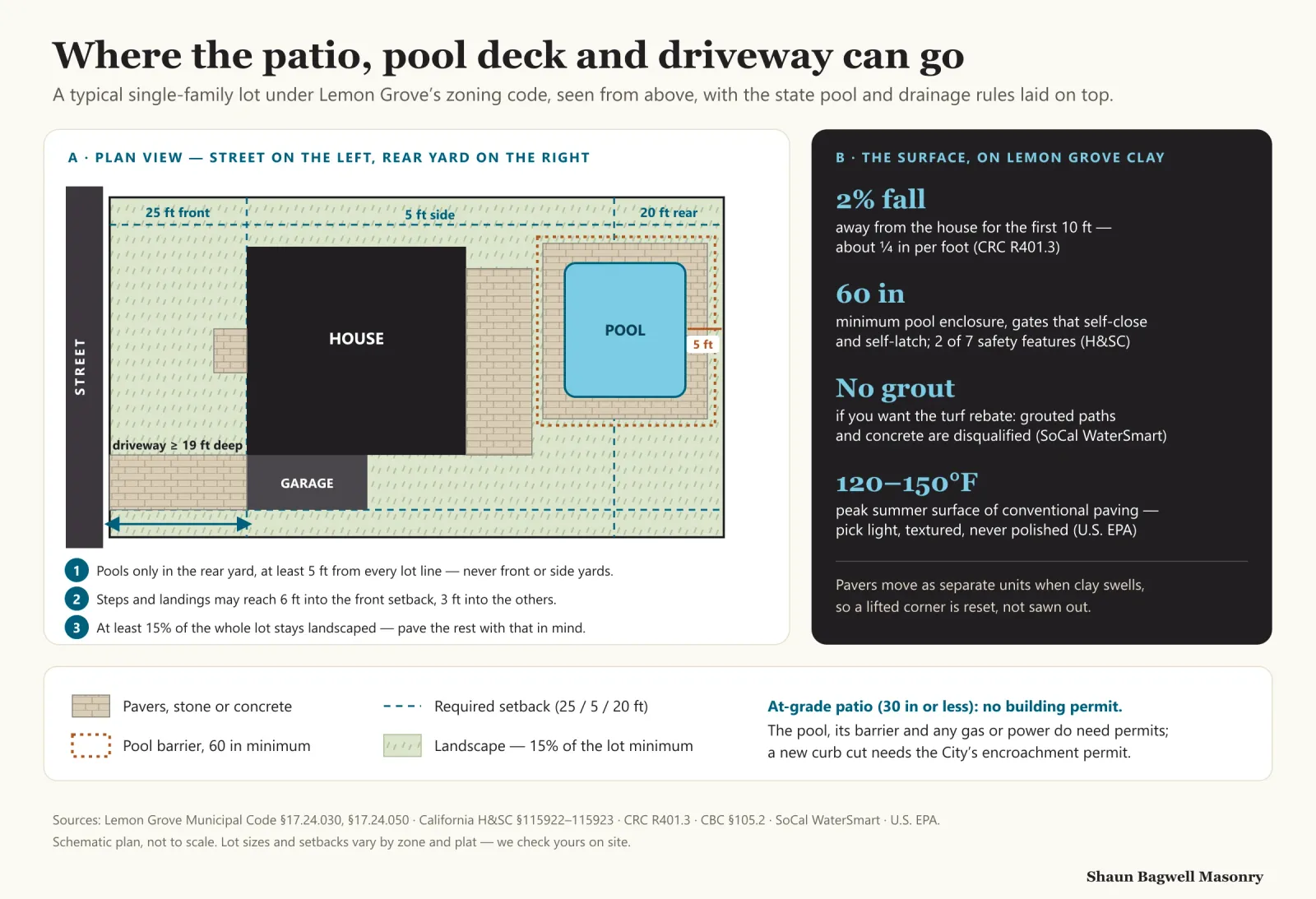
Lemon Grove is a town of yards: 61.5% of its homes are detached single-family houses (Census ACS 2020–24). But the zoning code is specific about how those yards are used. A pool can only go in the rear yard, at least 5 feet from every lot line. Steps and landings can reach 6 feet into the front setback and 3 feet into the others. And at least 15% of the whole lot has to stay landscaped — which caps how much of it you can pave.
Then there’s the ground. The City’s Safety Element says almost every soil in Lemon Grove, outside east Broadway, is high-clay with high shrink-swell potential. A single concrete slab cracks when that clay heaves; interlocking pavers and dry-laid stone move as separate units and can be reset. That’s the main reason we steer most Lemon Grove patios and pool decks toward a unit surface on a compacted base.
From a single walkway to a full back yard with a pool deck. The county-wide detail is on our pavers, patios and pool deck pages; this is what changes in Lemon Grove.
Paver patios
Concrete or clay pavers on a compacted base, bedding sand and a solid edge restraint, sloped 2% away from the house. When the clay underneath heaves, a corner can be lifted and relaid instead of sawn out.
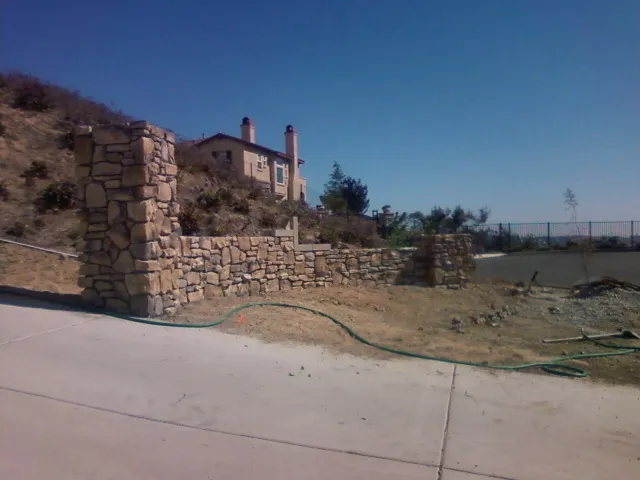
Driveways
A deeper base for vehicle loads, with the front-yard layout drawn to the City’s 19-foot minimum from garage door to property line. Widening the curb cut is work in the City right-of-way and needs an encroachment permit from Engineering, (619) 825-3810.
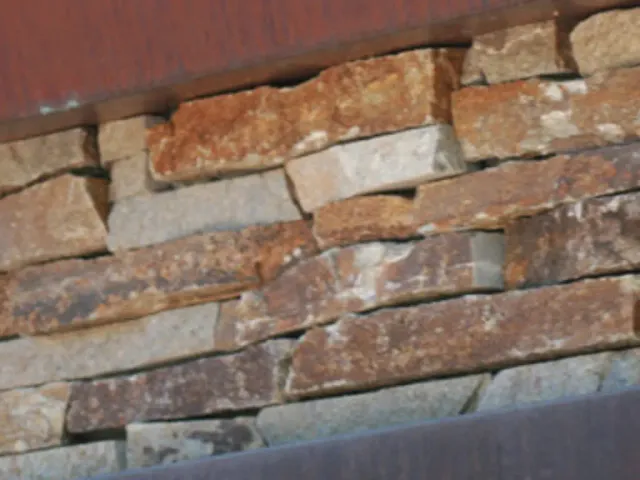
Stone & brick
Dry-laid flagstone in decomposed granite or sand, or mortared on a slab where you want a solid floor. Dry-laid joints can sit inside a rebated turf conversion; grouted ones can’t — worth knowing before you choose.
Pool decks
Paver, travertine or stone decks with bullnose or cantilevered coping and a flexible joint where coping meets deck, so deck movement doesn’t crack the bond beam. Textured, light surfaces — never polished stone at the water.
Steps & walks
Even risers and treads that shed water. Landings can project up to 6 feet into the front setback; we lay them out so the step down to the walk is where the code allows it.
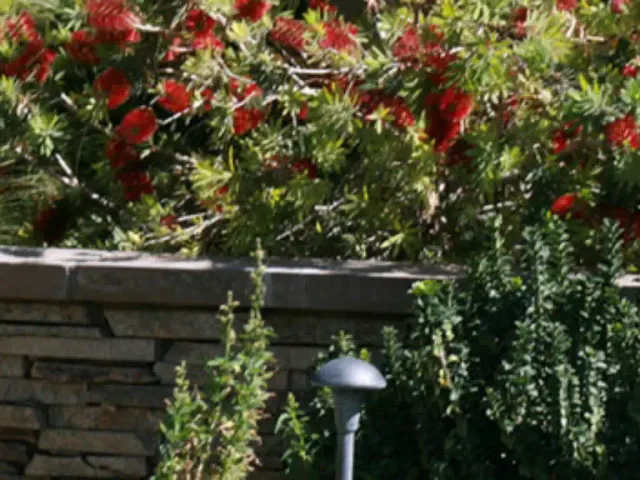
Outdoor living
Low block or stone seat walls and raised planters that frame a patio — and help keep the 15% of the lot the City wants green, green.
The California Residential Code wants the ground — and any hard surface — to fall at least 2% away from the house for the first 10 feet, about a quarter-inch per foot. On Lemon Grove clay, which drains slowly, that fall is what keeps water out of the slab joint and away from the footing.
Interlocking concrete pavers made to ASTM C936 have historically been required to average 8,000 psi in compressive strength — a hard unit, but what makes a paver surface last is the base under it and the edge that holds it in. For pool decks, a textured finish matters more than any number: the ANSI tile test’s 0.42 wet rating is an interior benchmark, so we ask for products rated for exterior wet use.
An at-grade patio, walk or driveway on your own lot — 30 inches or less above the ground next to it — needs no building permit under the state code. What does: a pool or spa, its barrier, any gas line or electrical to a barbecue or fire feature, and any work in the street right-of-way. A new or wider driveway curb cut, or replacing curb, gutter or sidewalk, needs the City’s encroachment permit from Engineering.
Lemon Grove’s zoning code decides where. Pools, hot tubs and spas aren’t allowed in front, street-side or interior side yards, and in the rear yard they stay at least 5 feet from any lot line. A roofed patio cover can reach 15 feet into the rear setback but not into the front or sides. Parking spaces can’t sit in the required front or side setbacks, and the driveway must be at least 19 feet deep from the garage door to the property line.
Every development project in the City must use stormwater “site design” measures, and the code lists permeable materials in low-traffic areas as one of them. Larger work — 5,000 square feet or more of new hard surface on a hillside of 25% slope or steeper, for example — becomes a Priority Development Project with engineered stormwater controls.
Three ways to surface a Lemon Grove patio or pool deck, compared on the things that matter on clay and under the turf-rebate rules.
| Interlocking pavers | Dry-laid flagstone | Poured or mortared slab | |
|---|---|---|---|
| When clay heaves | Units shift; reset by hand | Stones shift; reset by hand | Cracks; patch rarely matches |
| Turf-rebate area | Not addressed by the rules — ask first | Allowed if not grouted with cement | Disqualified (impermeable) |
| Stormwater | Permeable versions count as site design | Joints let water through | Sheds water; needs a place to send it |
| Installed cost, national (2022) | $10–$25 per sq ft | $16–$30 per sq ft | $6–$17 poured · $15–$30 stamped |
Sources: City of Lemon Grove Safety Element 2021; SoCal WaterSmart eligibility rules; LGMC §8.52.110; Fixr “Cost to Build a Patio” (2022, national — labelled by year because prices have moved since).
Setbacks, the 15% landscape minimum, where a pool can go and how far the landing can reach — before any design is drawn.
Pavers, dry-laid stone or a slab, and whether you want the area to stay rebate-eligible. If you’re removing lawn, the rebate has to be reserved before work starts.
Pool, barrier, gas and power through the Building Division; a curb cut through Engineering’s encroachment permit.
Clay dug out to depth, a compacted aggregate base, and the fall set away from the house and toward a drain.
Pavers or stone laid and cut to the edges, an edge restraint set, joints filled and the surface compacted.
At the pool, coping set with a flexible joint to the deck; everywhere, a final check that water runs where it should.
Planning one? Shaun will walk the site with you and tell you what it needs — free, no obligation.
Call (619) 581-2492National cost-guide figures, for orientation — not our price. In Lemon Grove the base depth on clay, access to the back yard on a narrow lot and any City permits move the number. You get an itemised written price after the visit.
| Item (national cost guide) | Typical range |
|---|---|
| Median patio, porch or deck project (U.S. homeowners) | $4,800 |
| Paver patio, installed, per sq. ft. (2022) | $10–$25 |
| Paver driveway, installed, per sq. ft. | $8–$25 |
| Concrete deck around a 12 × 24 ft pool | $7,500 avg ($6,750–$8,000) |
| Natural stone pool deck, per sq. ft. | $10–$40 |
| Pool coping, per linear ft. | $40–$50 |
Sources: U.S. Census/HUD 2023 American Housing Survey; Fixr patio (2022), driveway paving (Aug 2025) and pool deck (Jan 2025) guides — national figures. Permits, engineering and any pool or barrier work are priced separately.
Lemon Grove sits on one ZIP code, 91945, but its streets don’t drain or dig the same way. These are the areas where we plan paving differently.
The Lemon Grove page covers the ground, permits and neighbourhoods across every kind of job. The county-wide pages go deeper on the build itself.
Straight answers before you hire. Anything else — call, and Shaun answers it himself.
Call (619) 581-2492Not for an at-grade patio or walk — 30 inches or less above the adjoining ground — under the state building code. You do need permits for a pool or spa and its barrier, for gas or electrical to a barbecue or fire feature, and an encroachment permit for any driveway curb cut or sidewalk work in the street.
Only in the rear yard, and at least 5 feet from any lot line; the zoning code doesn’t allow pools, hot tubs or spas in front, street-side or interior side yards (LGMC §17.24.030). A permitted pool also needs at least two of the seven drowning-prevention features in state law, and an enclosure at least 60 inches high.
Usually, for patios and pool decks. The City says almost all of its soil is high-clay with high shrink-swell potential. A slab cracks when that ground moves; pavers and dry-laid stone shift as separate units and can be reset. Concrete is cheaper up front — see our Lemon Grove concrete page if a slab suits you better.
SoCal WaterSmart, which runs the $2-per-square-foot rebate Helix Water District customers use, disqualifies concrete and other surfaces water can’t pass through, and says flagstone or broken-concrete paths can’t be grouted. Its rules don’t mention pavers, so we confirm with the program before you count on it. The County’s permeable-paving rebate is for unincorporated areas, which Lemon Grove is not.
At least 19 feet from the garage door to the property line, under LGMC §17.24.030(B)(2). Parking spaces can’t sit in the required front or side setbacks. A new or wider curb cut needs the City’s encroachment permit.
Yes — travertine, stone, precast or poured coping, set on the bond beam with a flexible joint to the deck so the two can move independently. If the deck itself is cracked or heaving, we’ll tell you whether it needs replacing rather than covering.
Shaun Bagwell Masonry holds California C-29 Masonry licence #979389. Look it up at cslb.ca.gov under “Check a License”. California requires a licensed contractor for any job of $1,000 or more, or any job that needs a permit.
Call Shaun at (619) 581-2492 or send the form. He’ll measure the yard against the City’s setbacks, look at how the ground drains, and give you a written, itemised price for the surface that suits it.