
Repair
Crowns, caps and spark arrestors
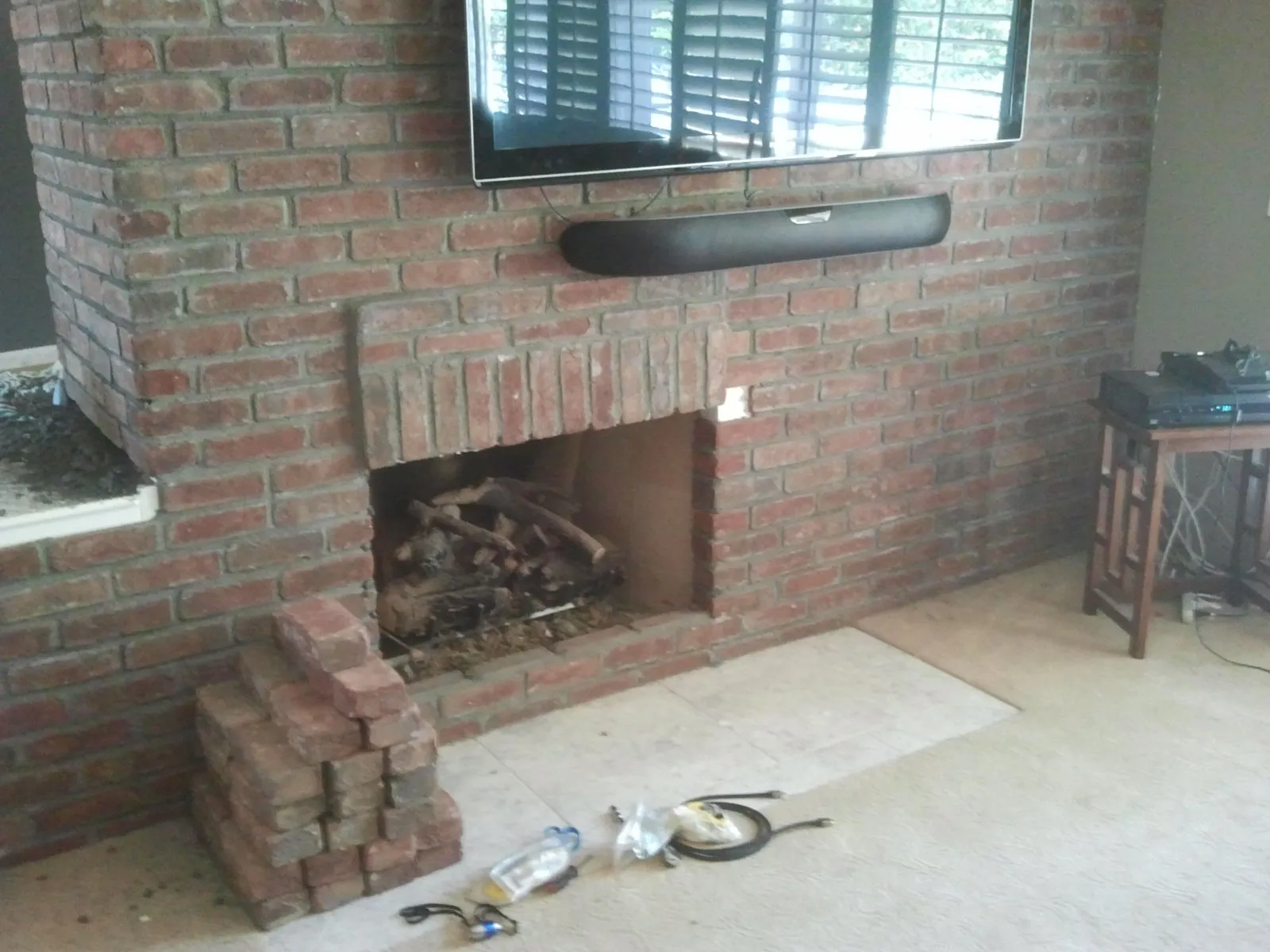
Cracked mortar washes replaced with a proper overhanging crown, and code spark arrestors fitted — openings no larger than ½ inch, at least four times the flue area, removable for cleaning.
Crowns, repointing, flashing, spark arrestors and seismic rebuilds for Lakeside’s 1970s and ’80s brick chimneys — plus new indoor and outdoor fireplaces and fire pits sited for the fire district. A licensed C-29 mason from next-door Alpine; call for a free inspection.
CSLB #979389 · C-29 Licensed · Bonded $25,000 · Free on-site estimates
Lakeside chimneys by the numbers
Most Lakeside houses date from the fireplace era: 57.1% were built between 1970 and 1989, with the 1980s the single biggest decade. Hardly anyone heats with them now — the Census counts just 6 of 7,288 Lakeside households using wood as their main heat — so many chimneys go years without a look. Forty-year-old crowns crack, mortar washes out, and flashing lets go long before anyone lights a fire.
In Lakeside that matters twice. A chimney is a hole in the roof in a district that treats every mapped fire-hazard property as Very High and that lost twelve residents of Wildcat Canyon and Muth Valley in the 2003 Cedar Fire. The California code’s answer is a spark arrestor whose openings stop anything bigger than ½ inch; Lakeside Fire Protection District adds that tree limbs stay at least 10 feet from the chimney.
Repairs to the masonry you have, and new fireplaces and fire features built to code — county-wide detail is on our chimney repair and fireplace pages.
Repair
Cracked mortar washes replaced with a proper overhanging crown, and code spark arrestors fitted — openings no larger than ½ inch, at least four times the flue area, removable for cleaning.
Repair
Washed-out joints raked and repointed, spalled brick replaced, and the stack sealed where the mortar has been letting water into the wall.
Roof line
Step and counter-flashing rebuilt where the chimney meets the roof, and a cricket added behind any chimney wider than 30 inches so water and debris don’t pile up against it.
Seismic
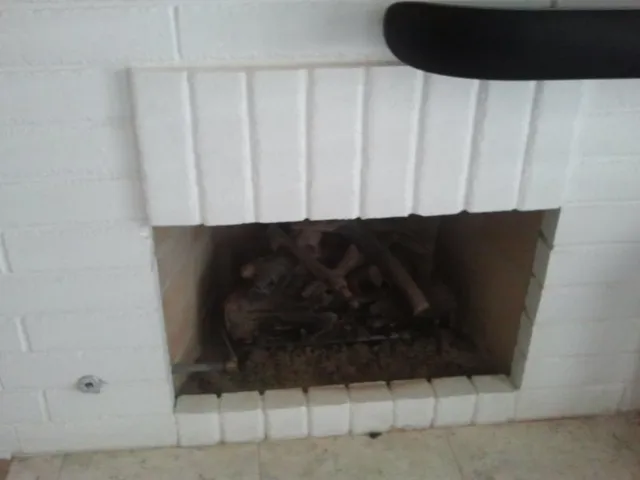
Loose or cracked stacks taken down and rebuilt with four No. 4 vertical bars, ¼-inch ties every 18 inches and straps into the framing — the steel older chimneys lack.
New builds
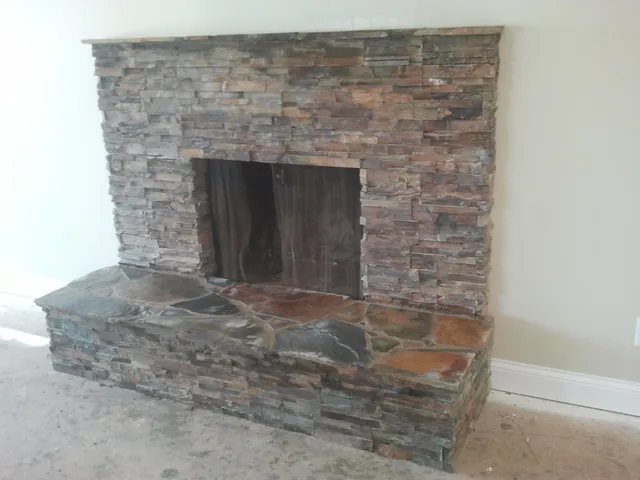
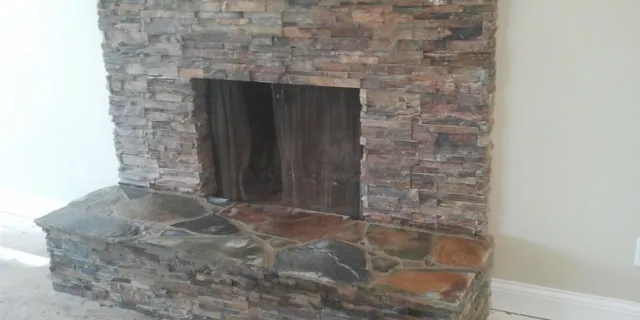
New site-built masonry fireplaces under a County building permit, and dated brick refaced in stacked or natural stone.
Outdoors
Block-core outdoor fireplaces and built-in pits in stone, sited and specified after checking what the fire district allows at your address — with the hose, distance and spark rules built in.
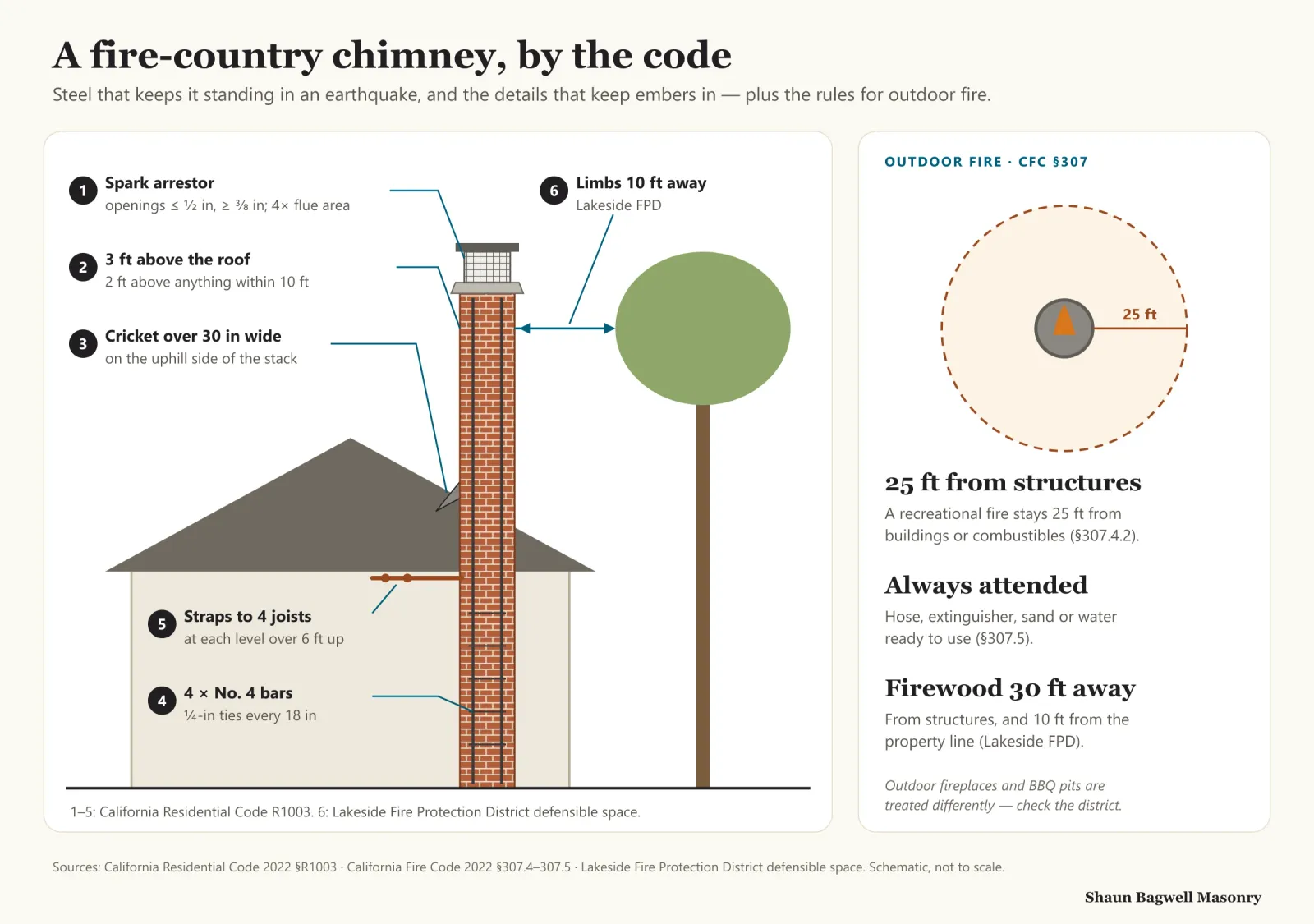
Chapter 10 of the California Residential Code governs masonry chimneys, and in seismic design categories C through D2 it adds steel: four No. 4 vertical bars anchored in the foundation, ¼-inch ties every 18 inches, and two 3/16 × 1-inch straps embedded 12 inches into the chimney and bolted to at least four joists at each floor, ceiling or roof line more than 6 feet up. A rebuild brings an old, unreinforced stack up to that.
The top of the chimney is where fire country and code meet. Any chimney serving a wood-burning fireplace needs an approved spark arrestor, it must stand 3 feet above the roof and 2 feet above anything within 10 feet, and a chimney wider than 30 inches needs a cricket on the uphill side.
Lakeside is unincorporated, so building permits come from County of San Diego Planning & Development Services. A new masonry fireplace or chimney is not on the County’s list of permit-exempt work (PDS 110), so it is built under a building permit; like-for-like repairs such as repointing or a new crown usually aren’t. The County’s 2026 Wildland-Urban Interface Code, which took effect on 2 April 2026 for its fire protection districts, sets the ember rules for new construction.
Lakeside Fire Protection District enforces the fire side. It adopted the new local fire-hazard maps by Ordinance 25-01 on 24 June 2025 and treats every property in a mapped zone as Very High. Its defensible-space rules keep tree limbs at least 10 feet from chimneys and firewood at least 30 feet from structures and 10 feet from the property line.
Outdoor fire has its own rules. The California Fire Code keeps a recreational fire 25 feet from structures or combustible material and requires it to be constantly attended with a hose or extinguisher on hand (§307.4.2, §307.5). Outdoor fireplaces and barbecue pits are treated differently, so we confirm with the district what it allows at your address before designing a pit or outdoor fireplace. Open debris burning is a separate matter: Cal Fire suspended burn permits in the district from 1 May 2026.
What the three routes mean for a Lakeside chimney. Shaun will tell you which one yours needs after an inspection.
| Repair | Above-roof rebuild | New fireplace or outdoor build | |
|---|---|---|---|
| When | Cracked crown, washed-out joints, failed flashing, no spark arrestor | Loose, leaning or cracked stack above the roof | Adding a fireplace, or replacing a failed one |
| Seismic steel | Existing chimney kept as is | Rebuilt with No. 4 bars, ties and straps (R1003.3–4) | Full R1001/R1003 reinforcement and anchorage |
| County permit | Usually not for like-for-like masonry repair | Typically yes — confirm with the County | Yes for a masonry fireplace |
| National cost guide | $250–$1,200 typical repair; crown $750–$3,000 | $500–$4,000 partial or full rebuild | Masonry or prefab wood $2,500–$30,000; outdoor $1,500–$8,000 |
Costs: Fixr chimney repair (Jan 2025) and fireplace installation (Jan 2026) guides, national — not our price. Code: CRC Ch. 10.
Shaun looks at the crown, joints, flashing, arrestor and firebox, and at the trees and roof around the chimney.
Repair, rebuild or new build, with what the County and fire district require for each, in an itemised proposal.
County building permit for new fireplaces and rebuilds that need one; district check before any outdoor fire feature.
Repointing, crown and flashing, or a rebuild with steel and straps — roof protected throughout.
Spark arrestor and cap fitted, cricket built where required, and the chimney checked against the 3-ft / 2-ft rule.
A walk-through on safe use: the U.S. Fire Administration advises a yearly inspection and keeping combustibles 3 feet back.
Planning one? Shaun will walk the site with you and tell you what it needs — free, no obligation.
Call (619) 581-2492National cost-guide figures for comparison. Lakeside jobs vary with roof pitch and access, how far the stack has to come down, and the finish on new work.
| Work (national) | Typical cost |
|---|---|
| Chimney repair, average | $750 (typical $250–$1,200) |
| Crown replacement | $1,000–$3,000 |
| Partial or full rebuild | $500–$4,000 |
| Outdoor fireplace | $1,500–$8,000 (custom up to $50,000) |
Fixr national cost guides (chimney repair Jan 2025, fireplace installation Jan 2026) — not our price. You get an itemised written proposal after a free inspection.
The age of the house, the trees around it and the fire exposure change what a Lakeside chimney needs.
The Lakeside page covers the ground, permits and neighbourhoods across every kind of job. The county-wide pages go deeper on the build itself.
Straight answers before you hire. Anything else — call, and Shaun answers it himself.
Call (619) 581-2492Yes, on any chimney serving a wood-burning fireplace or appliance. The California Residential Code requires an approved arrestor whose openings stop spheres larger than ½ inch but pass ⅜ inch, with a net free area at least four times the flue and a removable screen for cleaning (R1003.9.2).
Like-for-like masonry repair — repointing, a new crown, flashing — usually doesn’t. A new masonry fireplace or chimney isn’t on the County’s permit-exempt list (PDS 110), so it needs a County building permit; we confirm rebuilds with the County before work starts.
The California Fire Code keeps a recreational fire 25 feet from structures or combustible material and requires constant attendance with a hose or extinguisher ready (§307.4.2, §307.5). Outdoor fireplaces and barbecue pits are treated differently, so we check with Lakeside Fire Protection District for your address before designing.
Its defensible-space rules keep tree limbs at least 10 feet from chimneys and firewood stacked at least 30 feet from structures and 10 feet from the property line. Homes sold in a High or Very High zone also need an AB 38 defensible-space inspection.
Unreinforced chimneys are the most vulnerable part of an older house. Current code calls for four No. 4 vertical bars, ¼-inch ties every 18 inches and steel straps tying the chimney to the framing. A rebuild adds that; a repair doesn’t.
Usually more than one that’s used. Only 6 of 7,288 Lakeside households heat mainly with wood, so many chimneys go unchecked; cracked crowns and failed flashing let water into the walls whether or not a fire is lit. A missing spark arrestor matters the day you do light one.
National cost guides put typical chimney repairs at $250–$1,200, crown replacement at $1,000–$3,000 and partial or full rebuilds at $500–$4,000 (Fixr, 2025). Roof access and how far down the damage goes set the real price; you get it in writing after a free inspection.
Shaun Bagwell Masonry holds California C-29 Masonry licence #979389, issued 14 December 2012, with a $25,000 bond. Look it up at cslb.ca.gov → “Check a License”.
Call Shaun at (619) 581-2492 or send the form. He’ll look at the chimney, the roof line and what the fire district asks for, and put a written, itemised price in your hands.