
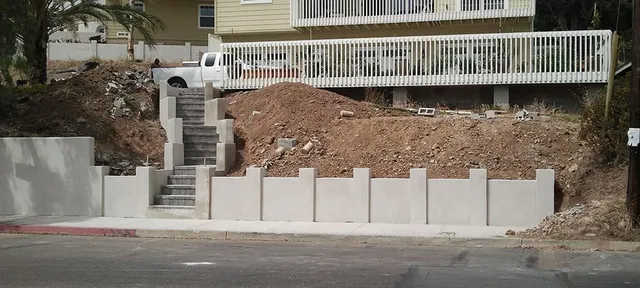
Structural
Footings and foundations
For walls, additions, fireplaces and outbuildings. Trenches cut to firm ground — often decomposed granite or rock in Alpine — with steel set and inspected before the pour.
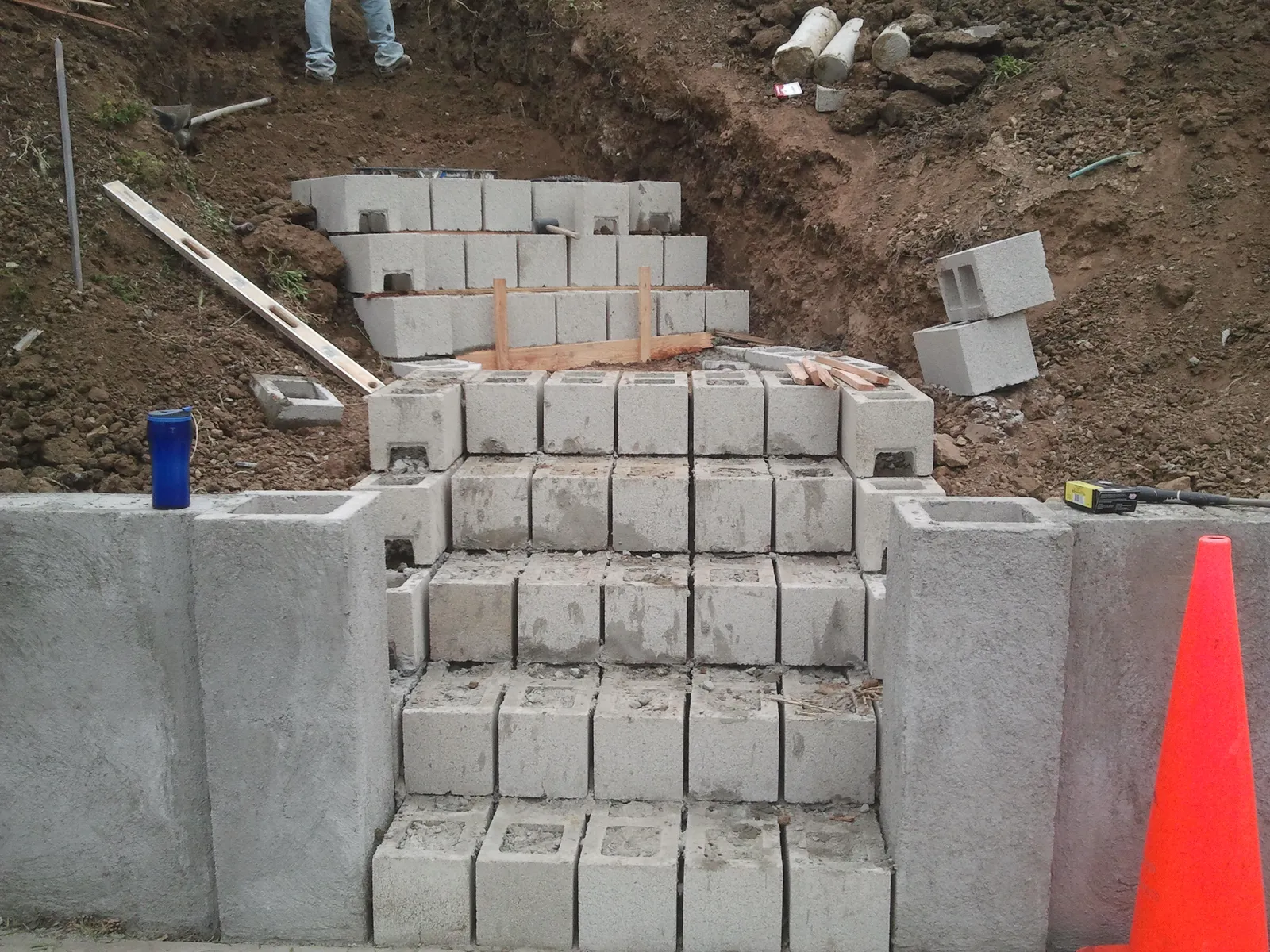
Footings cut into decomposed granite, slabs that don’t crack where you’d expect, and the long driveway down to the County road — poured early on hot days, jointed properly, permitted where the County requires it. Alpine-based, owner on every pour.
CSLB #979389 · C-29 Licensed · Bonded $25,000 · Free on-site estimates
Alpine concrete by the numbers
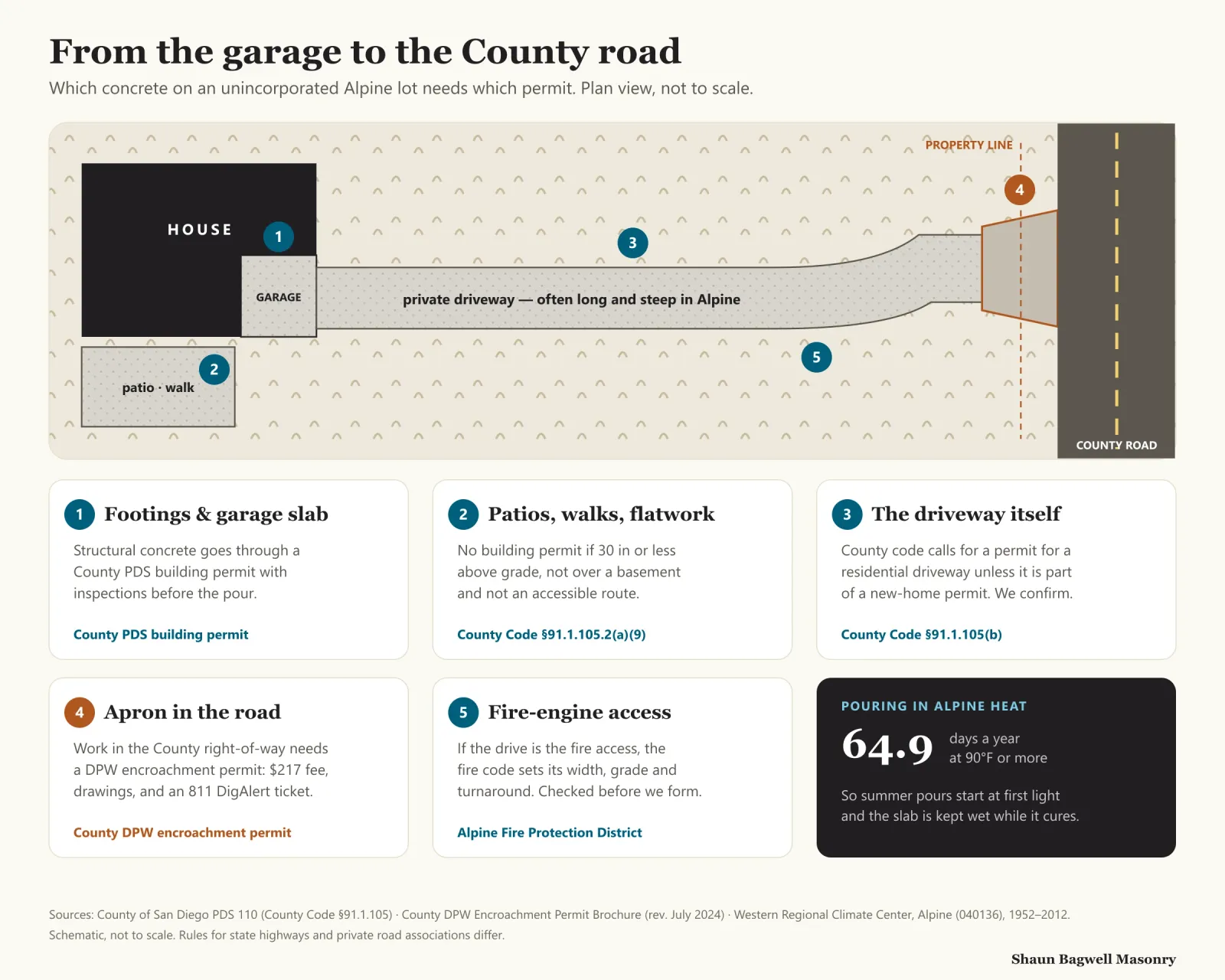
Concrete in Alpine is poured against the weather. The Alpine station has averaged 64.9 days a year at 90°F or hotter, August highs average 90.6°F, and the same summer night drops to about 61°F. Concrete that dries too fast at the surface cracks and dusts, so summer pours here start at first light and the slab stays wet while it cures. In winter, 6.6 nights a year at or below freezing are enough to protect a fresh pour on a cold forecast.
The ground changes the slab too. Granitic hill soils like the USDA’s Cieneba series are sandy and can be only 4 to 20 inches deep over weathered rock, so footings often bottom out on rock that has to be cut. Where the rock is gabbro, soils such as the Las Posas series hold 35–45% clay, and slabs need a deeper base and tighter steel. And the long private drives typical of Alpine end at a County road, where the apron needs its own permit.
Structural and flat concrete, from the footing under a wall to the apron at the road. The concrete services page has the county-wide detail; this one covers what Alpine’s ground and permits change.
Structural
For walls, additions, fireplaces and outbuildings. Trenches cut to firm ground — often decomposed granite or rock in Alpine — with steel set and inspected before the pour.
Slabs
On a compacted base with vapour barrier where needed and steel sized to the load and the soil. Thicker sections where the ground is clay or the slab carries vehicles.
Driveways
Broom-finished for traction on Alpine grades, jointed on a planned layout, with the apron at the County road permitted through DPW and checked against fire-access needs.
Flatwork
At-grade patios and walks — no building permit up to 30 inches above grade — plus steps and landings formed to consistent risers on sloped lots.
Fire
Concrete walks and pads in the first 5 feet around the house give embers nothing to land in, and a clean base for trash cans, propane or a generator.
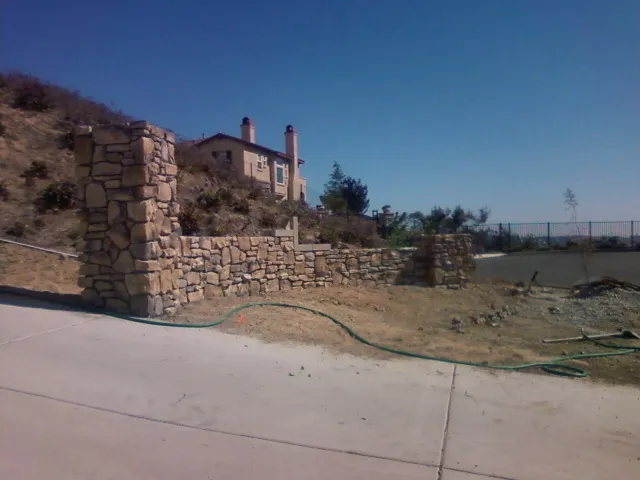
Entries
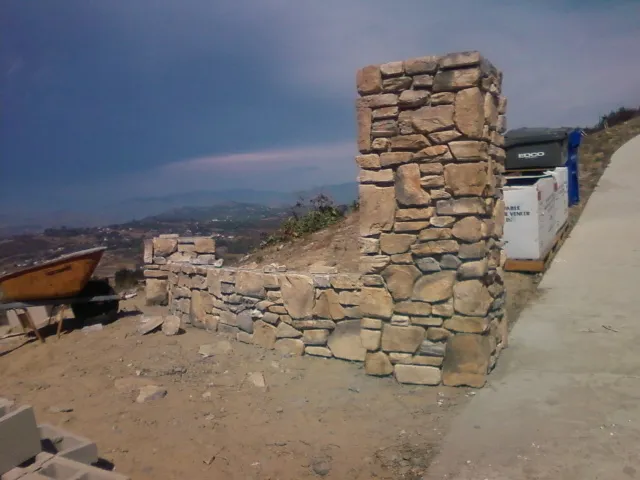
Footings for stone pillars, gate posts and mailbox piers at the end of the drive, poured with the drive or on their own.
Concrete shrinks as it dries — about 1/16 inch over 10 feet — so it will crack; the job is to make it crack where we choose. Contraction joints go in at no more than 24 to 36 times the slab thickness (8 to 12 feet for a 4-inch slab), cut at least a quarter of the slab deep. Slabs on clay or carrying cars get more thickness and steel.
In Alpine summer we schedule pours for early morning, keep materials and subgrade cool, and keep the slab wet through the first days of curing. In winter we watch the forecast for the few freezing nights and protect fresh concrete when one is coming.
Alpine is unincorporated, so County of San Diego Planning & Development Services applies its building code. Decks, walks and driveways no more than 30 inches above grade, not over a basement or story below and not part of an accessible route are exempt from a building permit. The same code separately says no one may build a residential driveway without a permit unless it’s part of a new-home permit — so we confirm with PDS on every drive rather than assume.
Anything in the County road — the apron, a new curb cut, a culvert crossing — needs a written DPW encroachment permit before work starts: a $217 fee, drawings, and a DigAlert ticket with 811 called two working days ahead. Where your drive is also the fire engine’s way in, the Alpine Fire Protection District’s adopted fire code sets its width, grade and turnaround.
Both work here; which is better depends on the slope, the ground and how you use it. Pavers have their own page — pavers, patios and pool decks in Alpine.
| Broom-finished concrete | Interlocking pavers | |
|---|---|---|
| Traction on a grade | Good with a broom finish | Good; textured units available |
| If the ground moves | Cracks at joints or between them | Lift and relay the affected area |
| Heat underfoot | Light grey; can be coloured | Choose light colours |
| Apron in a County road | DPW encroachment permit | DPW encroachment permit |
| Typical cost (national guide) | $6–$8 per sq. ft. plain | $10–$25 per sq. ft. (patio figure) |
Sources: Fixr concrete driveway cost guide (January 2025) and patio cost guide (August 2022), national figures; County DPW encroachment brochure.
Shaun checks the ground, the grades, where water goes and whether the work touches a County road or fire access.
PDS building permit where it’s structural, DPW encroachment for the apron, and a call to 811 before anyone digs.
Dug to firm ground — cutting rock where we hit it — base placed and compacted.
Forms set to drain, steel placed and chaired, joints laid out; inspection where required.
Concrete placed and finished in the cool of the morning, joints tooled or cut the same day.
Kept wet while it cures, then a walk-through and a written workmanship guarantee.
Planning one? Shaun will walk the site with you and tell you what it needs — free, no obligation.
Call (619) 581-2492These are national cost-guide figures, not our prices. Alpine jobs are driven by access, rock in the excavation, slope and permits, so you get an itemised written quote after the visit.
| Item (national guide) | Typical installed range |
|---|---|
| Plain concrete driveway | $6–$8 per sq. ft. |
| Broom, coloured or exposed-aggregate drive | $8–$12 per sq. ft. |
| Stamped concrete | $12–$18 per sq. ft. |
| Poured concrete patio | $6–$17 per sq. ft. |
Sources: Fixr concrete driveway cost guide (January 2025) and patio cost guide (August 2022). County permit and DPW encroachment fees ($217 for the encroachment permit) are extra.
The pour is the same; what’s around it isn’t.
The Alpine page covers the ground, permits and neighbourhoods across every kind of job. The county-wide pages go deeper on the build itself.
Straight answers before you hire. Anything else — call, and Shaun answers it himself.
Call (619) 581-2492A patio or walk no more than 30 inches above grade doesn’t need a County building permit. Driveways are less clear-cut: County code requires a permit for a residential driveway unless it’s part of a new-home permit, so we confirm with PDS. Any work in the County road needs a DPW encroachment permit.
The DPW encroachment permit fee is $217, with an $87 renewal; a deposit and an encroachment removal agreement may also be required, and drawings are part of the application.
Yes, with care. Alpine averages about 65 days a year at 90°F or hotter, so we start pours at first light, keep the subgrade and materials cool, and keep the slab wet while it cures.
Concrete shrinks about 1/16 inch over 10 feet as it dries. Joints at no more than 24–36 times the slab thickness, cut a quarter of the slab deep, make it crack where we choose. Random cracks usually mean joints too far apart, a weak base or a fast-drying surface.
Broom-finished concrete is the lower-cost, high-traction choice; pavers cost more but can be lifted and relaid if the ground moves. On clay or a steep drive we’ll walk you through both.
Shaun Bagwell Masonry holds California licence #979389, issued 2012, bonded and insured, and is based in Alpine. Check it at cslb.ca.gov.
Call Shaun at (619) 581-2492 or send the form. He’ll look at the ground and the grades, tell you which permits apply, and give you a written, itemised price.