
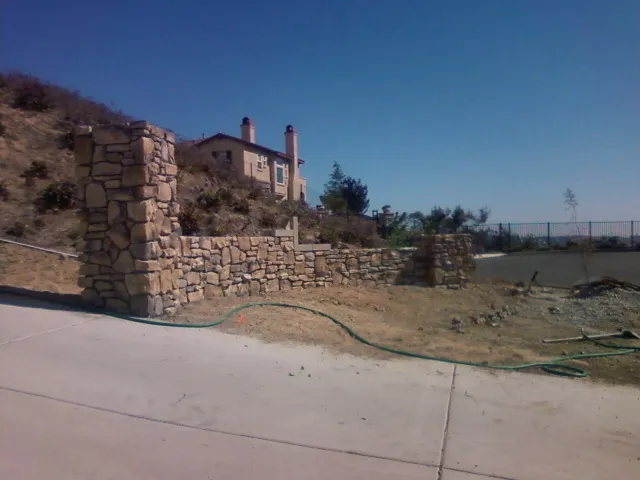
Driveways
Driveways and aprons
Tear-out and replacement of cracked 1950s–’70s driveways, widened parking pads and new aprons — with the encroachment permit pulled before we touch the curb.
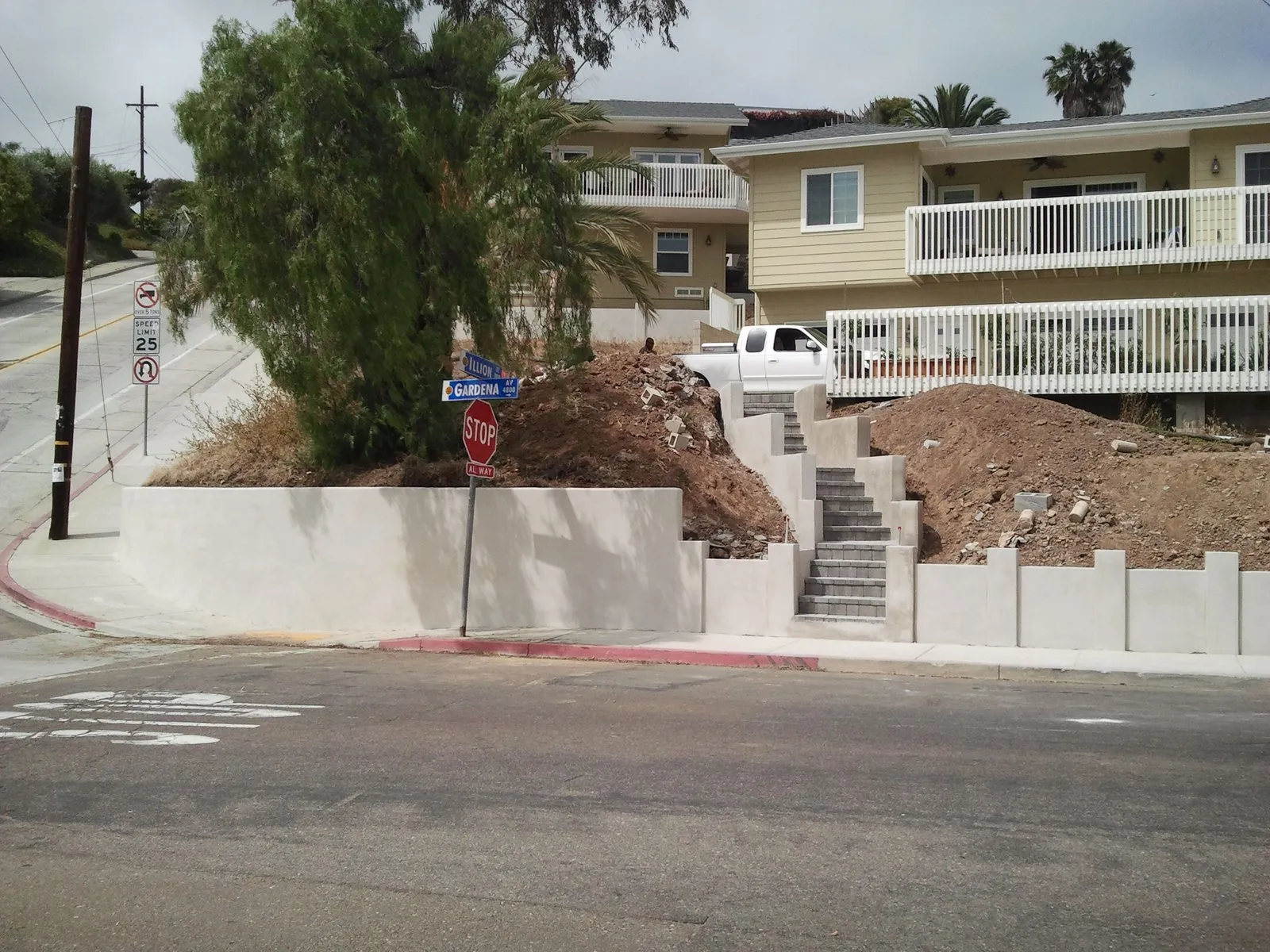
Concrete that drains away from your house, cracks only where the joints tell it to, and gets a proper cure even in an El Cajon August. Driveways, patios, walks, steps, slabs and footings, with the City’s right-of-way permit handled when the apron is involved. Free on-site estimate.
CSLB #979389 · C-29 Licensed · Bonded $25,000 · Free on-site estimates
El Cajon concrete by the numbers
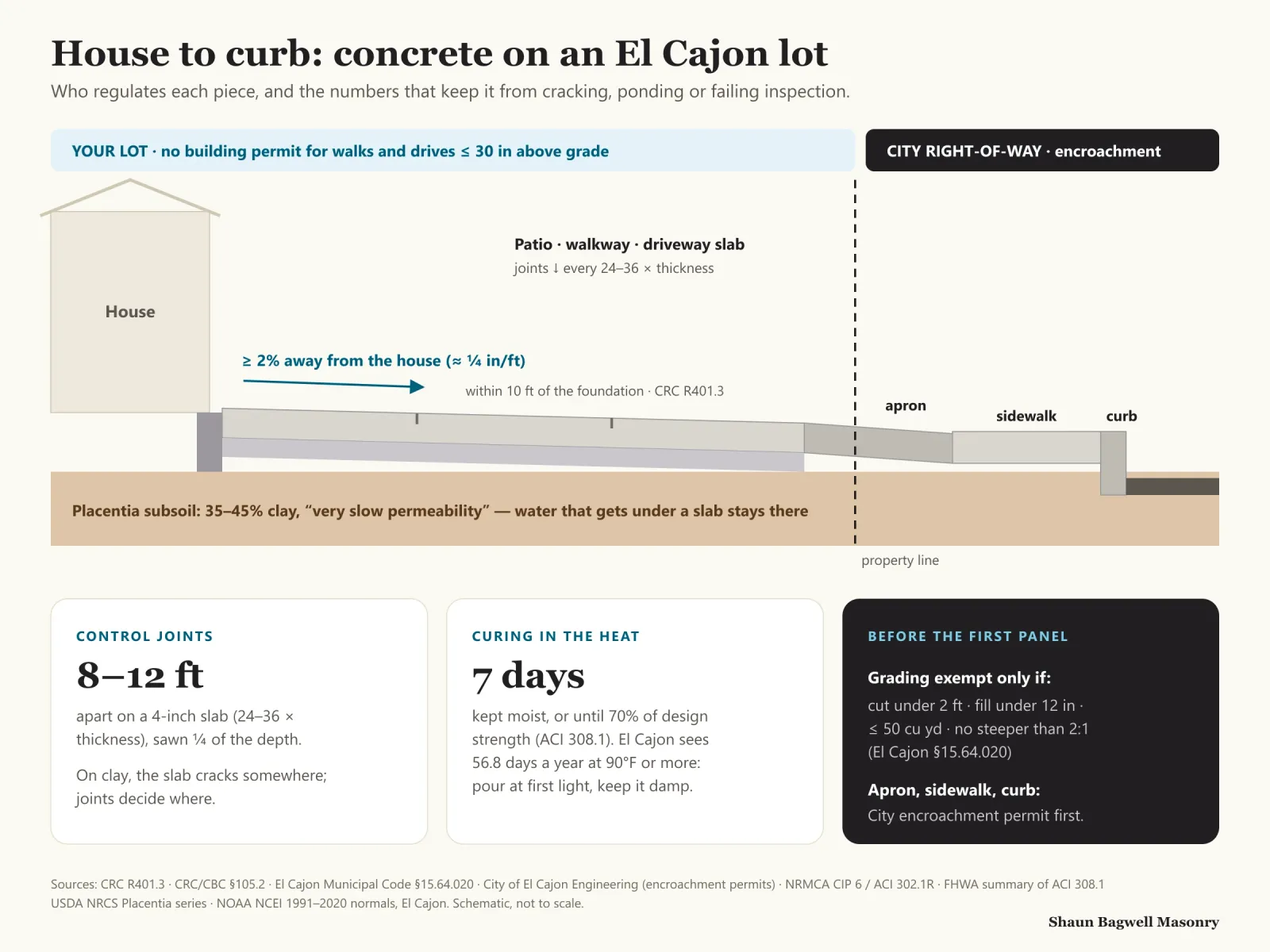
Two local facts explain most cracked El Cajon concrete. NOAA’s station in town averages 56.8 days a year at 90°F or hotter (6.9 at 100°F), and hot, dry air pulls water out of a fresh slab before it has cured. Underneath, the valley floor’s Placentia subsoil is 35–45% clay with very slow permeability, and parts of the west hillside are Diablo clay that shrinks and swells with the seasons. A slab poured fast, cured dry and jointed by guesswork on that ground will crack where it likes.
The fixes are not exotic. Control joints every 24–36 times the slab thickness — 8 to 12 feet on a 4-inch patio — sawn a quarter of the depth. Moist curing for 7 days or until the concrete reaches 70% of its design strength, the default in ACI 308.1. A fall of at least 2% away from the house. And an early-morning start from June to October.
Residential flatwork and structural concrete, poured by a licensed mason who also builds the walls, steps and footings it ties into. County-wide detail is on our concrete services page.
Driveways
Tear-out and replacement of cracked 1950s–’70s driveways, widened parking pads and new aprons — with the encroachment permit pulled before we touch the curb.
Patios
Broom, exposed-aggregate, coloured and stamped patios, pitched away from the house and jointed so the cracks that clay soil makes happen in the joints.
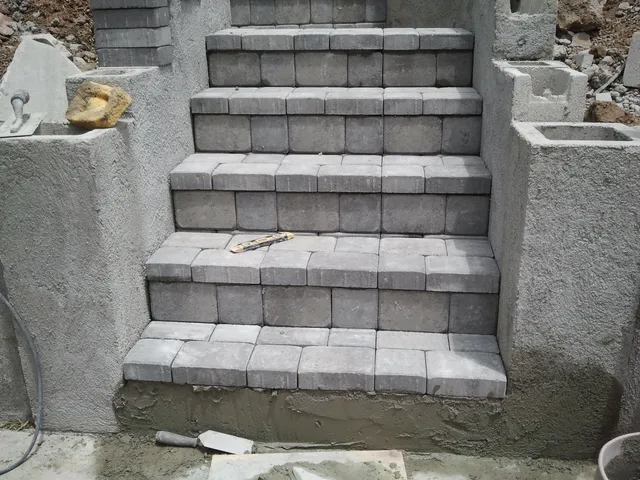
Walks & steps
Side-yard walks, entry steps with even risers, and landings at doors — the pieces that settle first on valley-floor fill and trip people when they do.
Footings
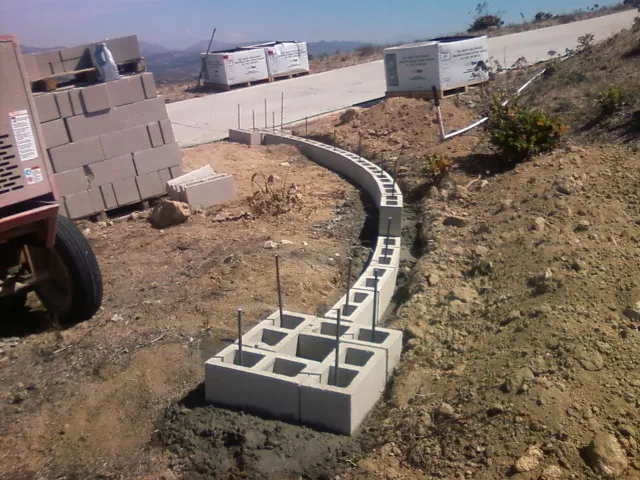
Continuous and spread footings dug to design depth, steel tied and inspected — for block and retaining walls, masonry fireplaces, posts and small additions.
Slabs
Reinforced slabs on a prepared base for sheds, pads and garage floors, with vapour retarder where a floor will be finished on top.
Right-of-way
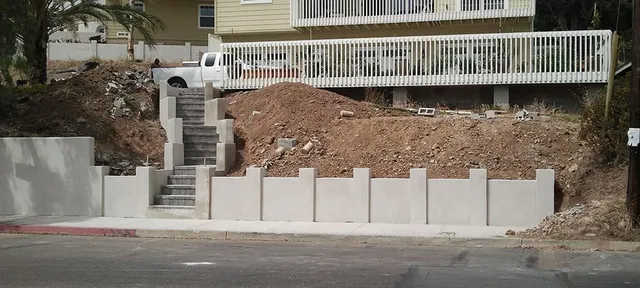
Lifted or broken sidewalk panels and curb sections in front of your home, built to the City’s requirements under an encroachment permit.
Strength is specified at 28 days — that’s the test the American Concrete Institute uses for acceptance — and getting there depends on keeping the slab wet early. In El Cajon’s summer that means pouring at first light, never adding water at the truck to make placement easier, and keeping new work damp or under cure compound for the first week.
On the valley floor, the slow-draining clay is the reason we slope every slab away from the house and give the water somewhere to go. On Fletcher Hills’ Diablo clay, which opens cracks ½ to 2 inches wide in the dry season, slabs get a deeper, compacted base and tighter joint spacing; on east-side decomposed granite, base prep is easier but rock may need breaking out.
On your lot. CBC §105.2 exempts sidewalks and driveways no more than 30 inches above adjacent grade, not over a basement and not part of an accessible route, and El Cajon’s amendment to that list (§15.04.040) touches only Item 1, so a typical patio, walk or driveway replacement needs no building permit. Foundations, structural slabs and footings for permitted walls or fireplaces do.
At the street. The apron, sidewalk, curb and gutter sit in the public right-of-way. Work there needs an encroachment permit from the City’s Engineering Services, and the application asks for a scaled drawing, an insurance certificate, a traffic-control plan where needed and a current El Cajon business licence. In unincorporated Bostonia or Rancho San Diego, the County Department of Public Works issues it instead.
Grading. Cuts under 2 feet and fills under 12 inches, 50 cubic yards or less and no steeper than 2:1, are exempt (§15.64.020). Hillside lots are limited to 2:1 cut and fill slopes no more than 30 feet high (§17.170.040). The City’s Safety Element notes central El Cajon is more than 70% impervious, so where your water goes off the slab matters to the street, too.
Finish changes the price, the grip and how hot it gets underfoot. Cost figures are national (Fixr, January 2025) — use them to compare, not to budget.
| Broom finish | Exposed aggregate | Coloured | Stamped | |
|---|---|---|---|---|
| National cost, driveway | $6–$8/sq ft (plain) | $8–$12/sq ft | $8–$12/sq ft | $12–$18/sq ft |
| Grip when wet | Good | Very good | As the texture | Can be slick — needs a textured sealer |
| Summer heat | Light grey stays cooler | Depends on stone colour | Darker tints run hotter | Darker patterns run hotter |
| Best for | Driveways, side walks | Driveways, pool surrounds | Patios | Patios, entries |
| Upkeep | Low | Low | Reseal to keep colour | Reseal every few years |
Source for costs: Fixr concrete driveway cost guide (Jan 2025, national). Heat and grip are general guidance, not test results — we set samples out on site when it matters.
We check the soil, the fall, the old concrete and whether the job reaches the street — and whether your parcel is City or County.
Encroachment permit for any apron, sidewalk or curb work; building permit for foundations and structural slabs.
Old concrete broken out and hauled, soft clay removed, subgrade shaped to fall away from the house.
Compacted base, forms set to grade, reinforcement on chairs — not lying in the dirt — and inspections where required.
An early start in hot months, finish to your choice, joints tooled or sawn the same day at the spacing the slab needs.
Kept moist or cured for the first week; we tell you when to walk on it, when to drive on it and how to care for it.
Planning one? Shaun will walk the site with you and tell you what it needs — free, no obligation.
Call (619) 581-2492These are national cost-guide and survey figures, not our price. San Diego County labour runs above national averages; demolition, haul-off, access and right-of-way permits move an El Cajon job most. You get an itemised written price after a free visit.
| National benchmark | Figure |
|---|---|
| Concrete driveway, 24 × 24 ft, 5 in, broom (Fixr 2025) | $3,460–$6,910 · avg $5,184 |
| Poured concrete patio, per sq ft (Fixr 2022) | $6–$17 |
| Stamped driveway, per sq ft (Fixr 2025) | $12–$18 |
| Median U.S. driveway/walkway project (AHS 2023) | $2,900 |
Sources: Fixr concrete driveway (Jan 2025) and patio (2022) cost guides; U.S. Census Bureau/HUD 2023 American Housing Survey. Permit fees are listed separately on our proposal.
The slab is the same; the ground under it and the agency at the curb aren’t.
The El Cajon page covers the ground, permits and neighbourhoods across every kind of job. The county-wide pages go deeper on the build itself.
Straight answers before you hire. Anything else — call, and Shaun answers it himself.
Call (619) 581-2492Not a building permit for the part on your lot — driveways no more than 30 inches above grade are exempt under CBC §105.2. If the work includes the apron, sidewalk or curb, you need an encroachment permit from the City’s Engineering Services first (or County DPW in unincorporated areas). We handle that application.
Clay subsoil that holds water, seasonal swelling on the west hillside, and heat that dries slabs before they cure. All concrete shrinks; joints every 24–36 times the thickness, a good base, fall away from the house and a week of moist curing keep the cracks in the joints.
Four inches is a common residential minimum, and 5 inches or more is recommended for heavier vehicles (Fixr’s benchmark driveway is 5 inches). On expansive clay we often go thicker with reinforcement — the soil decides, and that’s part of the site visit.
Light foot traffic after a day or so, cars typically after about a week, and heavy vehicles later. Strength is specified at 28 days; we give you dates for your pour based on the mix and the weather.
Yes, with precautions: a first-light start, shaded and dampened subgrade, no water added at the truck, and moist curing or cure compound right after finishing. On the hottest forecast days we’ll move the pour rather than gamble with it.
Stamped concrete costs less up front and gives a continuous surface, but it cracks like any slab and needs resealing. Pavers flex with clay and can be lifted and reset. We quote both if you’re undecided — see our El Cajon pavers page.
Yes, under a City encroachment permit. The application needs a scaled drawing, insurance, a traffic-control plan where required and a current El Cajon business licence; we prepare it.
Shaun Bagwell Masonry holds California C-29 Masonry licence #979389 with a $25,000 contractor bond. Look it up at cslb.ca.gov → “Check a License”.
Call Shaun at (619) 581-2492 or send the form. He’ll look at the old concrete and the ground under it, tell you whether the City needs a permit for the street side, and put a written, itemised price in your hands.